Lower back exercises: gentle mobility and strength
For habitual tension and stiffness in the lower back, regular gentle movement works best: mobilisation, light core strengthening and relieving positions. This selection is for people without acute pain who want to look after their back carefully.
Who this selection is for — and who it is not for
The exercises suit mild stiffness and tiredness in the lower back after long sitting. They are not intended for acute pain, pain after an injury, or pain with numbness or weakness in a leg — in those cases an in-person medical consultation comes first.
Four exercises with easier variants
Move slowly, without pain. Detailed instructions are on the exercise pages:
- 1Cat–cow for the lower back — gentle mobilisation. Easier: reduce the range to what is comfortable.
- 2Knees to chest — relieving the lower back lying down. Easier: draw one knee at a time.
- 3Bird dog — core stability. Easier: lift only the arm or only the leg.
- 4Glute bridge — strengthening the glutes and supporting the pelvis. Easier: lift the pelvis only slightly.
A short, realistic routine
Ten minutes a day is enough: two minutes of mobilisation, two to three minutes for each strengthening exercise and a minute of relief at the end. Regularity matters more than duration: ten minutes every day helps more than an hour once a week.
Load and discomfort: how to tell them apart
A light sense of muscles working or a soft stretch is normal. Sharp, shooting or growing pain is a signal to stop. The rule is simple: an exercise should not amplify your usual symptoms — neither during nor the next day.
Common mistakes and warning signs
Common mistakes: pushing through pain “for the benefit”, holding the breath during effort, chasing range. Warning signs that call for a doctor: pain radiating below the knee, numbness in the groin, weakness in the foot, night pain that wakes you, or pain after a fall.
Matching exercises
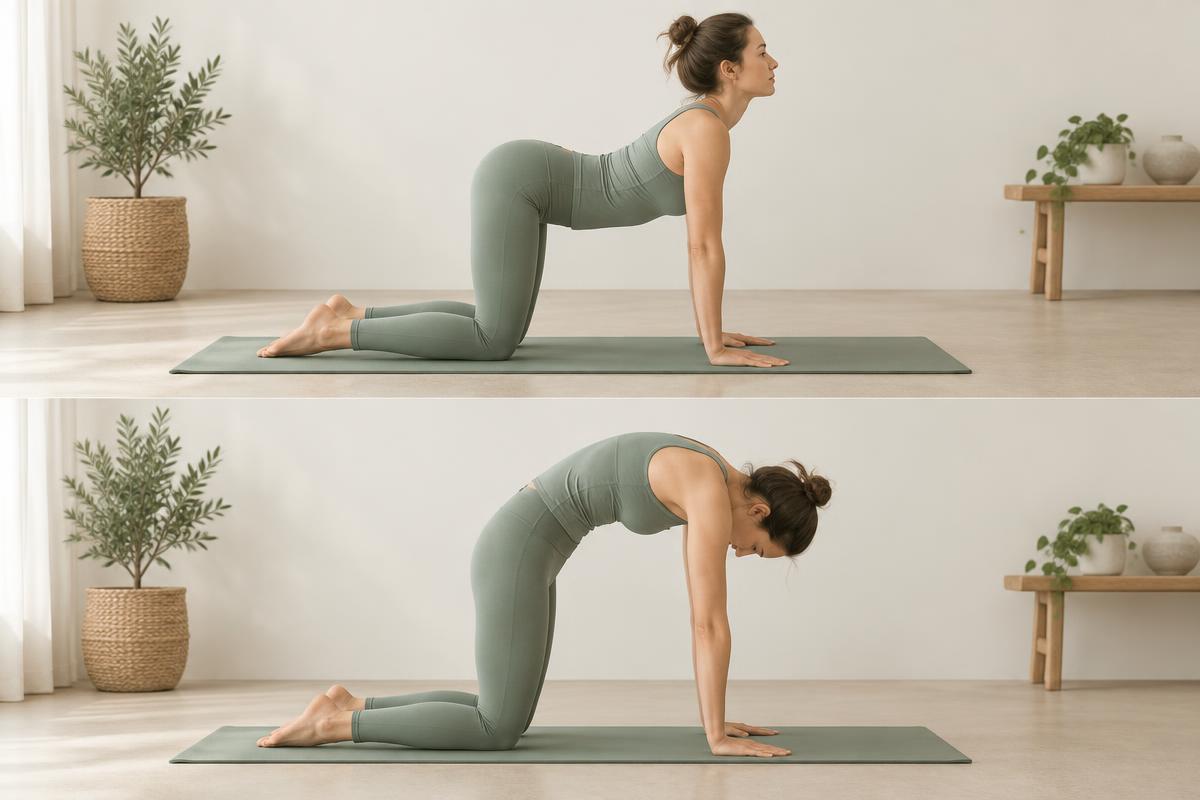
Cat–Cow — Lumbar Spine Mobility
Controlled mobility for the lumbar spine and pelvis.
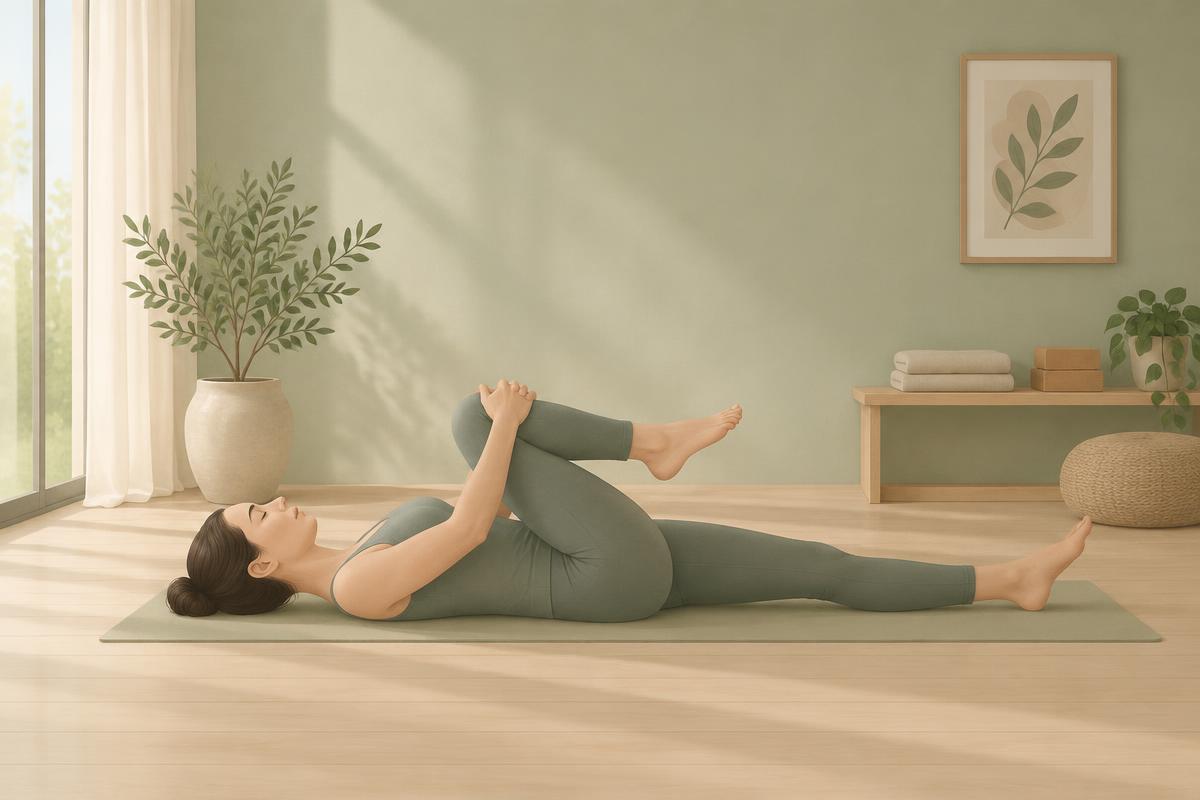
Knee to Chest (Supine)
Relieving flexion for the lower back and hip.
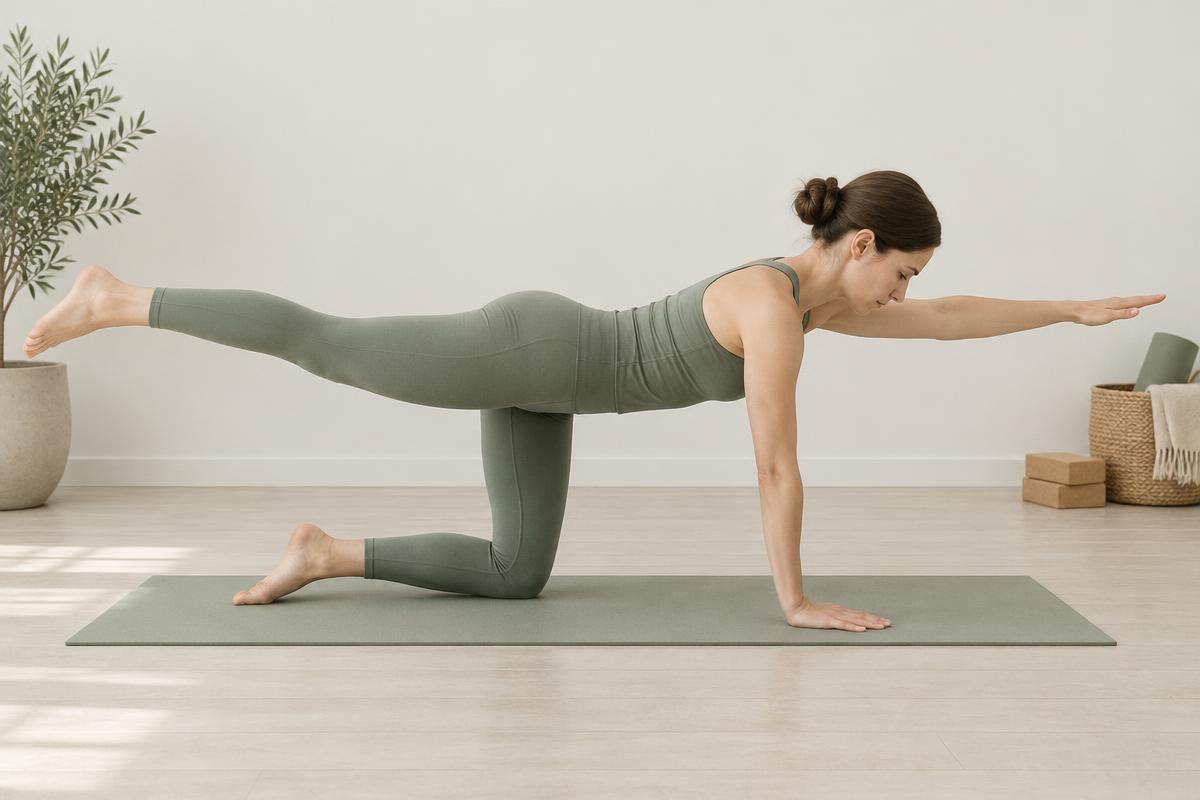
Bird Dog
Stability and coordination for the trunk, pelvis and spine.
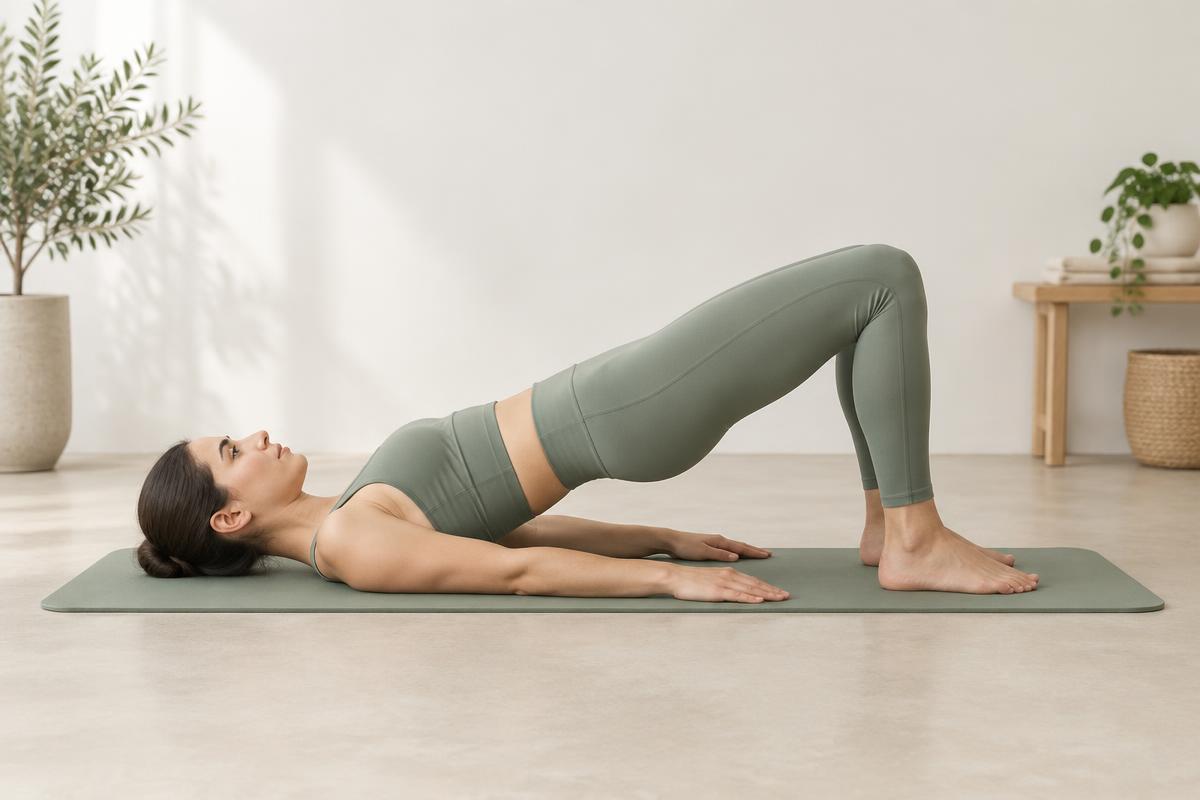
Glute Bridge
Strength for the glutes and stability for the pelvis.
Frequently asked questions
Can I do these exercises with a disc herniation?
With a confirmed herniation, the programme should be chosen by a doctor or physiotherapist — there are no universally safe routines here. This selection is intended for people without diagnosed spinal conditions.
How often should I practise?
Ideally a little every day or every other day. Muscles and ligaments adapt to regular moderate load, not to rare intense sessions.
Is morning or evening better for the exercises?
Whenever suits you. In the morning the body may be stiffer — start more slowly and with a smaller range. In the evening the exercises release the tension accumulated during the day.
What if the pain got worse after the exercises?
Take a break for a few days, then try again with a smaller range and fewer repetitions. If the pain returns or grows, stop and see a doctor.