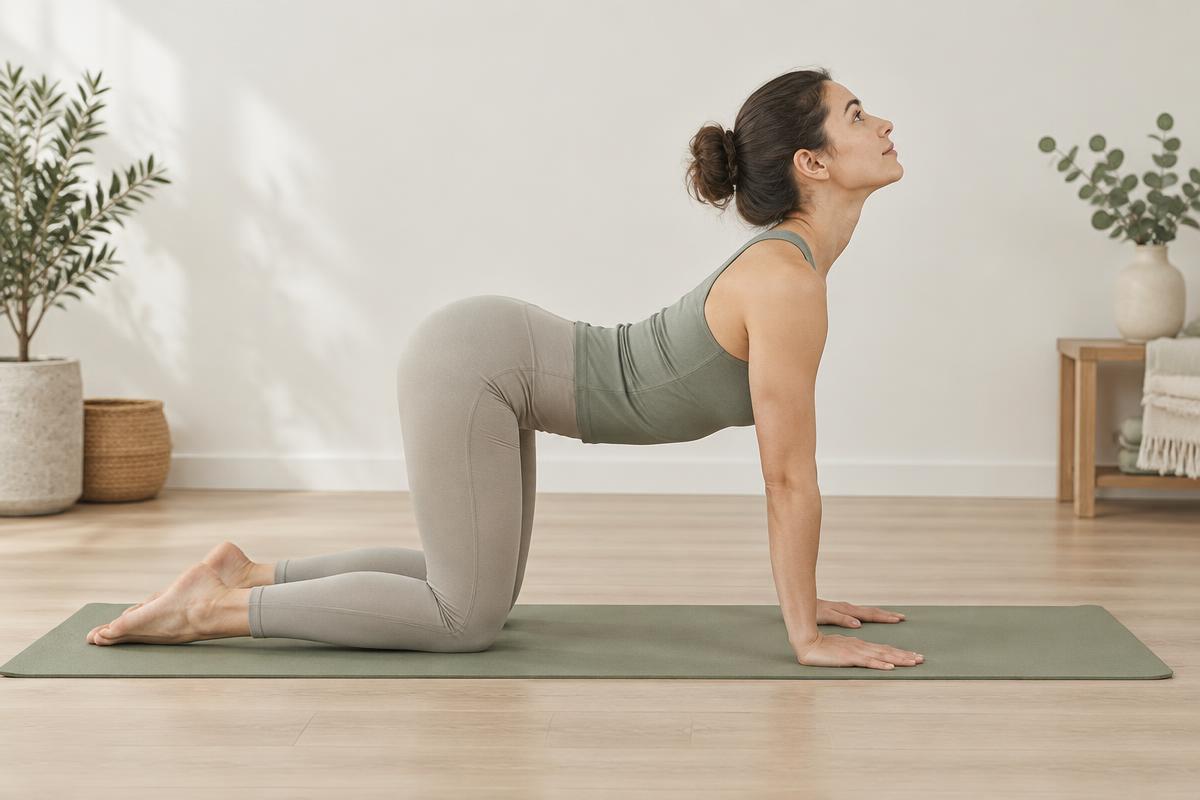
Mobility
Cat–Cow — Thoracic Spine Mobility
Targeted mobility for the upper and middle back.
- Thoracic spine
- Spine
- Upper back
- Mobility
Mobility · stability · relaxation
Calm exercises for spinal mobility, core stability and a more attentive connection with your body. Move slowly and stay within a comfortable range.
Choose an exercise for what you need today. Each page offers a clear sequence, breathing guidance and cues for careful practice.
Targeted mobility for the upper and middle back.
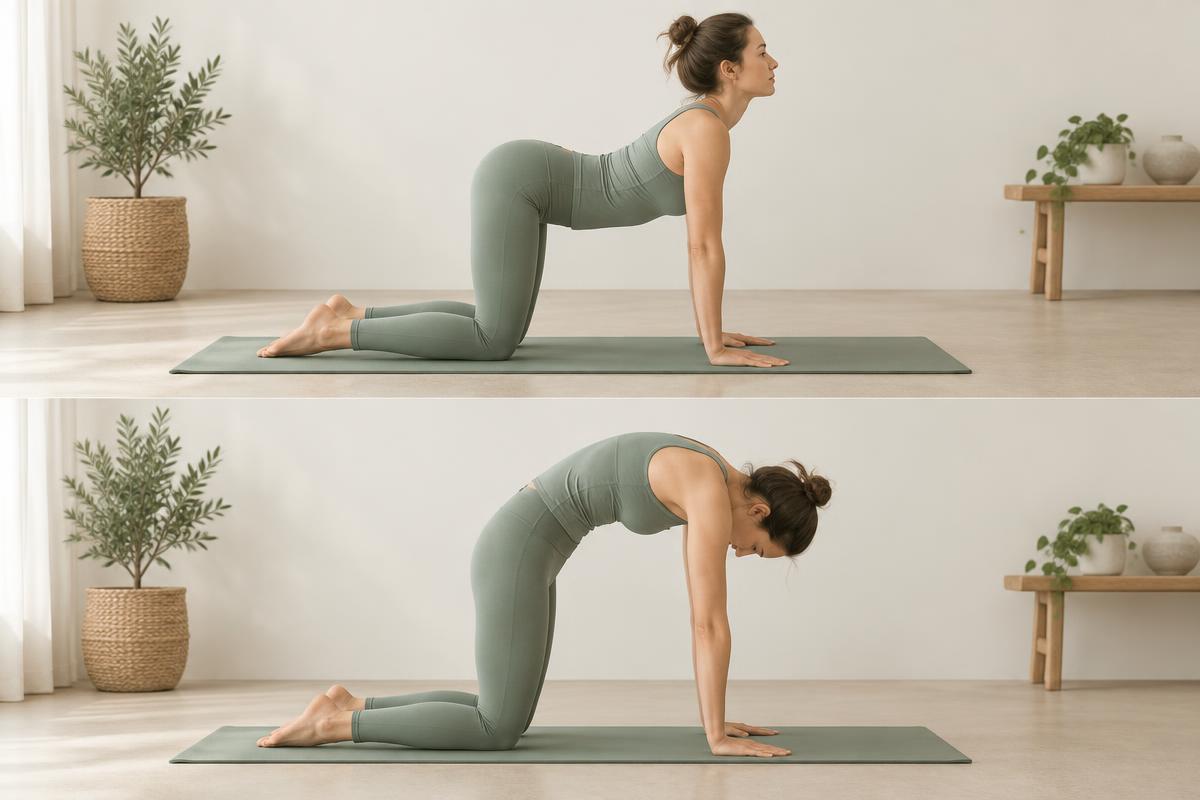
Controlled mobility for the lumbar spine and pelvis.
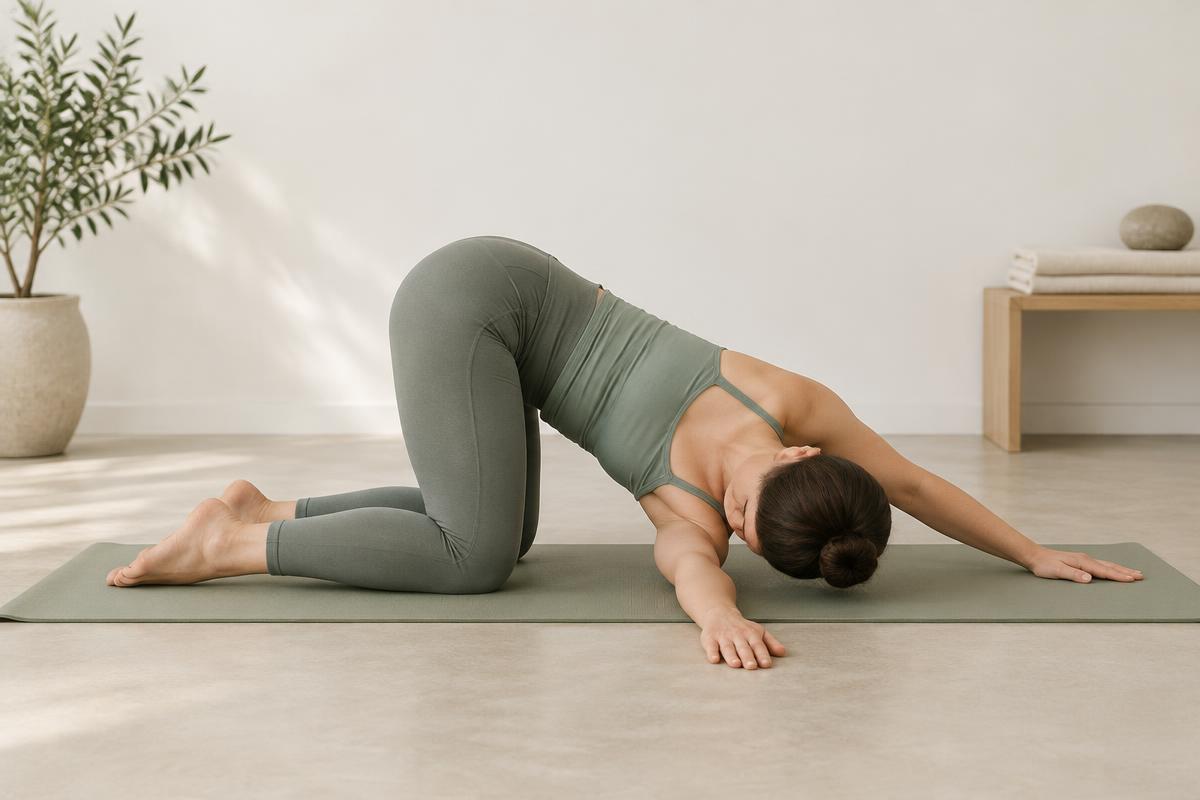
Gentle rotation for the thoracic spine, shoulders and upper back.
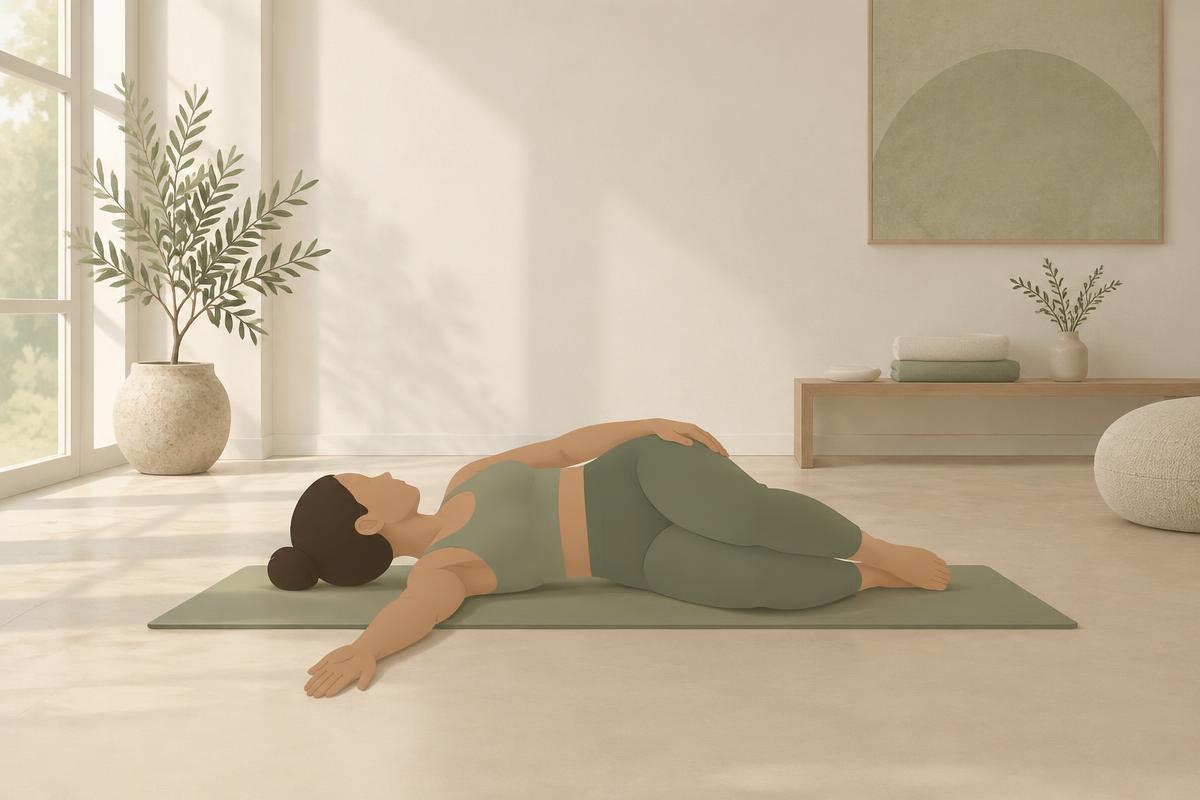
Gentle rotation for the thoracic spine and rib cage.
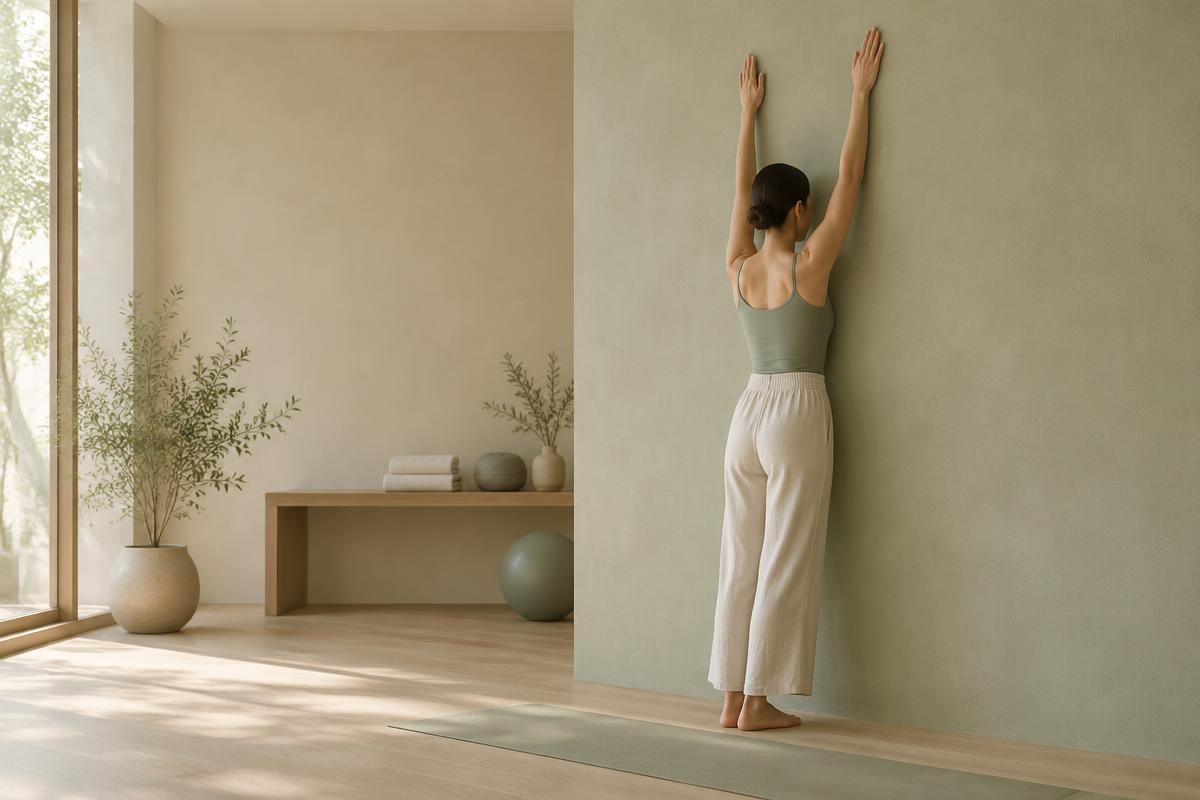
Controlled mobility for the shoulders and upper back.
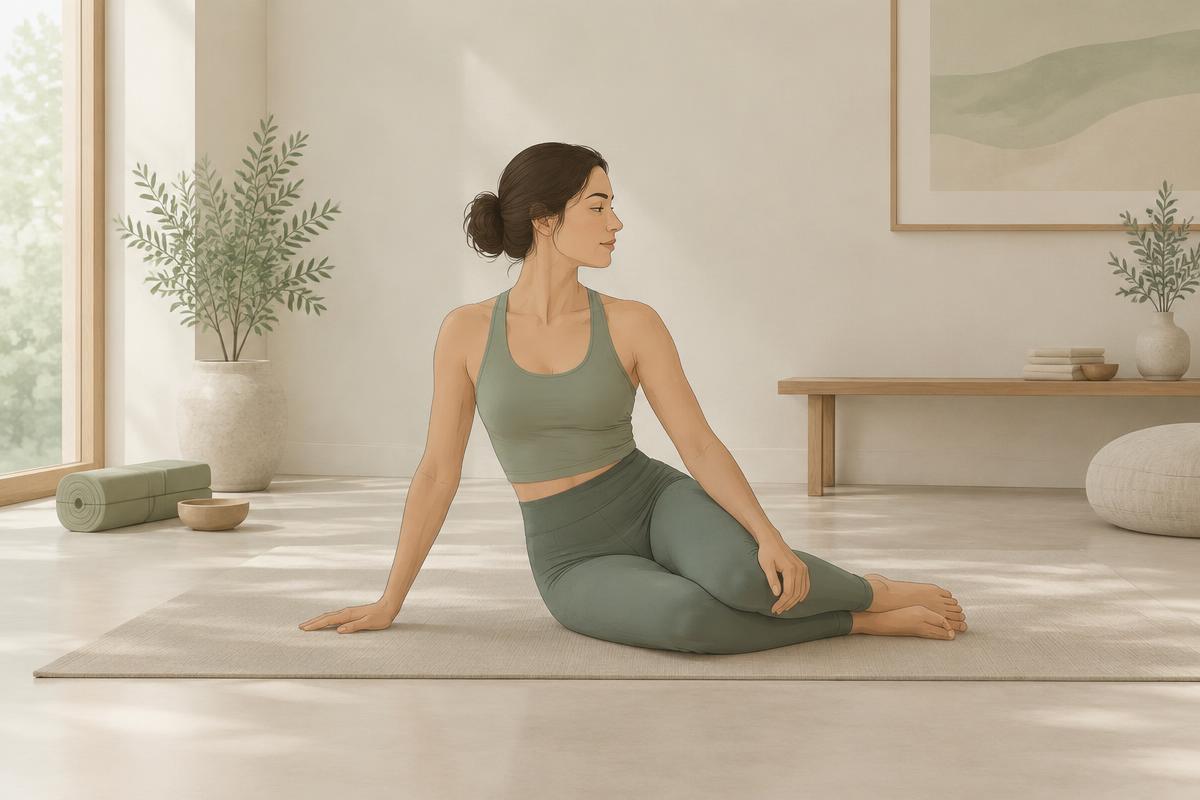
Seated practice for active hip rotation.
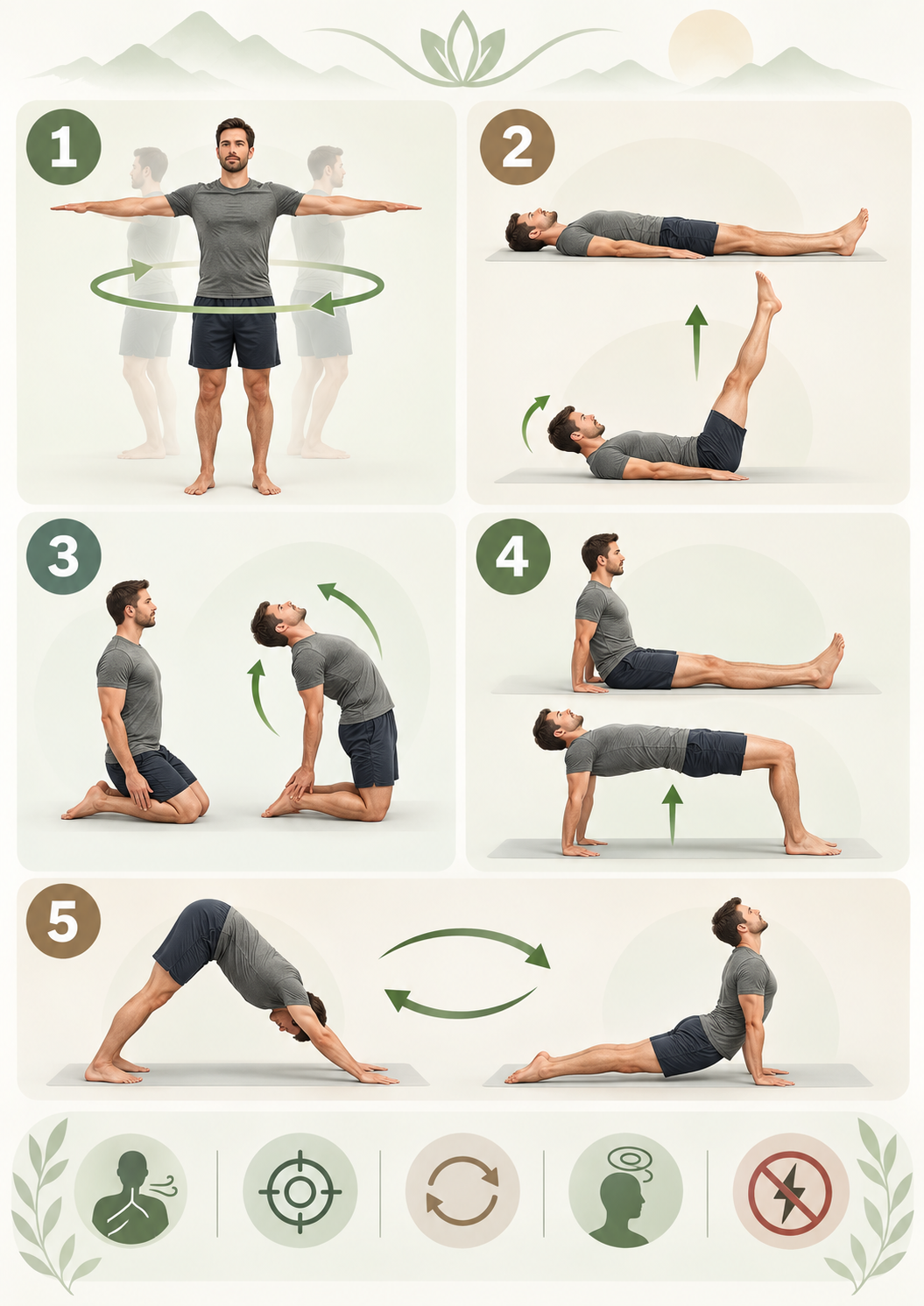
A traditional sequence of five dynamic exercises for mobility, coordination and general physical activation. Move calmly, without jerking or feeling compelled to reach 21 repetitions.
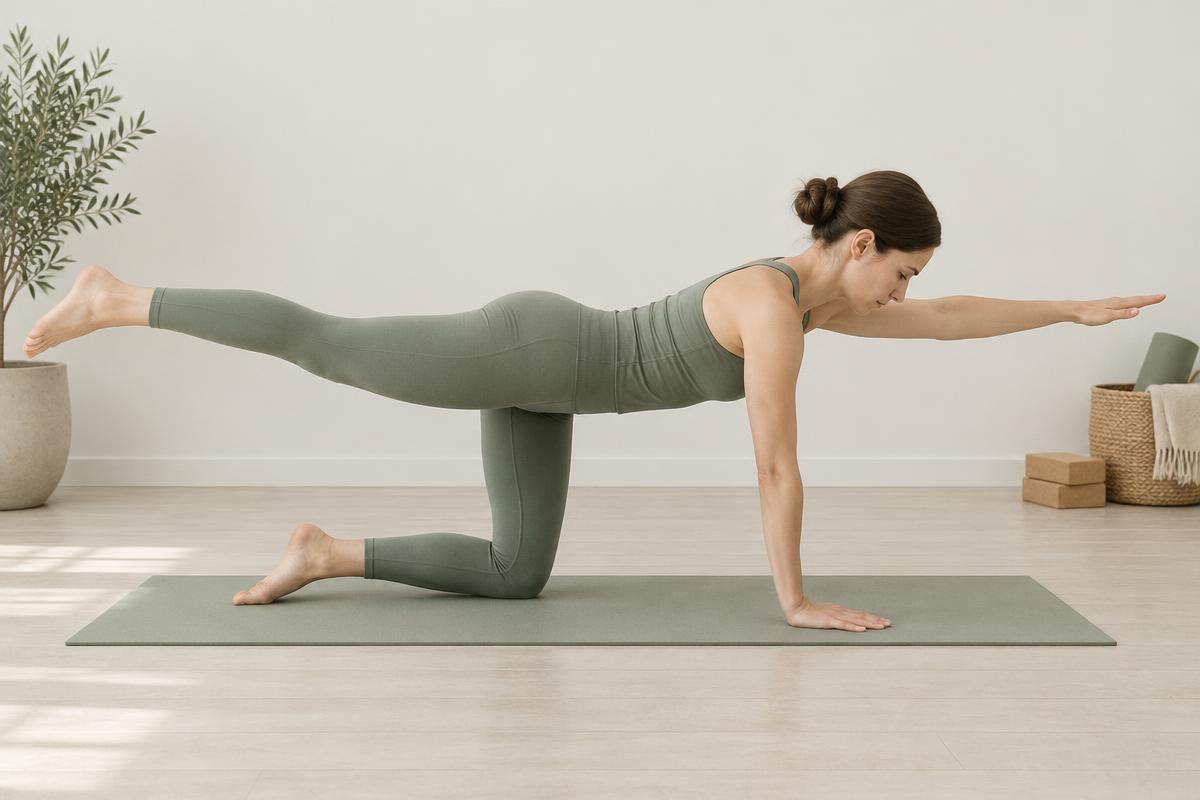
Stability and coordination for the trunk, pelvis and spine.
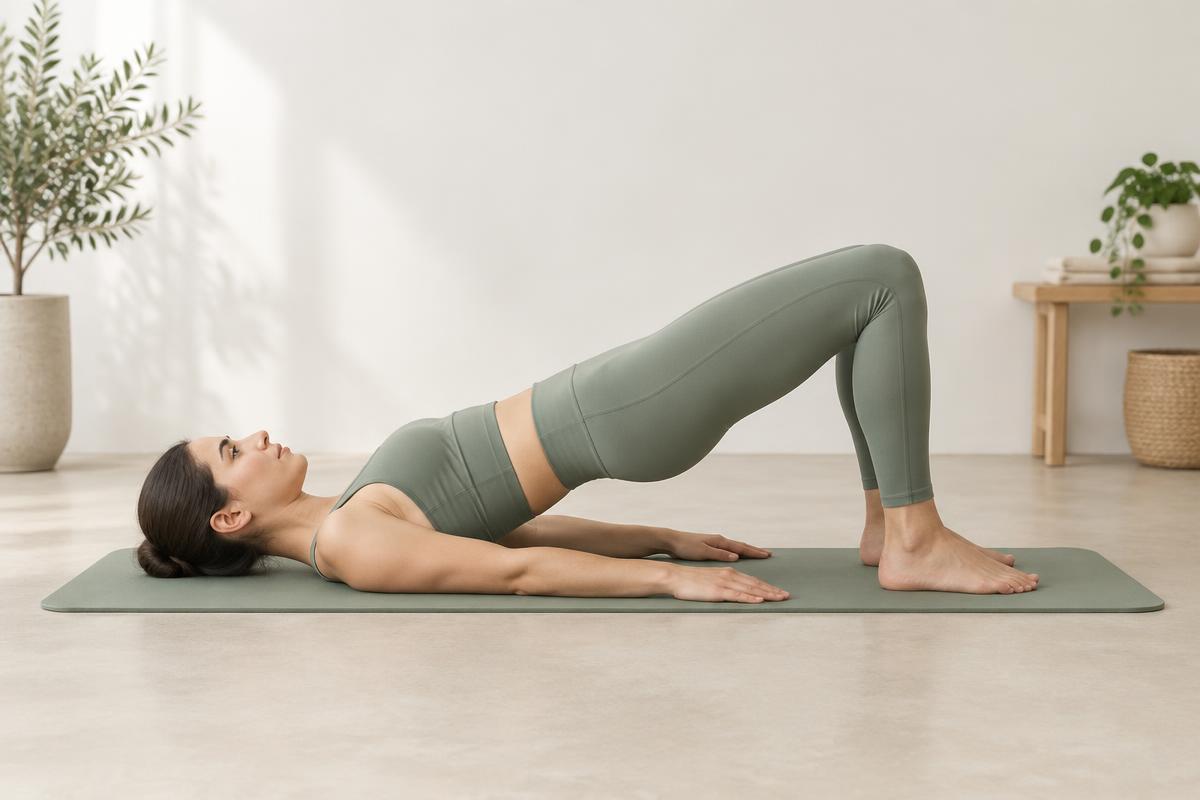
Strength for the glutes and stability for the pelvis.
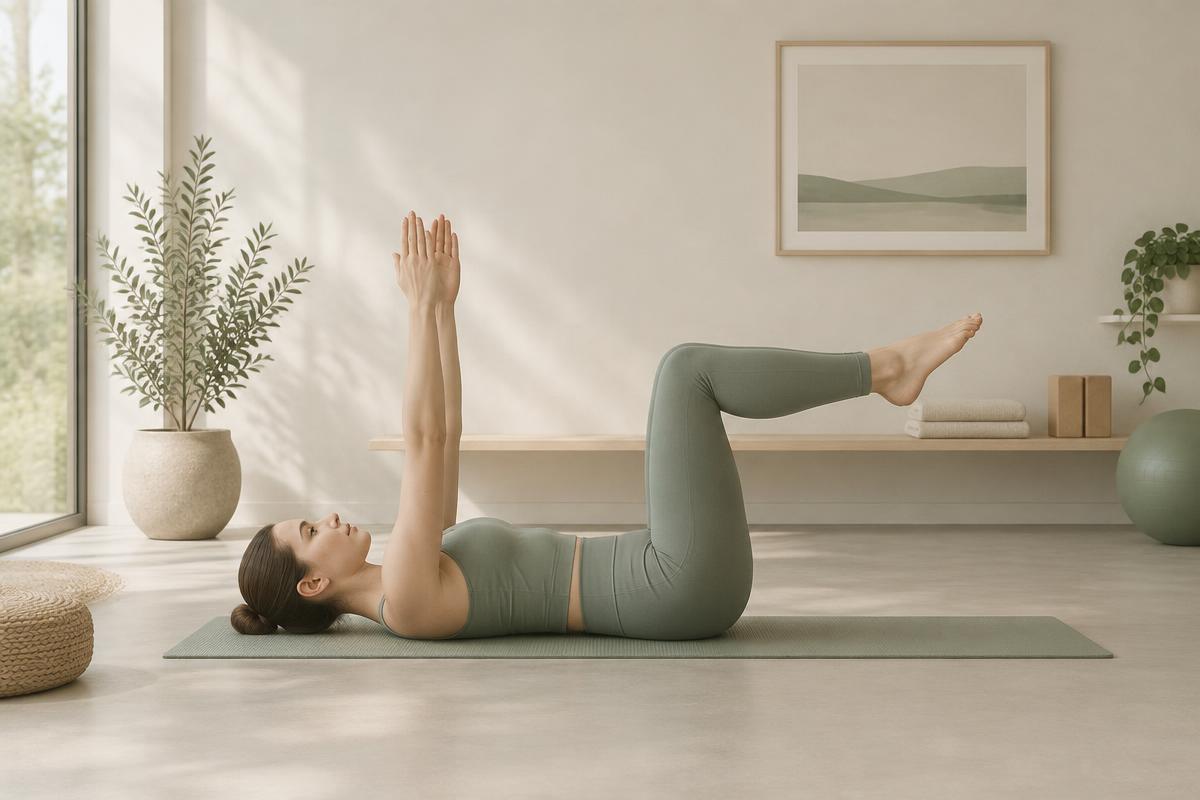
Core control while the arms and legs move.
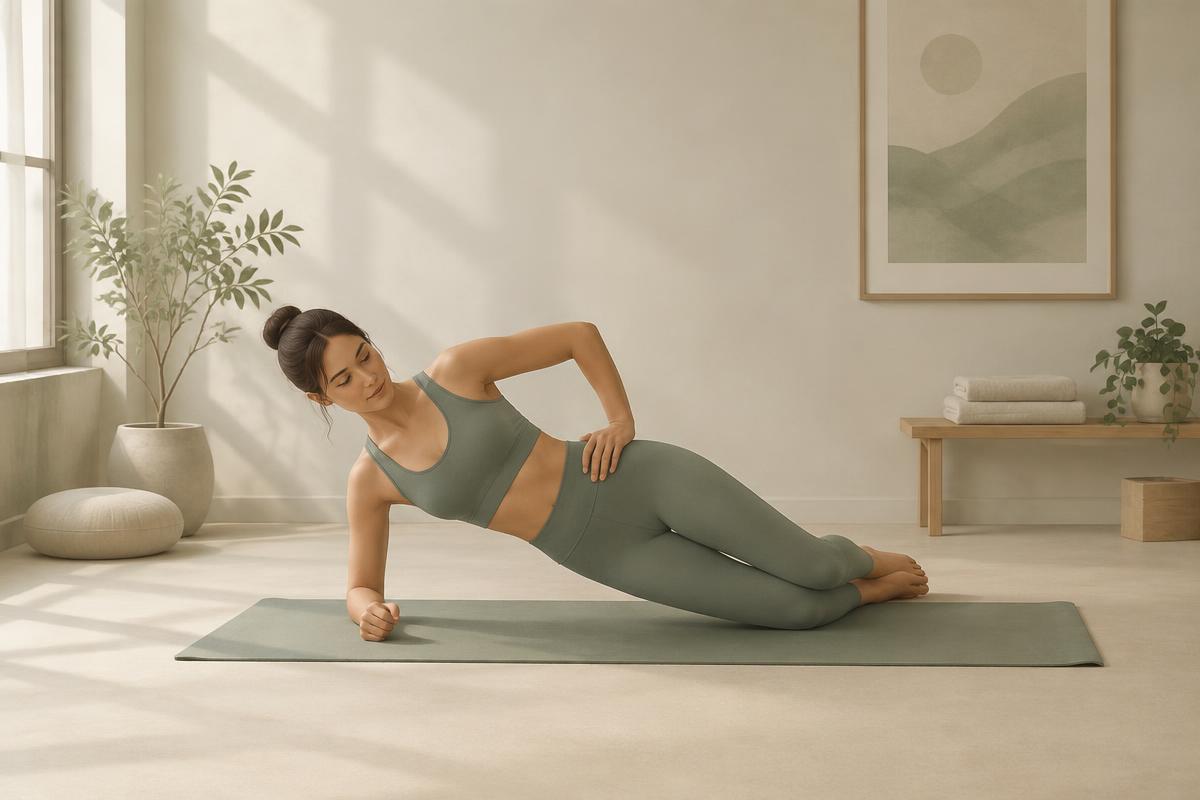
Strength for the lateral trunk, glutes and shoulder.
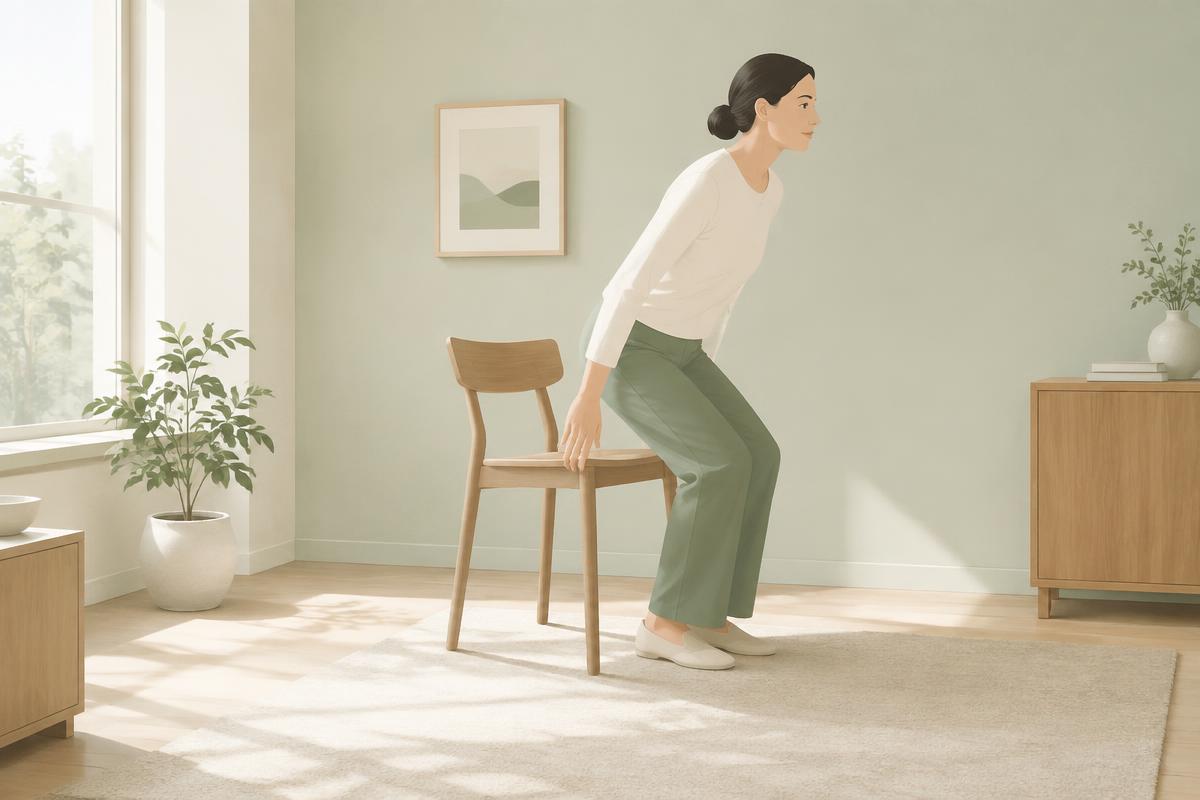
Everyday strength for legs and hips.
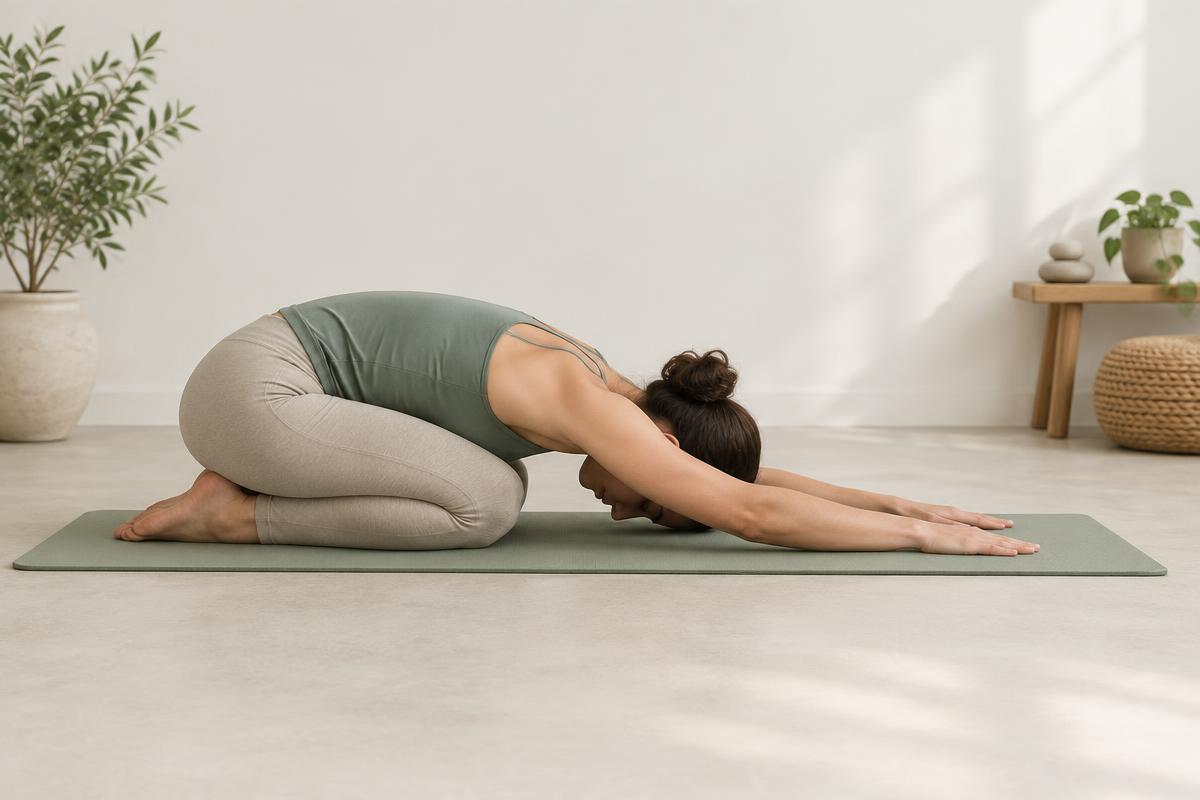
A quiet position for relief and gentle stretching.
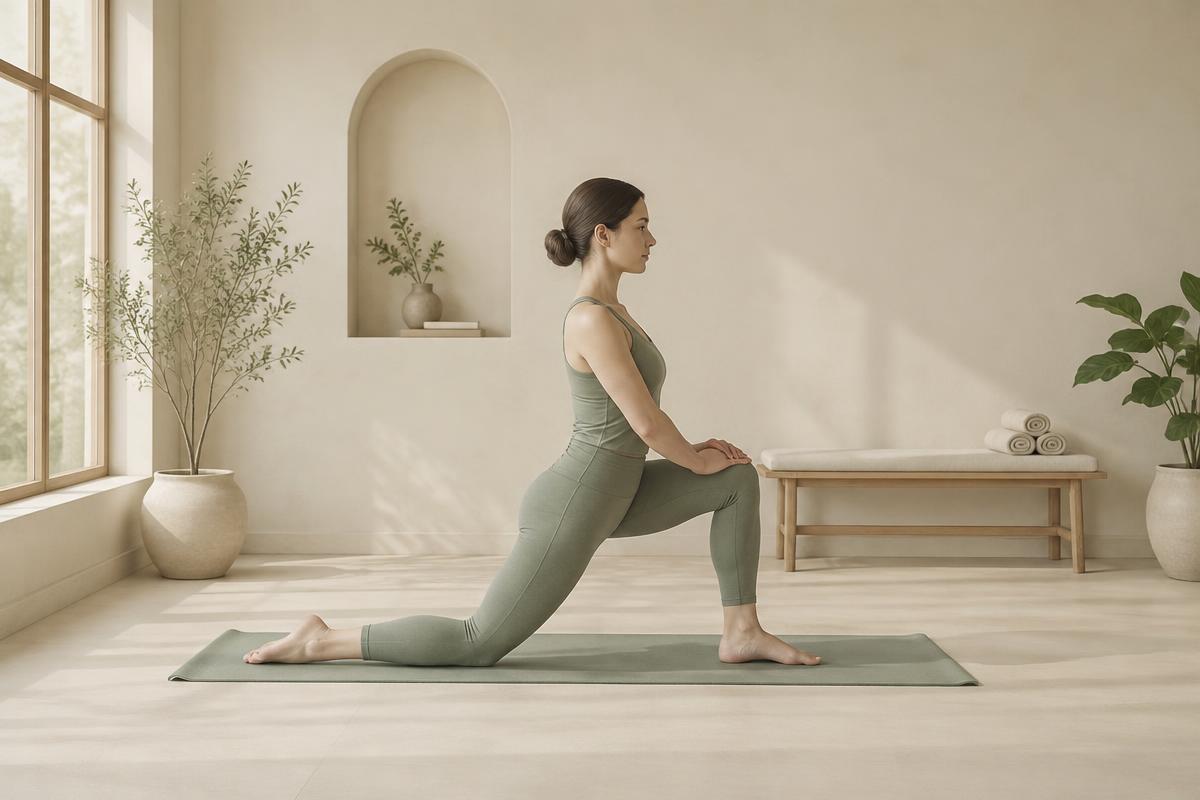
Gentle stretch for the front of the hip.
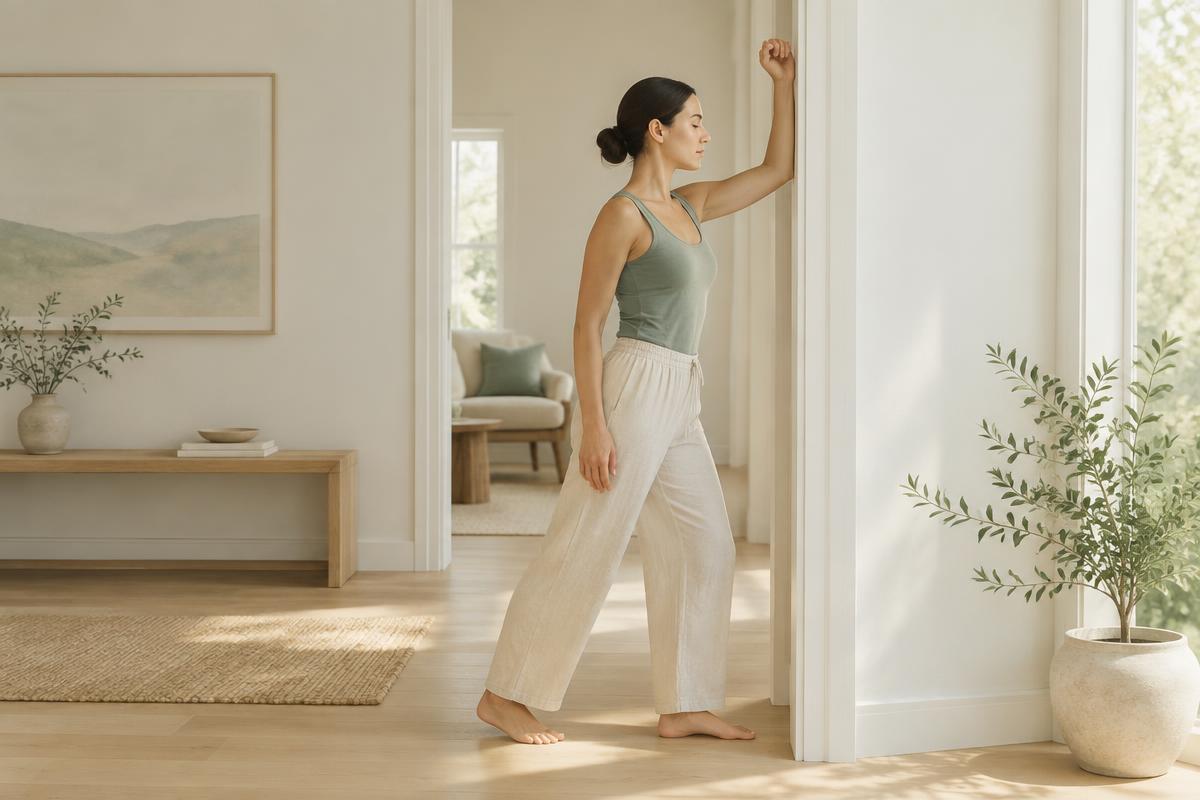
An opening stretch for the chest and front shoulder.
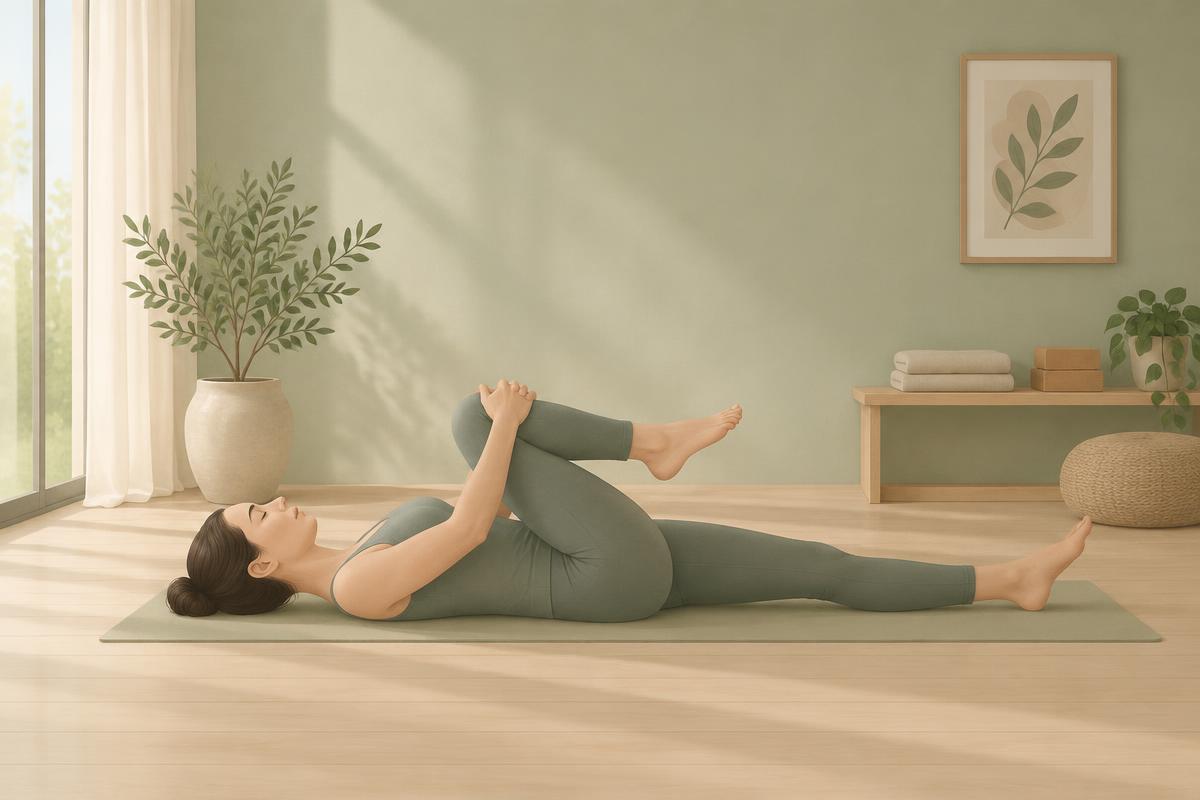
Relieving flexion for the lower back and hip.
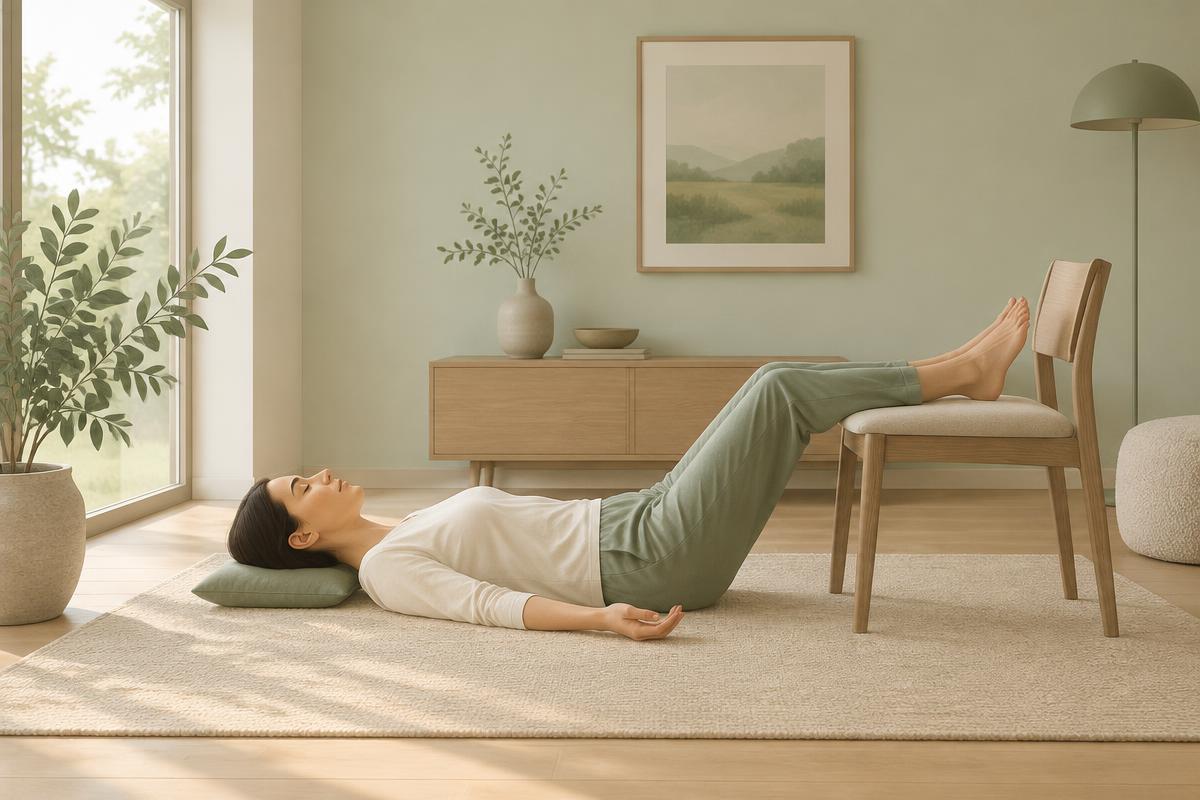
Calm breathing in a supported position.
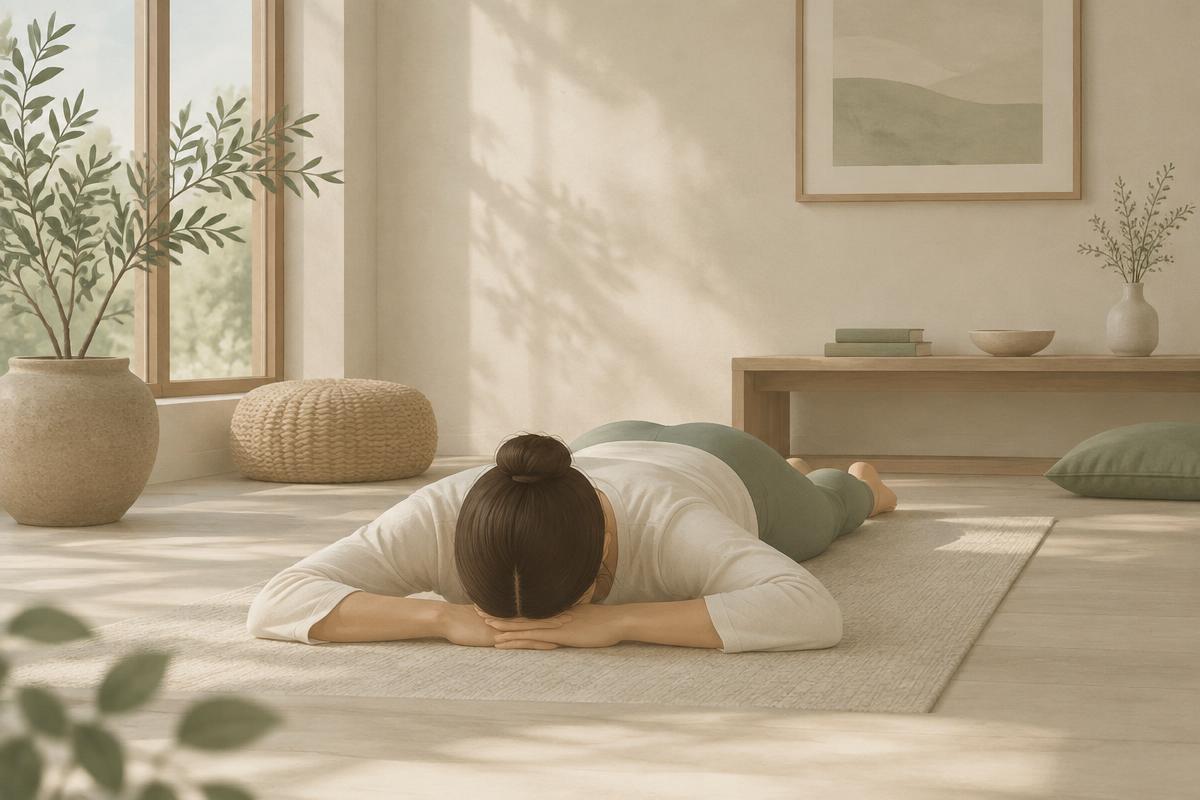
Awareness of breathing into the back and sides.
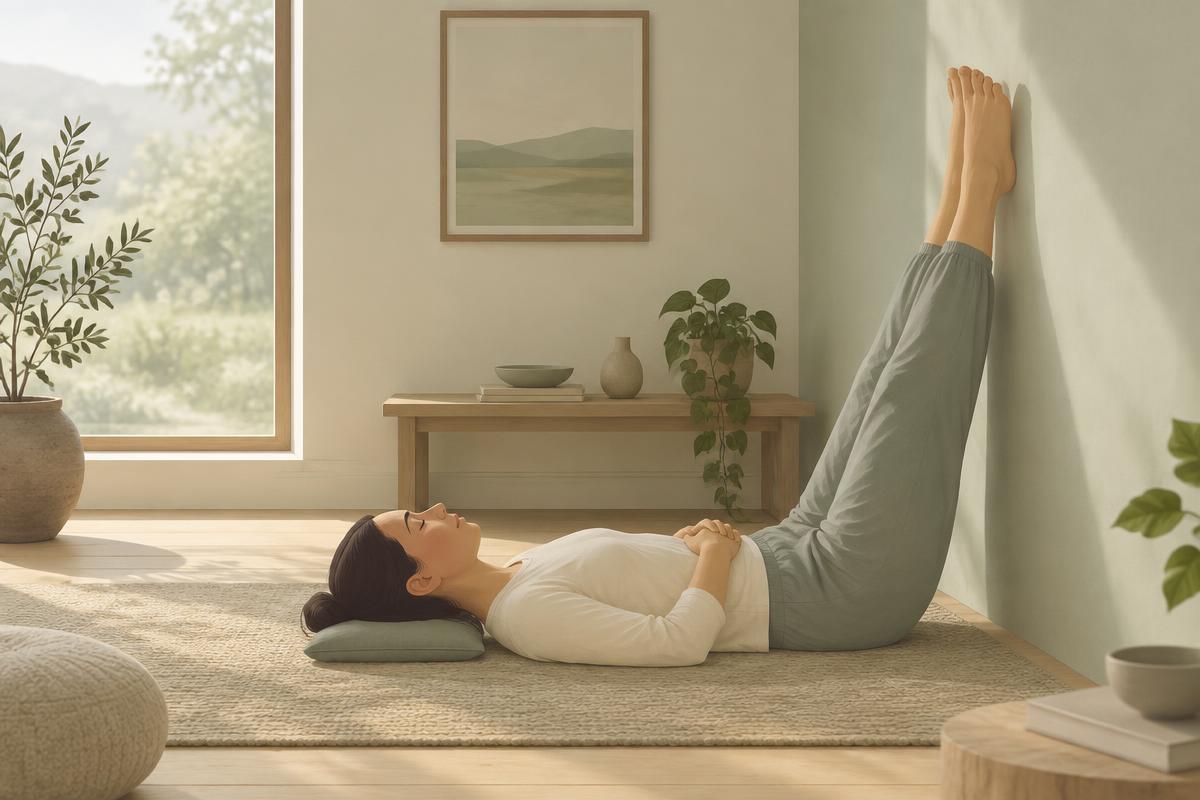
A restful, supported position for recovery.
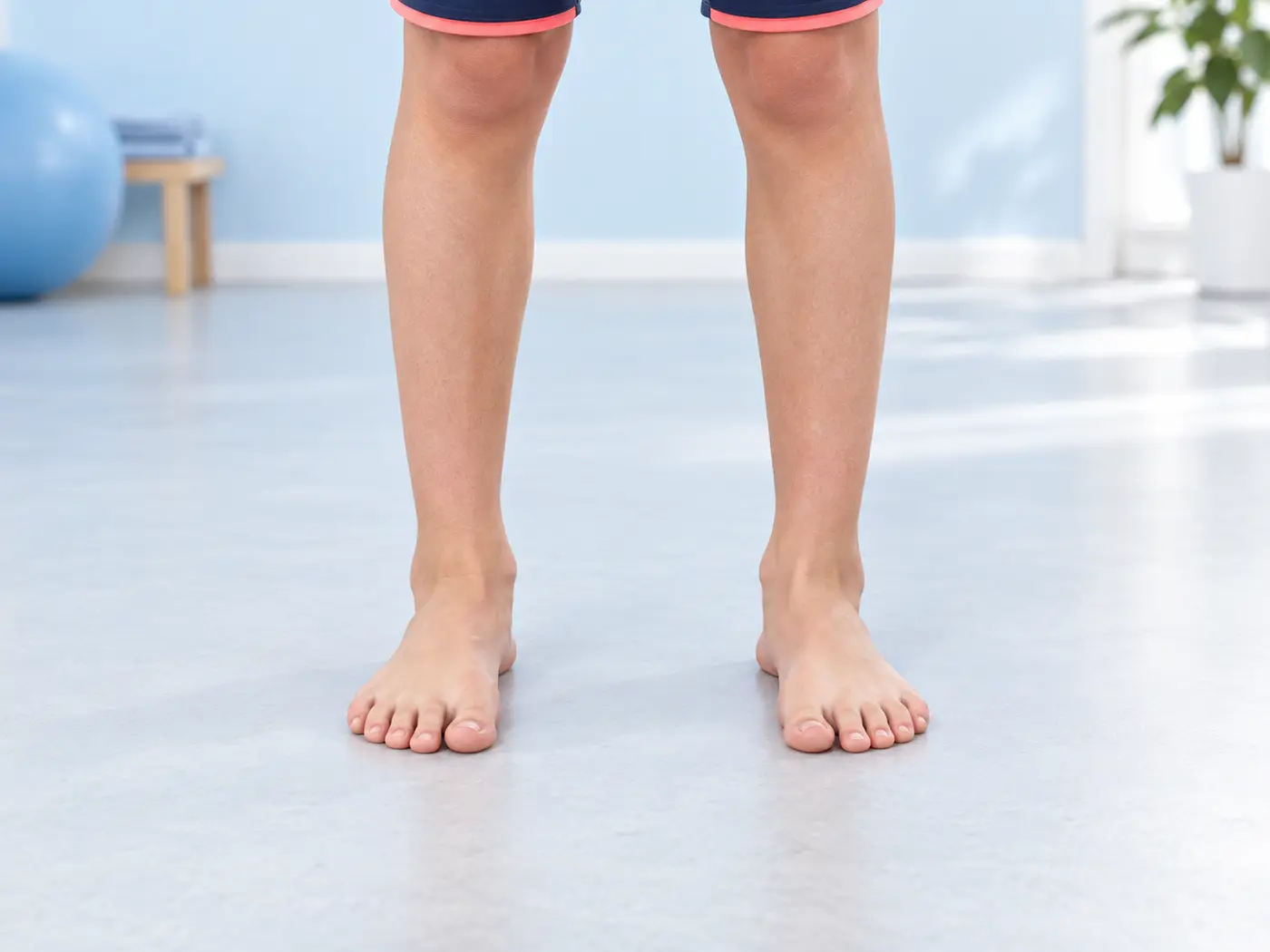
This exercise promotes conscious weight distribution in the foot and can help stabilize the foot arch. It serves as a foundation for many standing exercises.
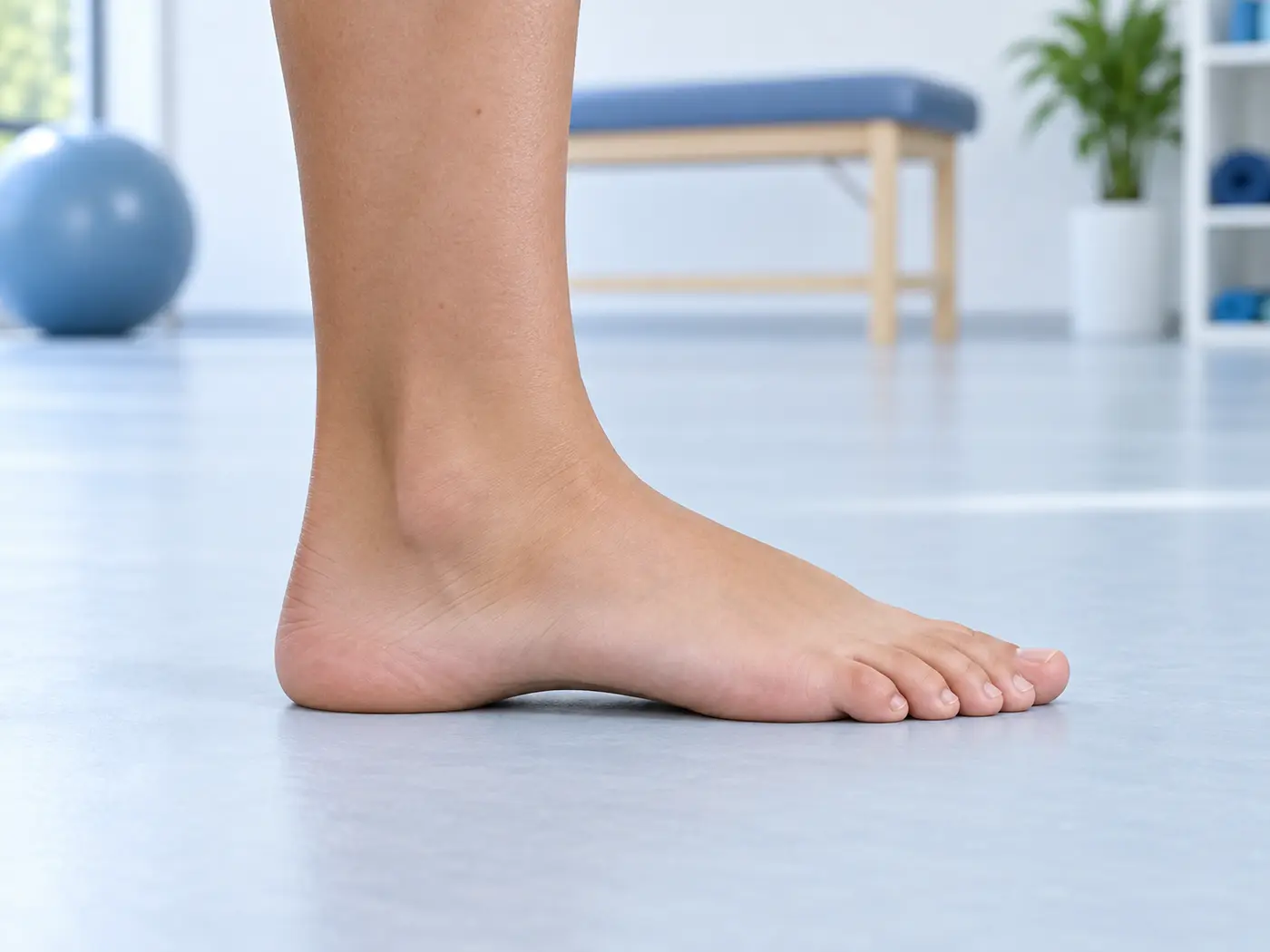
This exercise strengthens the short foot muscles that support the longitudinal arch. This can improve foot stability and be helpful for conditions like flat feet.
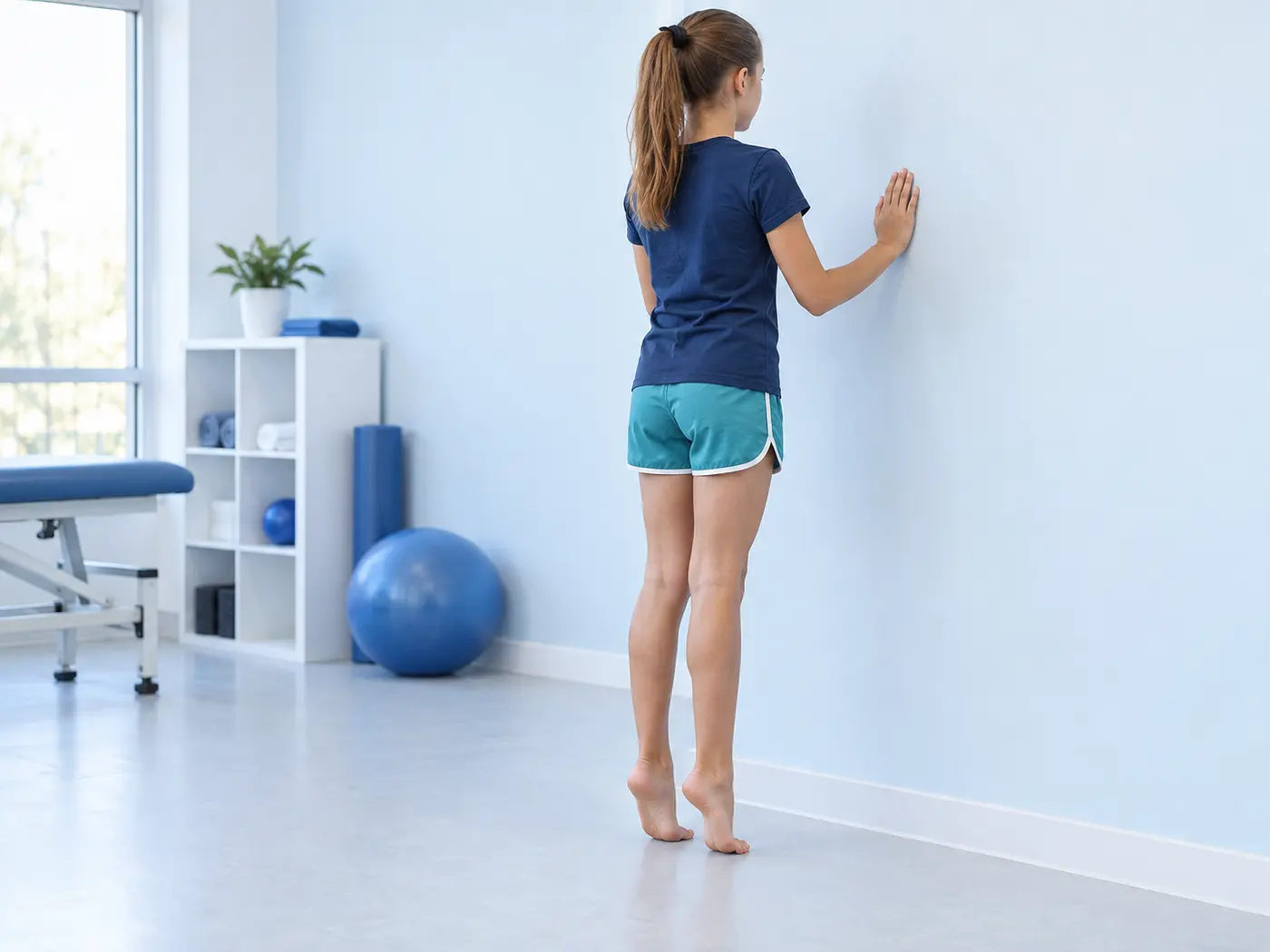
This exercise strengthens the calf muscles and improves ankle stability. Controlling the foot and leg alignment is crucial.
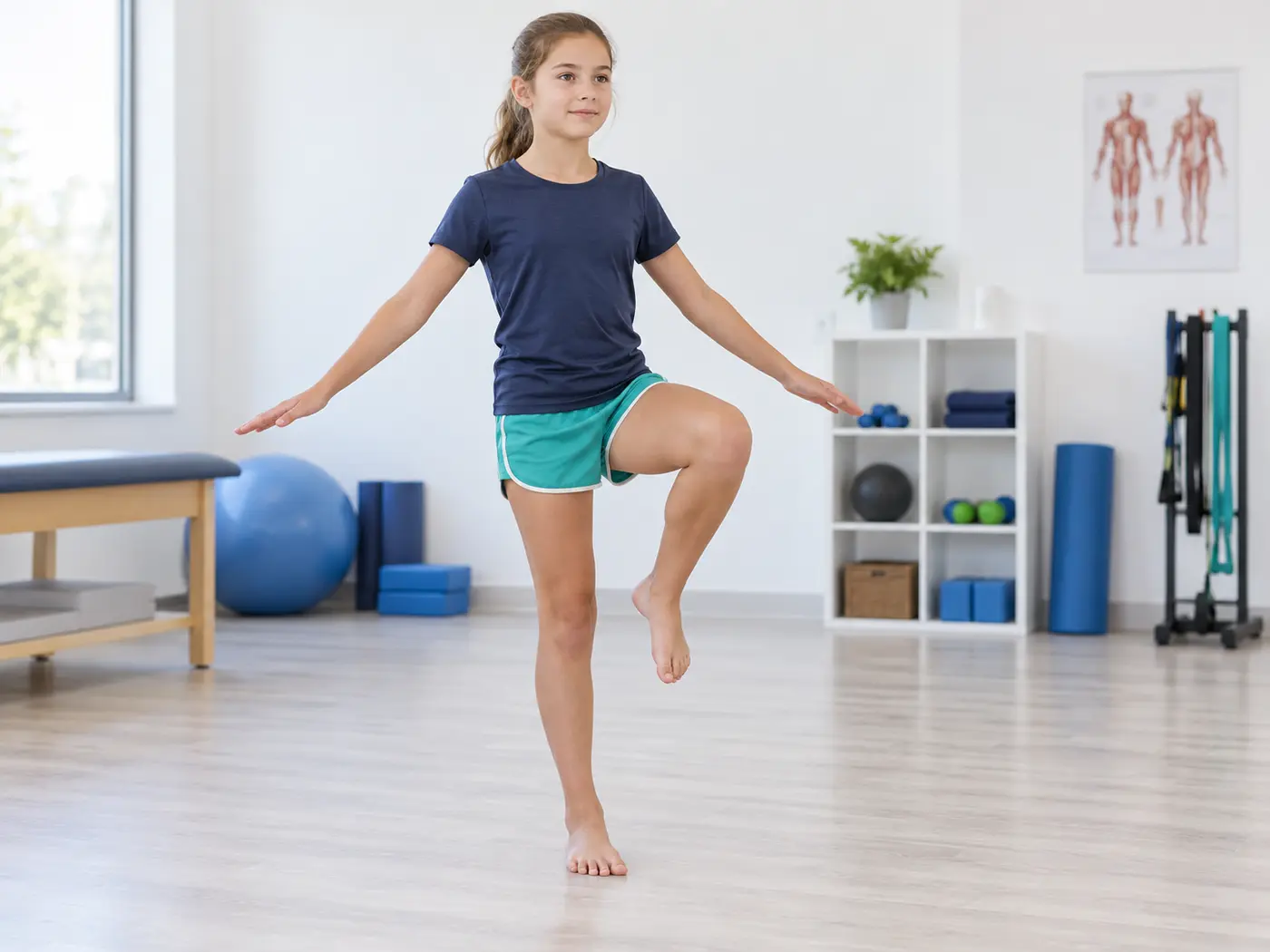
Improves balance and proprioceptive control of the foot, knee, and hip. The main goal is to maintain stable leg alignment.
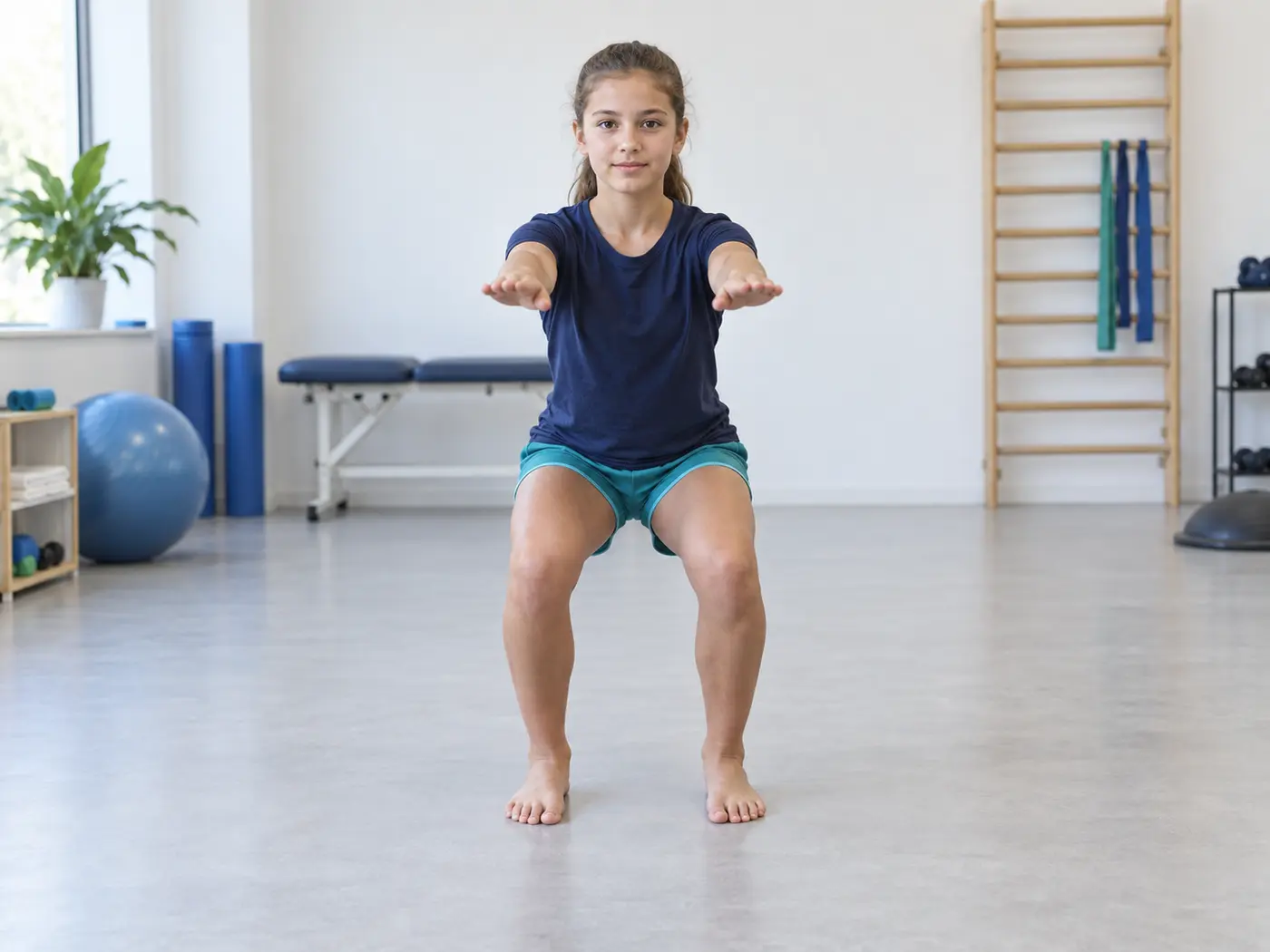
A fundamental strength exercise for the leg and gluteal muscles with a focus on correct knee alignment. It improves functional strength for daily activities.
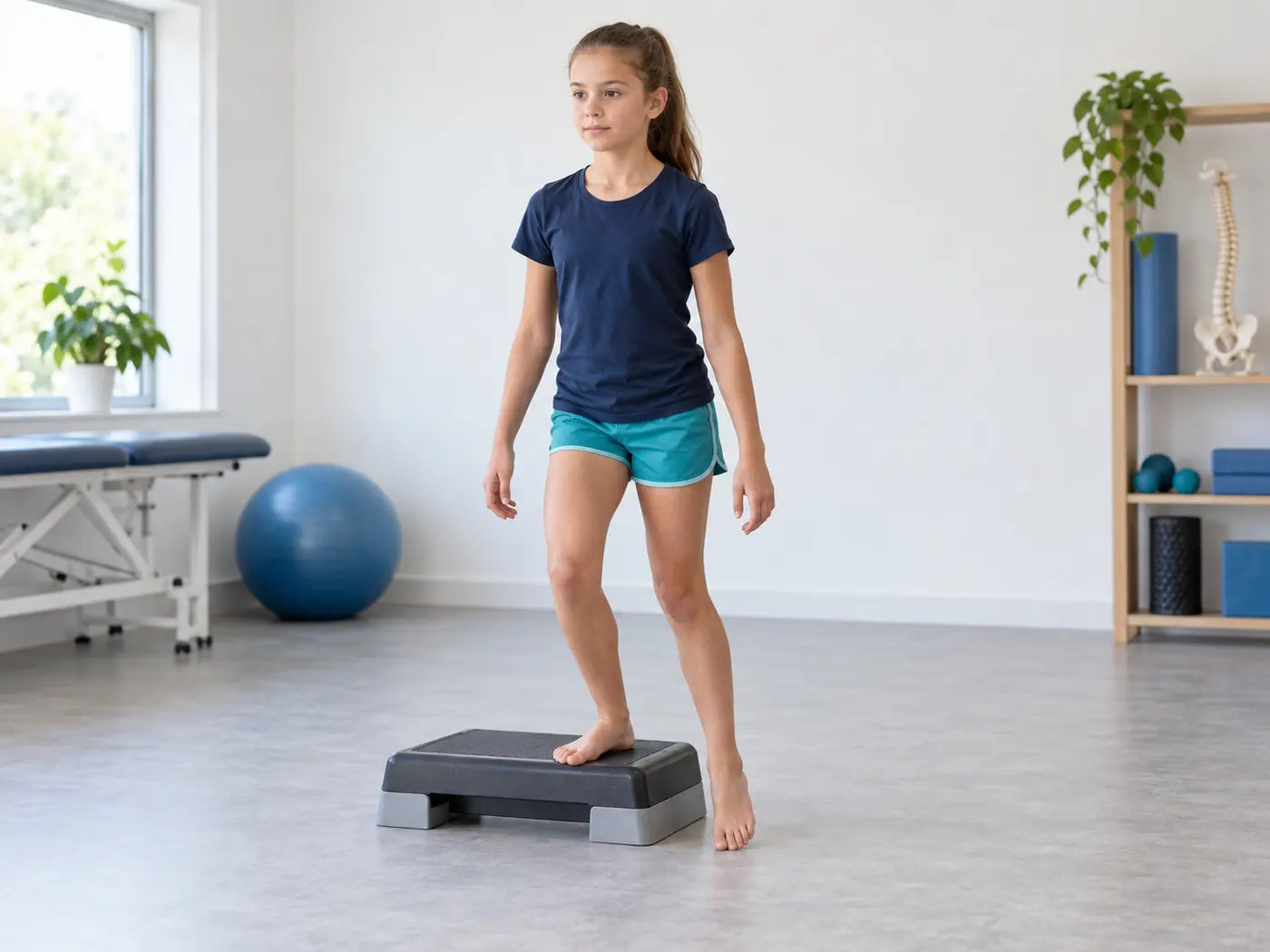
Strengthens the thigh and gluteal muscles and trains control over leg alignment. Especially good for stabilizing the knee.
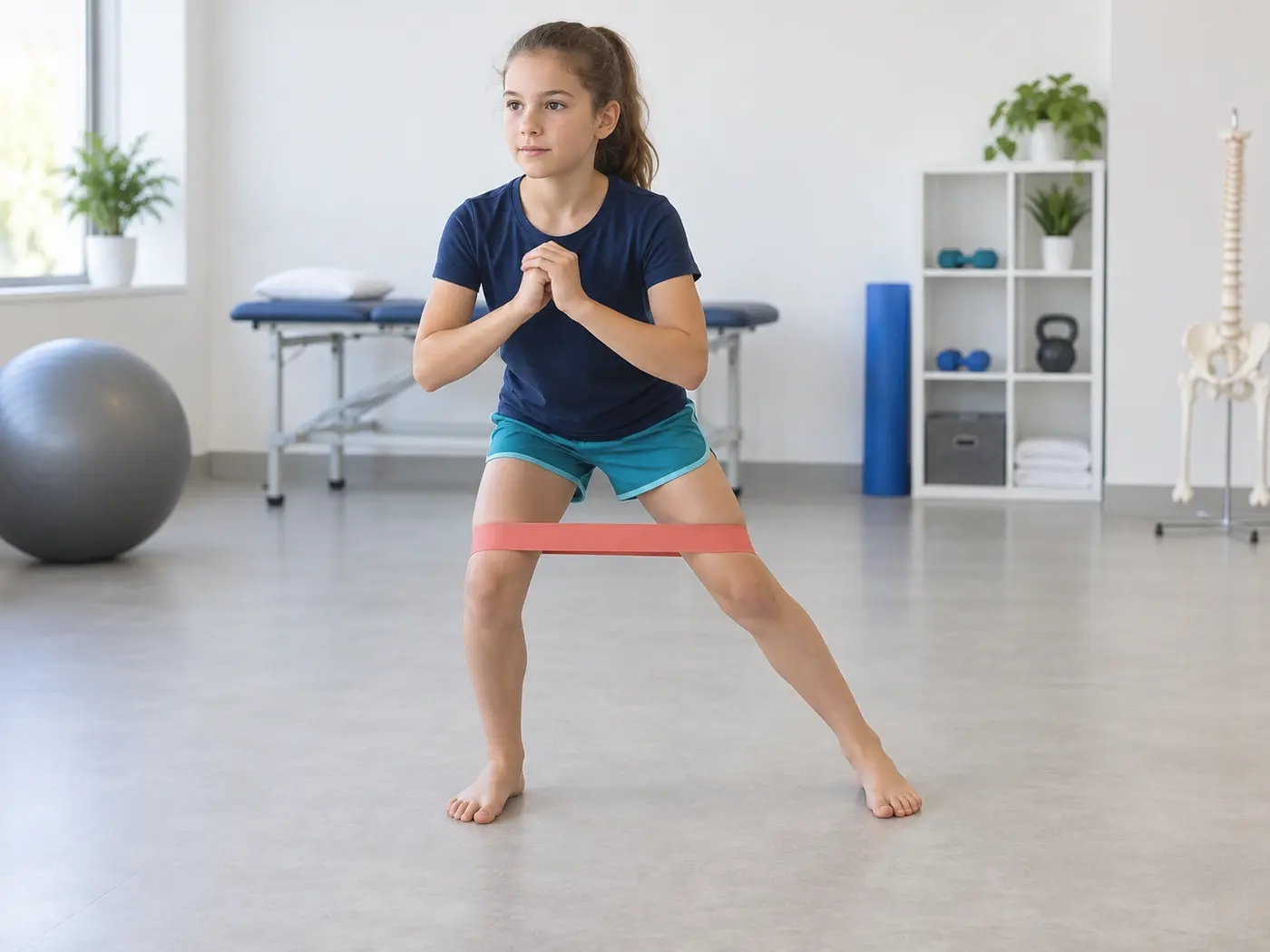
This exercise specifically targets and strengthens the lateral hip muscles (abductors), which helps stabilize the pelvis and knees. It's important for leg alignment control.
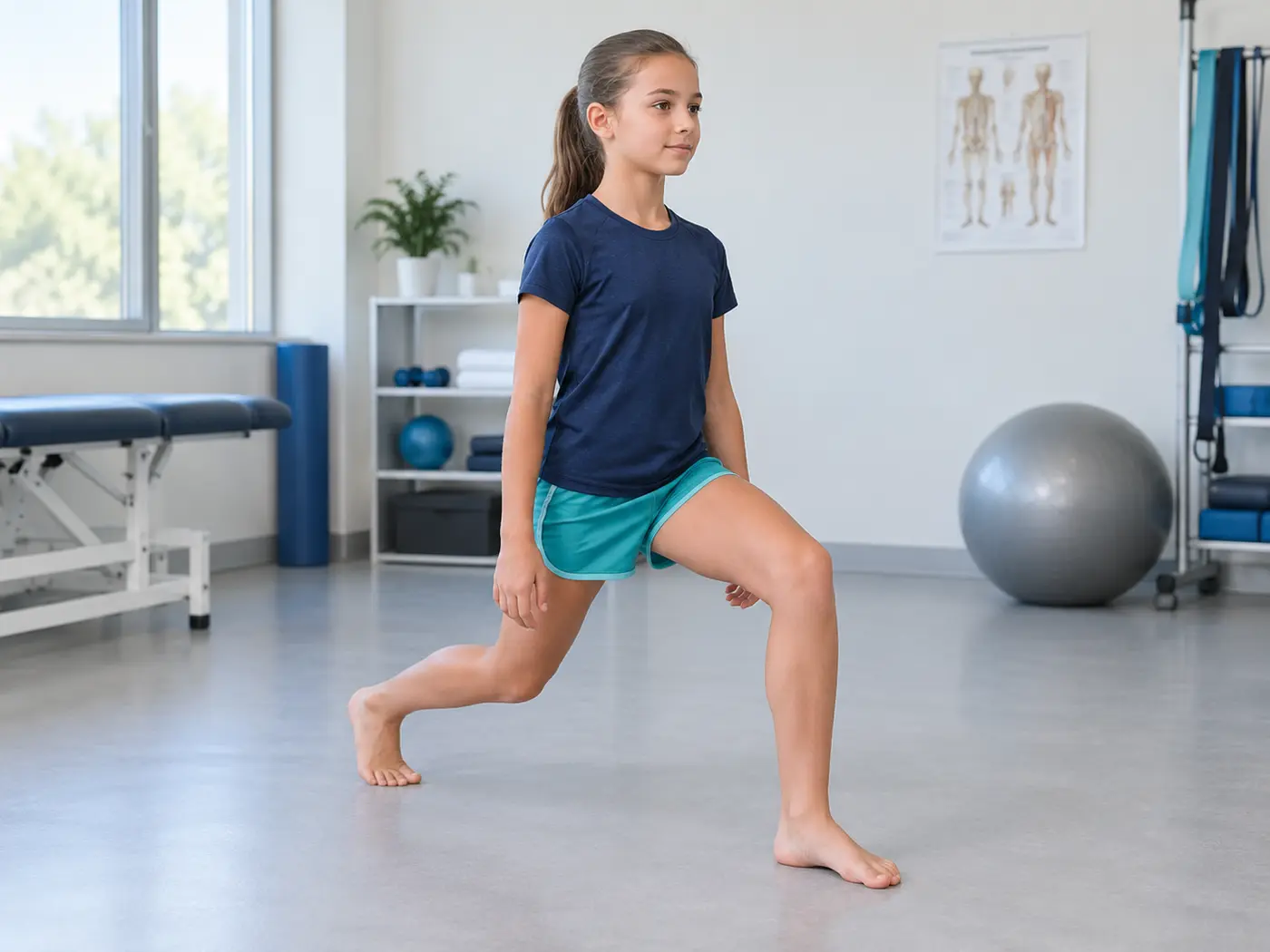
This exercise strengthens the leg and gluteal muscles and improves stability. It is particularly useful for promoting balance and control of the leg axis.
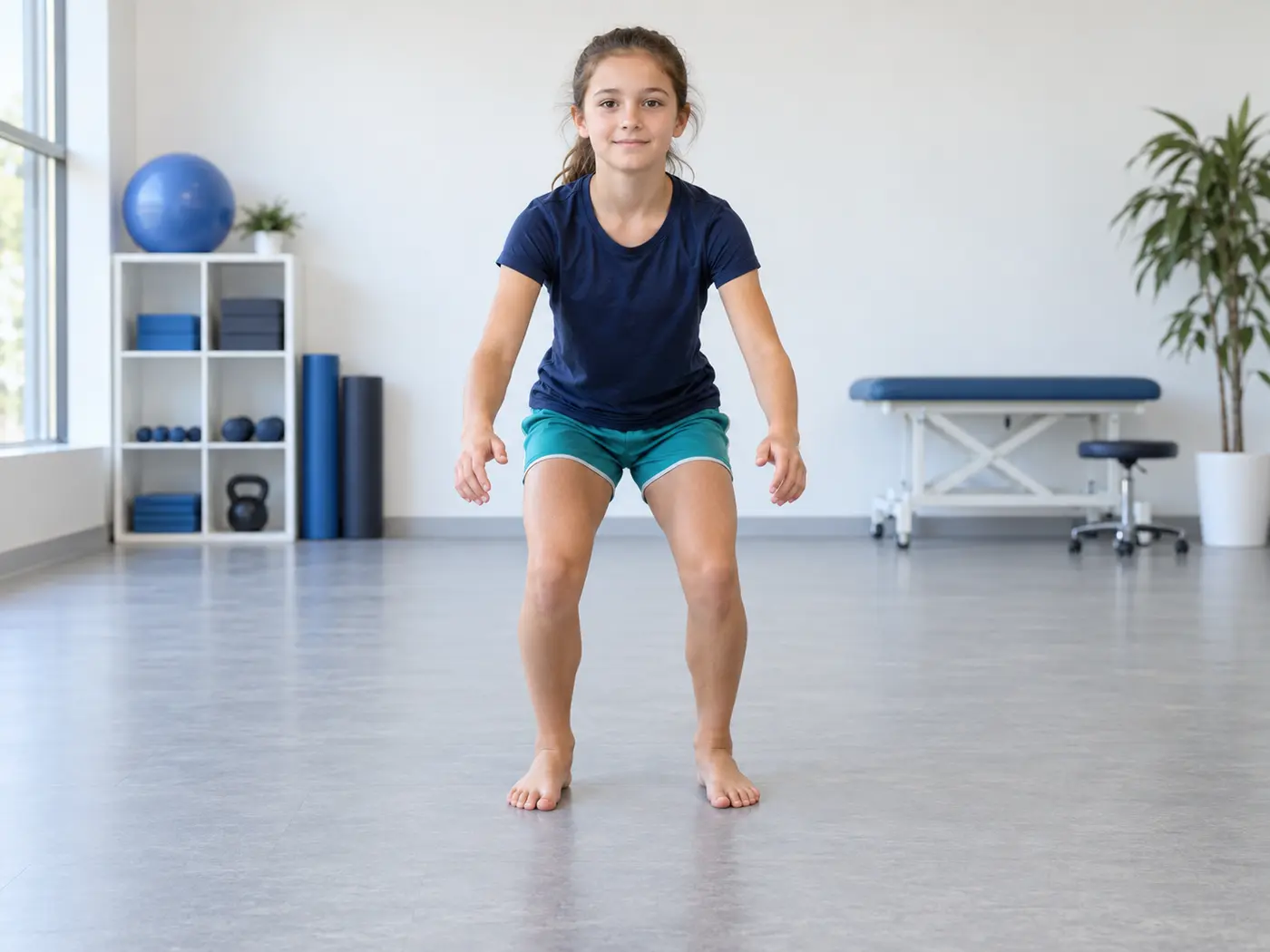
This exercise promotes neuromuscular control and stability of the leg joints during landings. It helps reduce the risk of injury from impact and jumping.
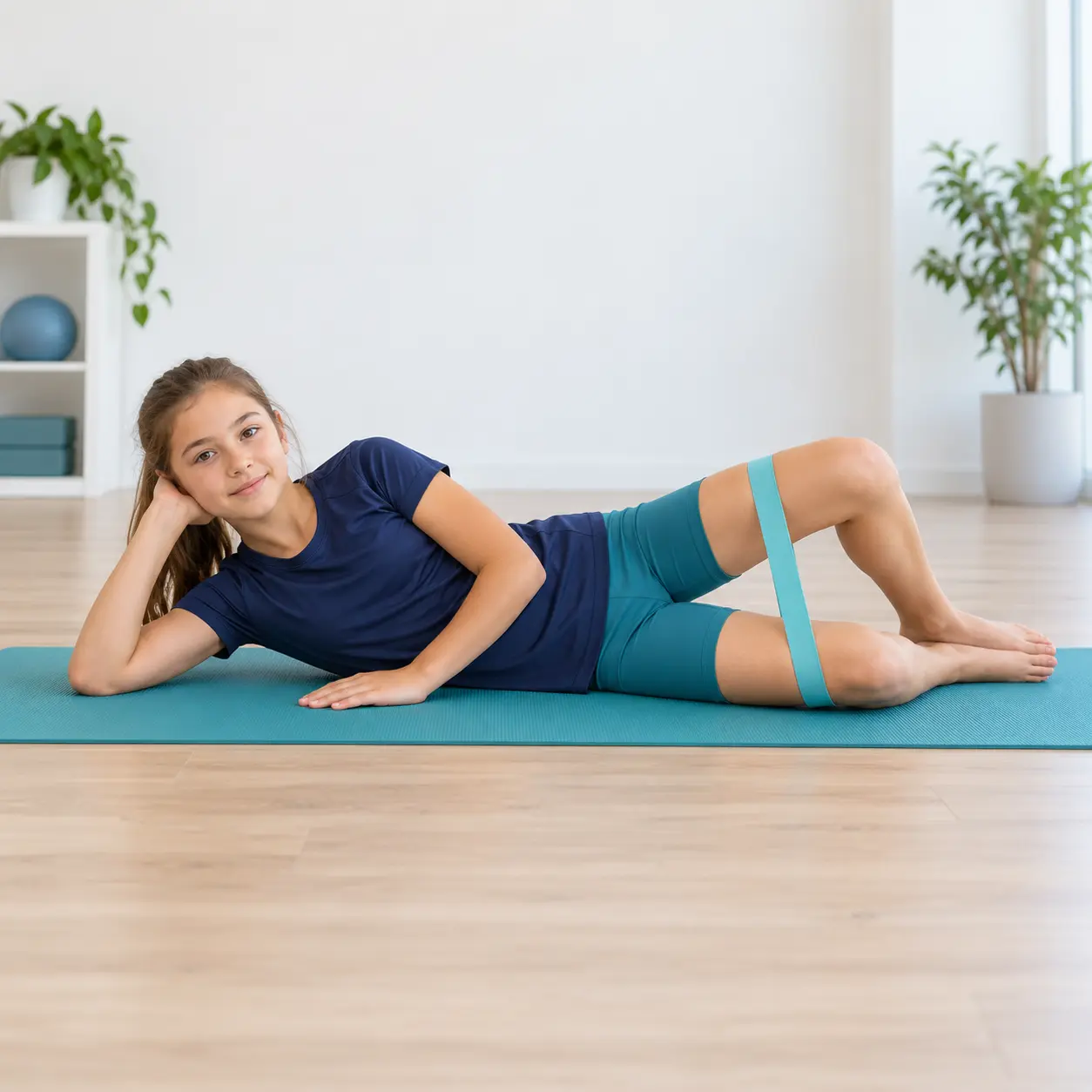
Strengthens the lateral hip and gluteal muscles, especially the gluteus medius. This improves pelvic stability and leg alignment control.
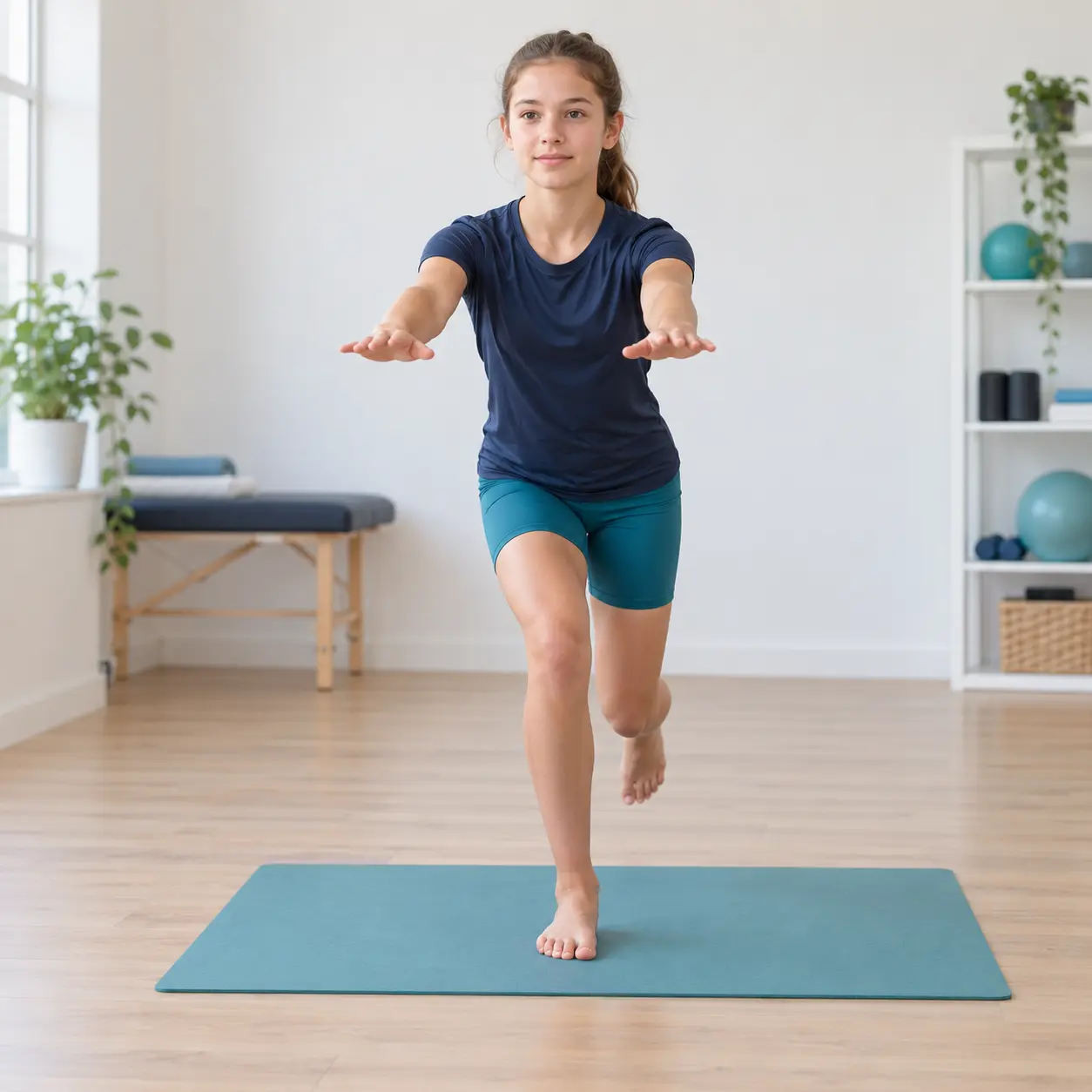
Improves stability and control in the standing leg, from the foot to the hip. It specifically strengthens the leg and gluteal muscles for better balance.
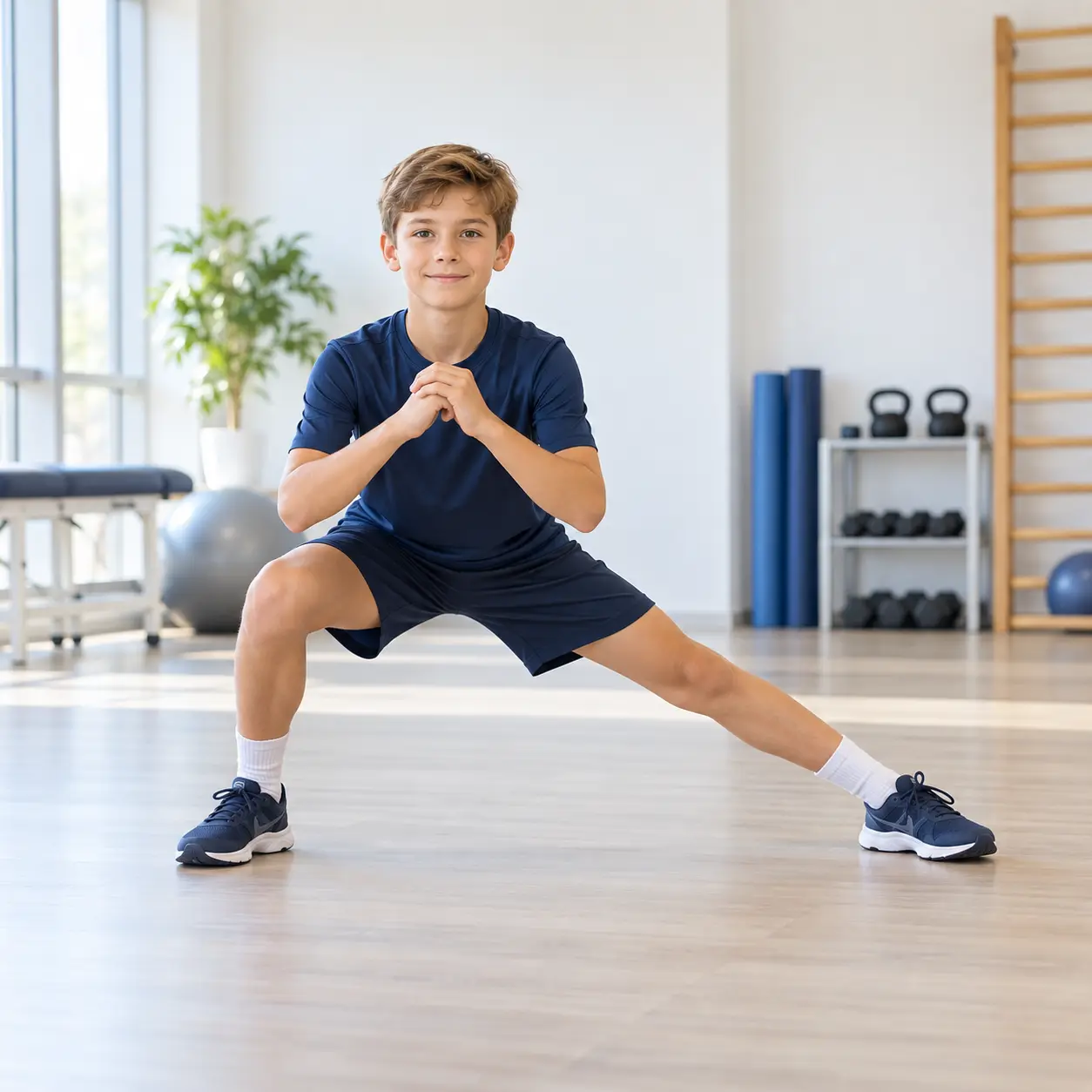
Strengthens the leg and gluteal muscles while stretching the adductors (inner thighs). It improves lateral hip mobility and stability.
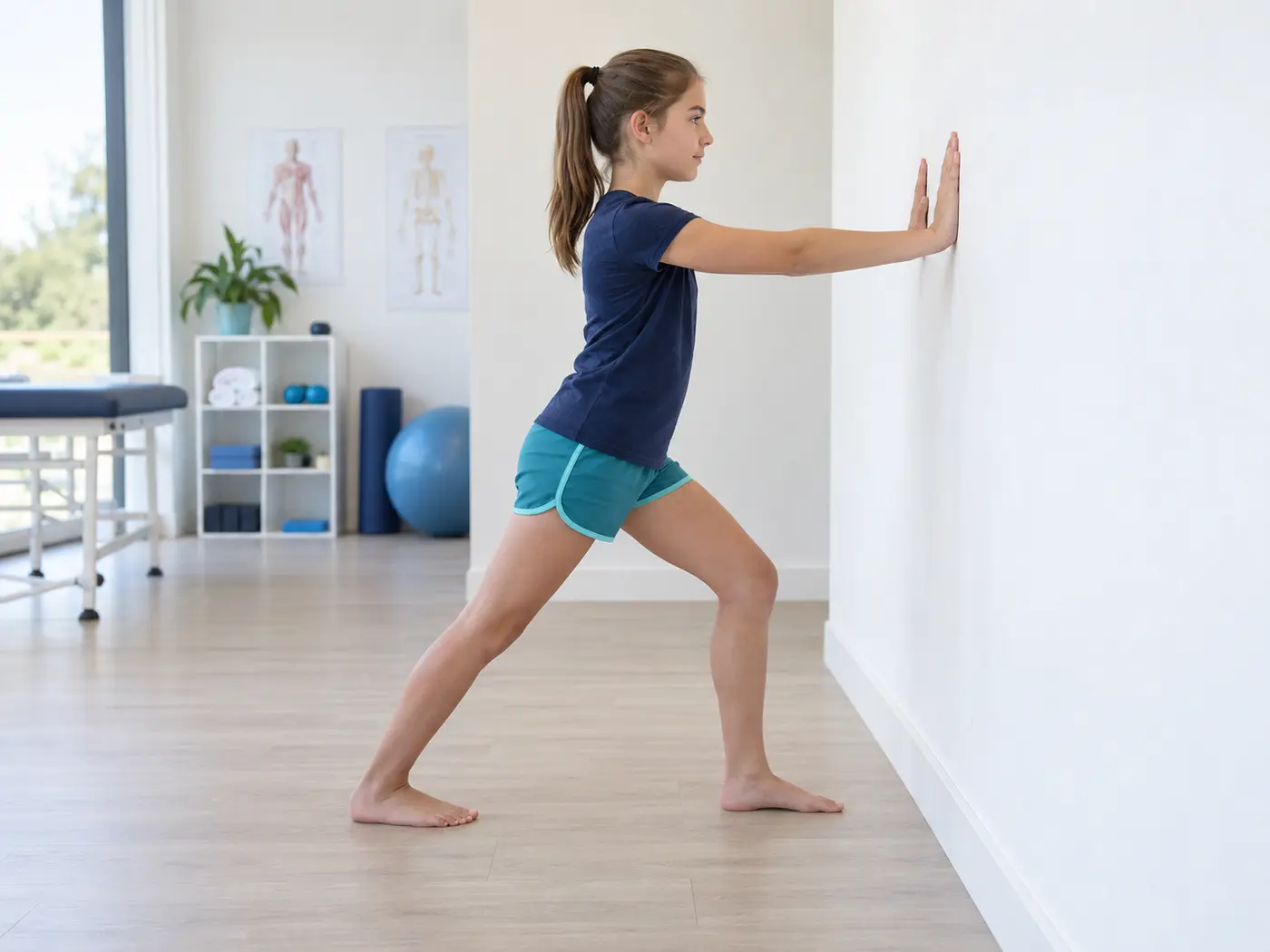
Stretches the calf muscle (gastrocnemius) to improve ankle flexibility. It can help reduce tension in the lower leg.
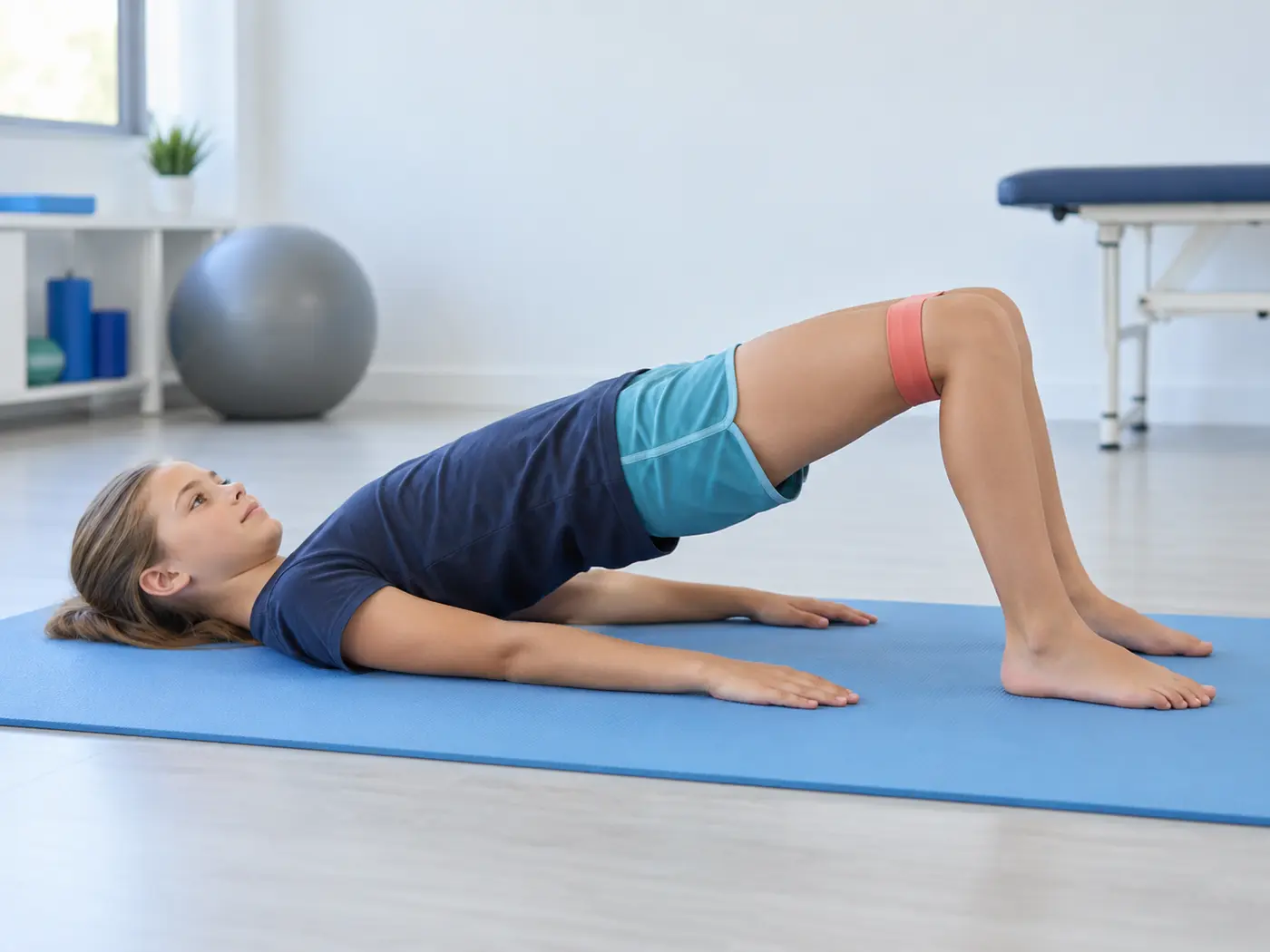
This variation of the glute bridge also strengthens the lateral gluteal muscles and improves knee stability.
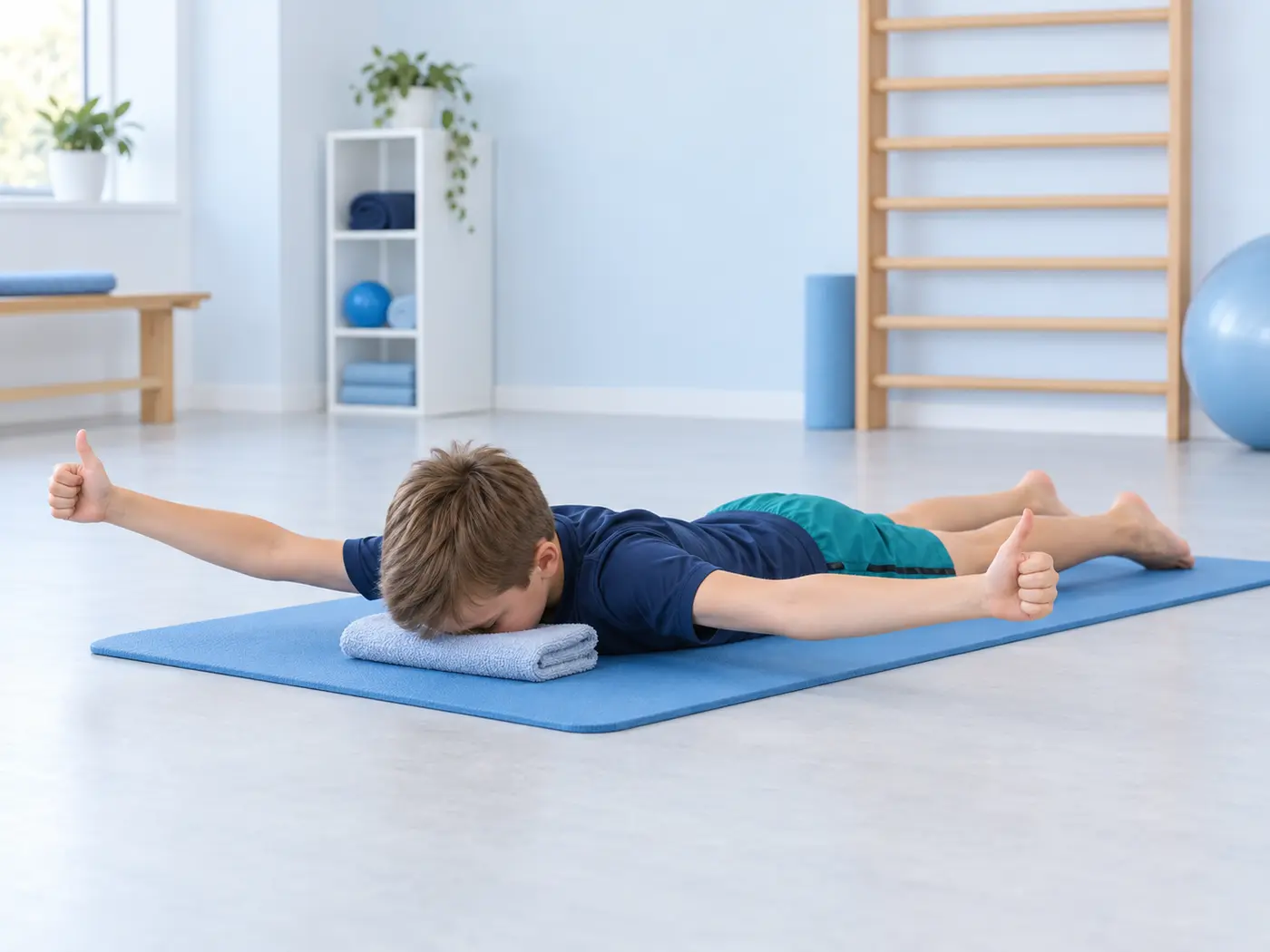
Strengthens the muscles of the upper back and shoulders, particularly the lower trapezius. Can contribute to improving posture.
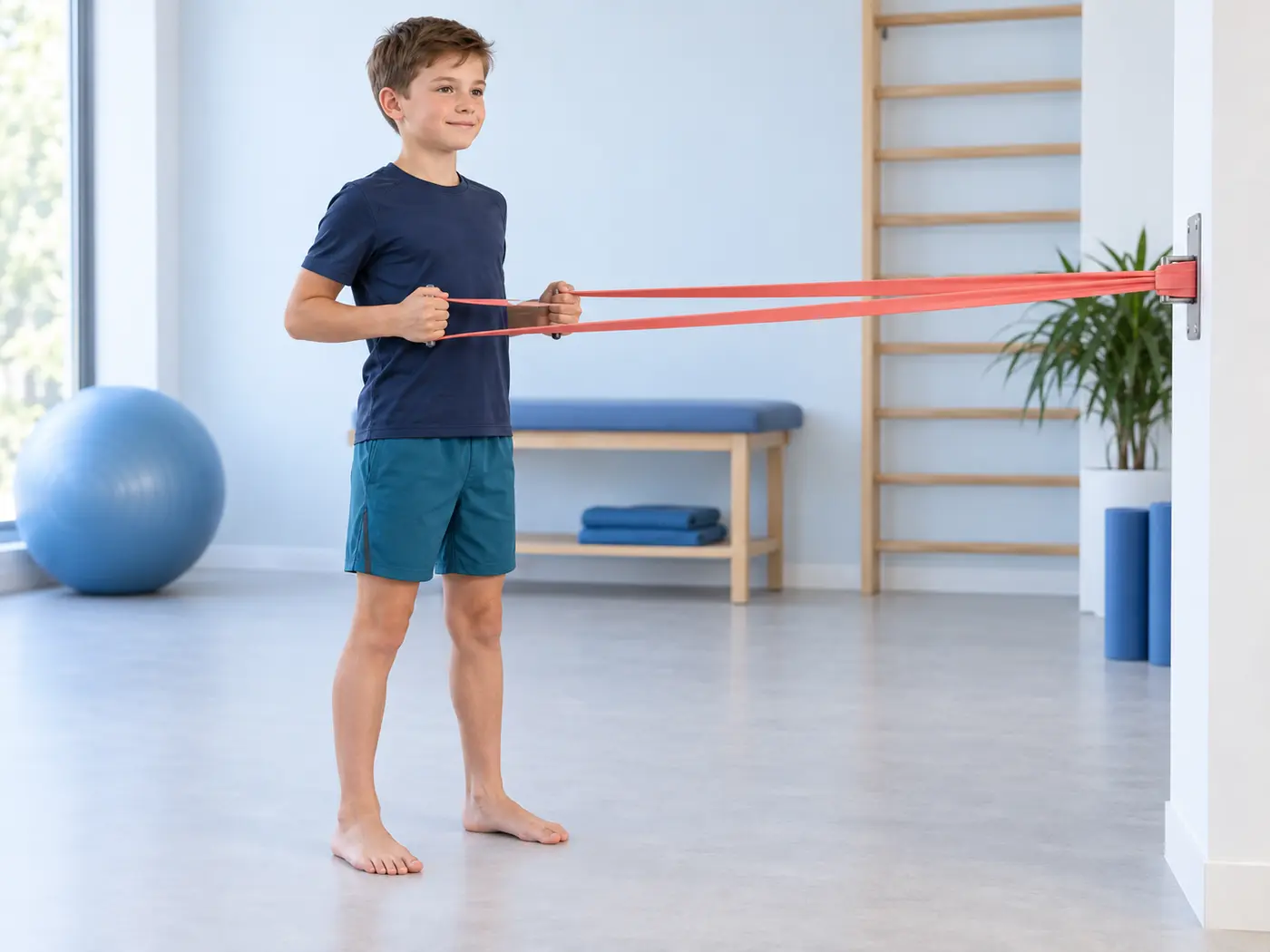
This exercise strengthens the back muscles between the shoulder blades and improves posture. It counteracts a rounded-shoulder posture.

Activates the deep neck flexor muscles and helps correct forward head posture. Promotes an upright cervical spine position.
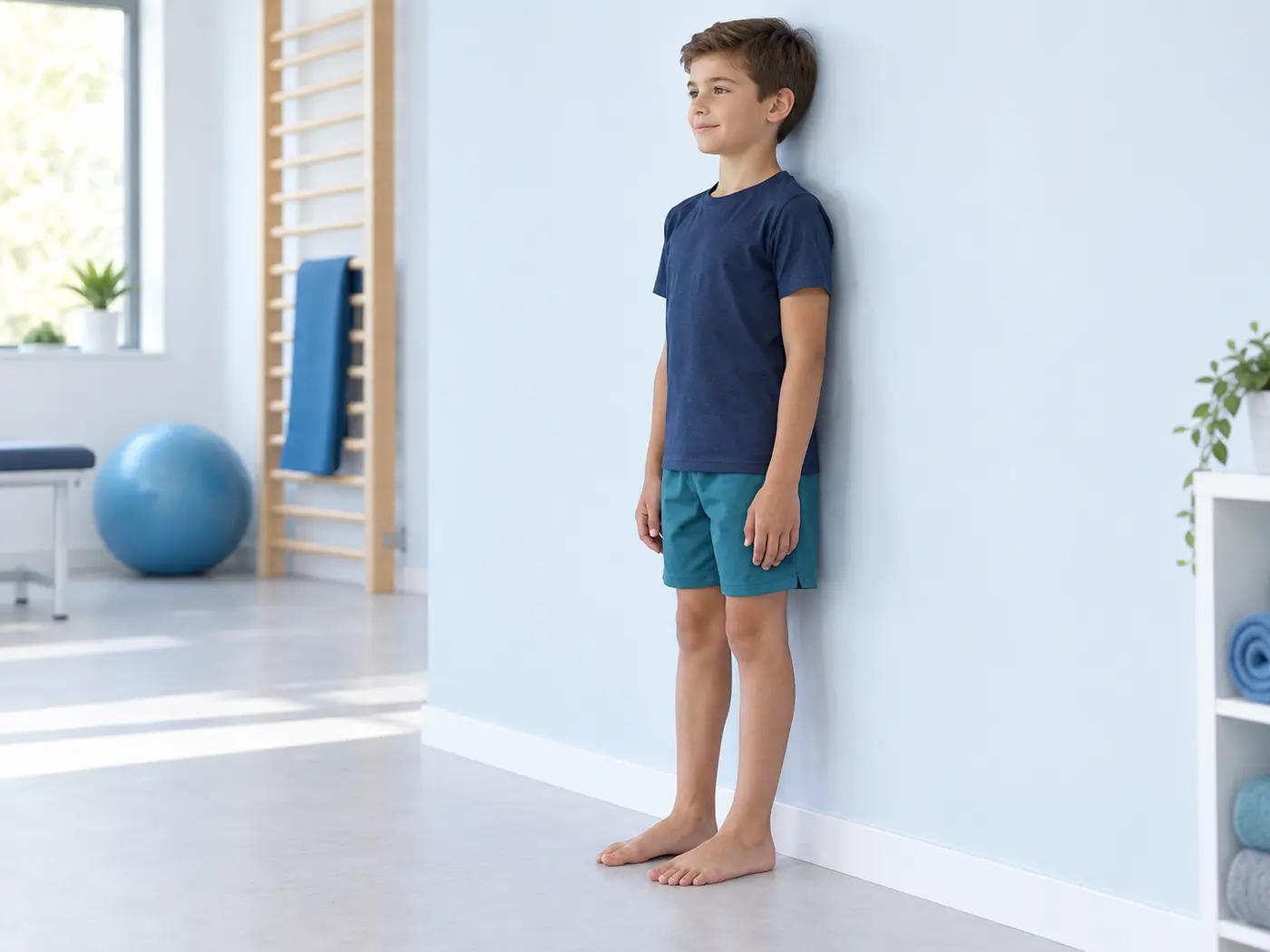
Improves body awareness and promotes deep, relaxed breathing. Helps to find an upright yet non-rigid posture.
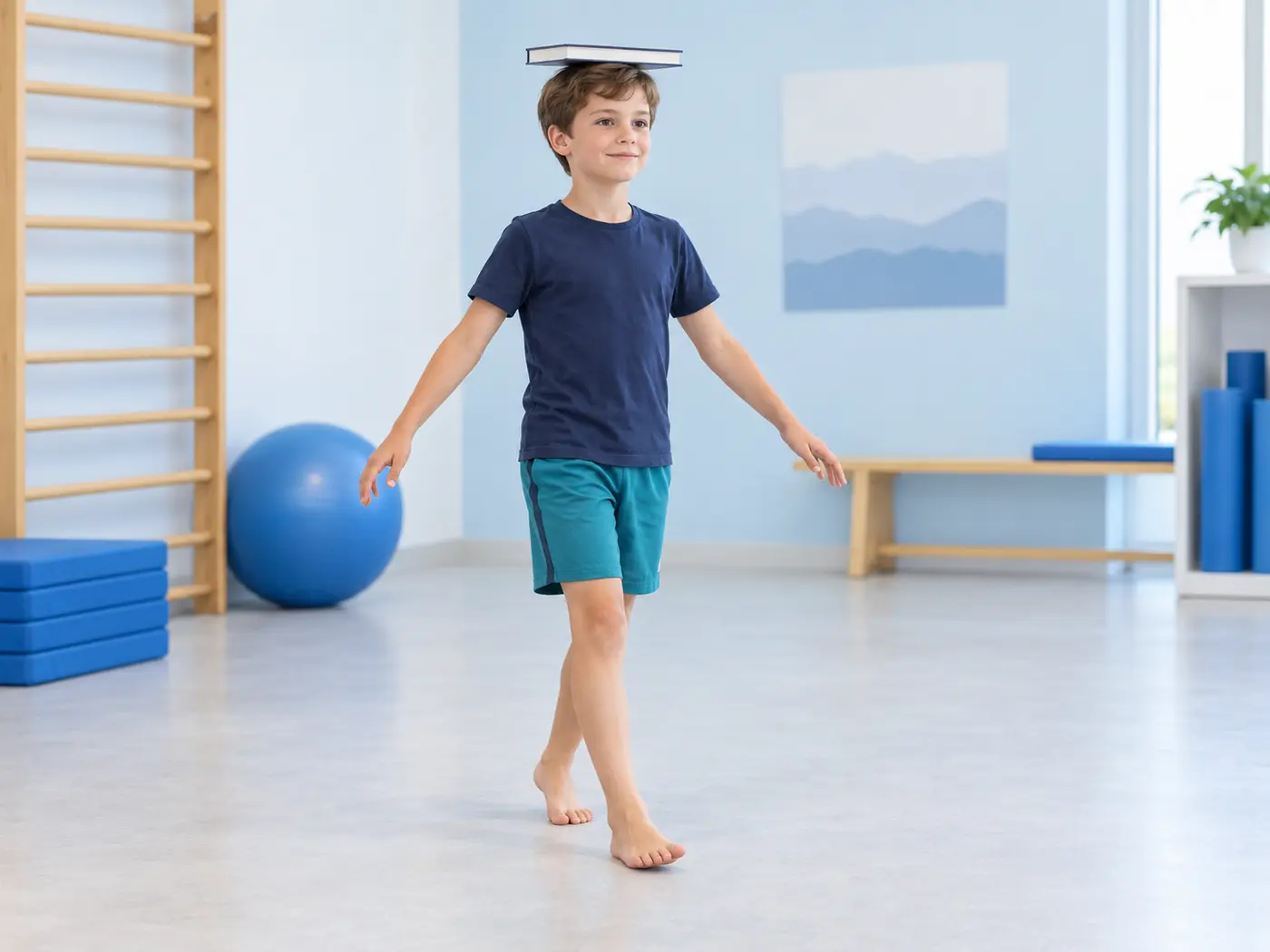
Promotes an upright posture and improves body awareness. Strengthens the deep neck and core muscles.
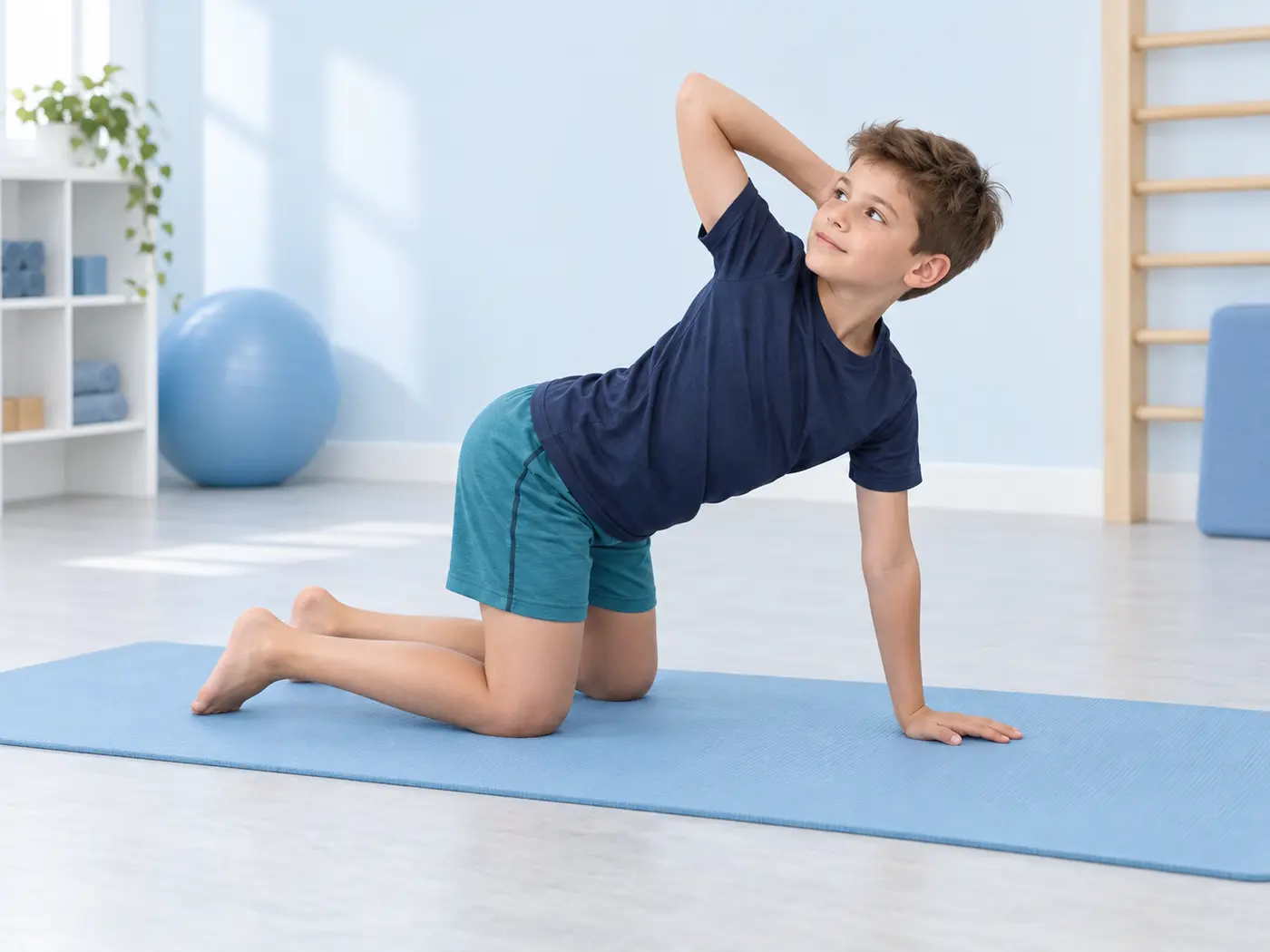
Mobilises the thoracic spine and can help release tension in the upper back. Improves the rotational capacity of the torso.
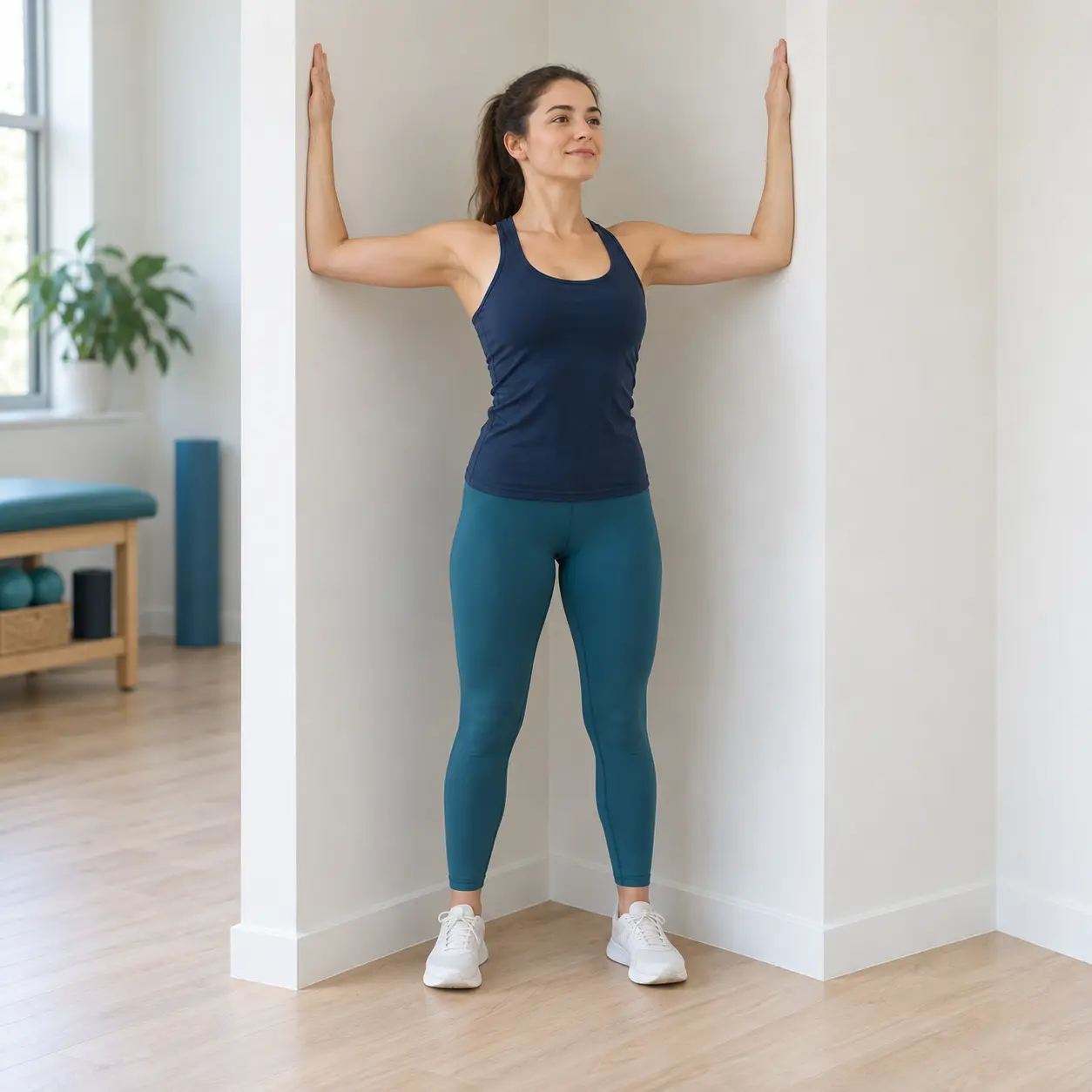
Targets the small chest muscle (pectoralis minor). Can help to correct shoulder position and improve rounded shoulders.
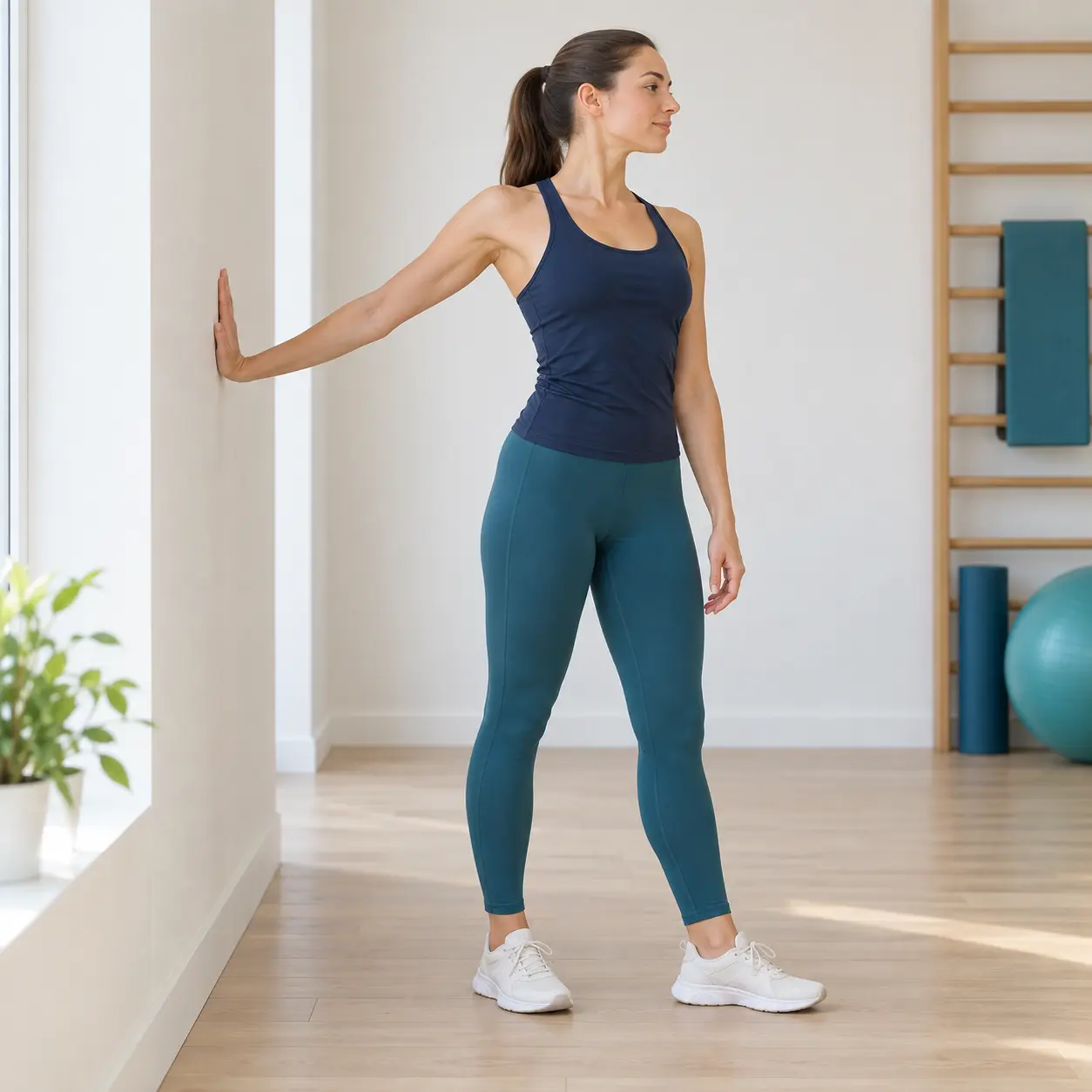
Stretches the coracobrachialis muscle at the front of the shoulder. Can be helpful for anterior shoulder pain or tightness.
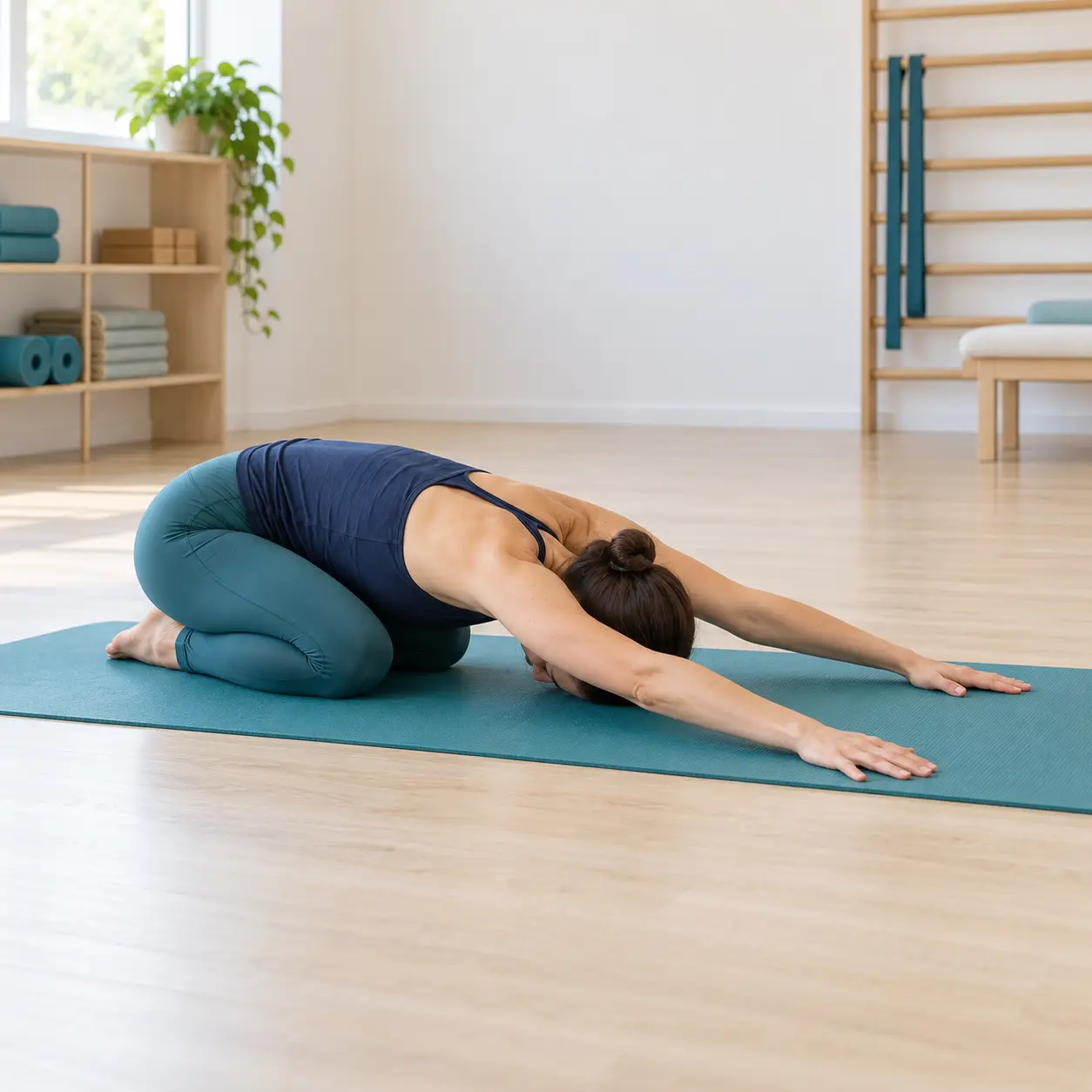
This exercise gently stretches the latissimus dorsi muscle and the side of the torso. It can help to release tension in the back and shoulders.
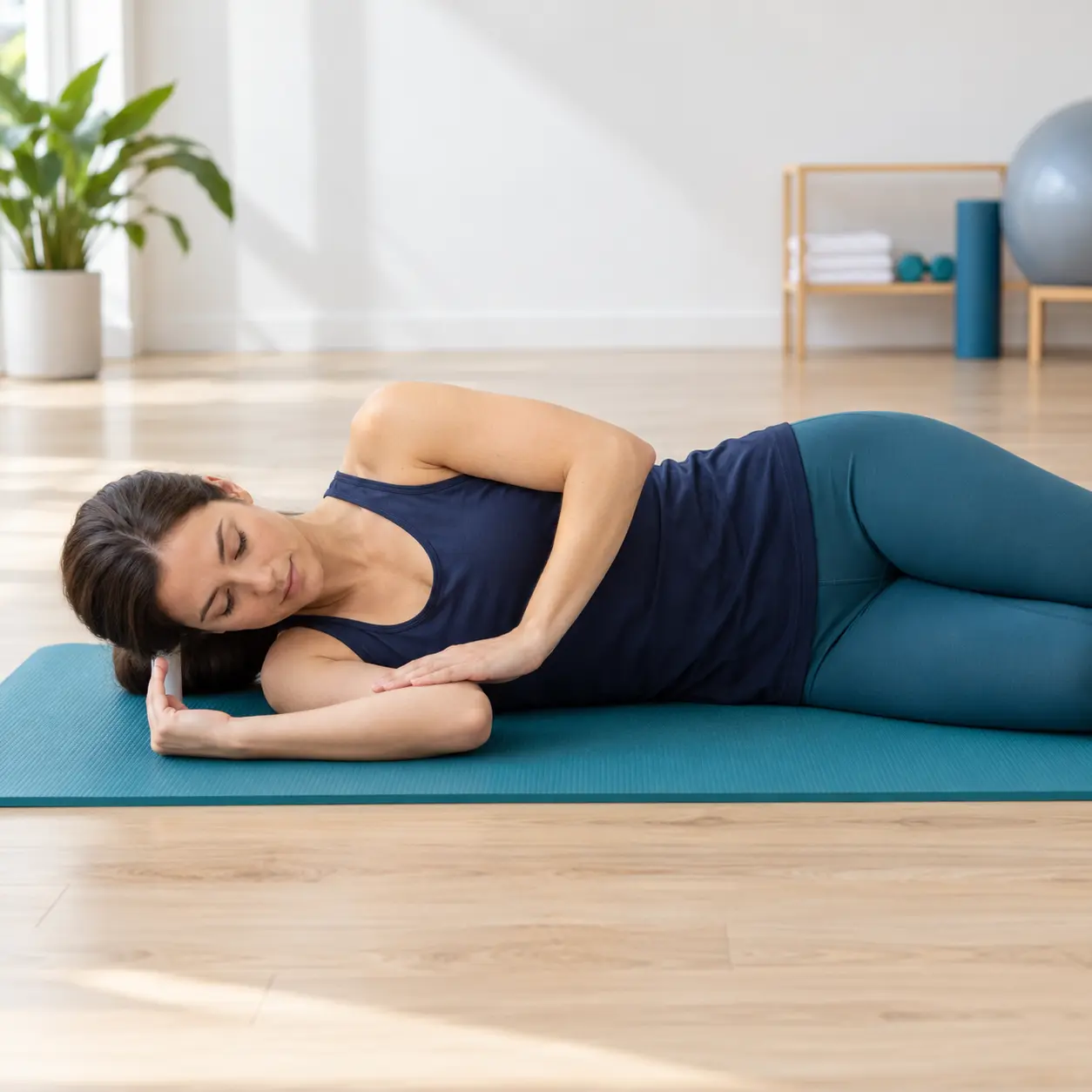
This stretch targets the posterior shoulder capsule and internal rotators. It is often used to improve shoulder mobility, particularly for internal rotation.
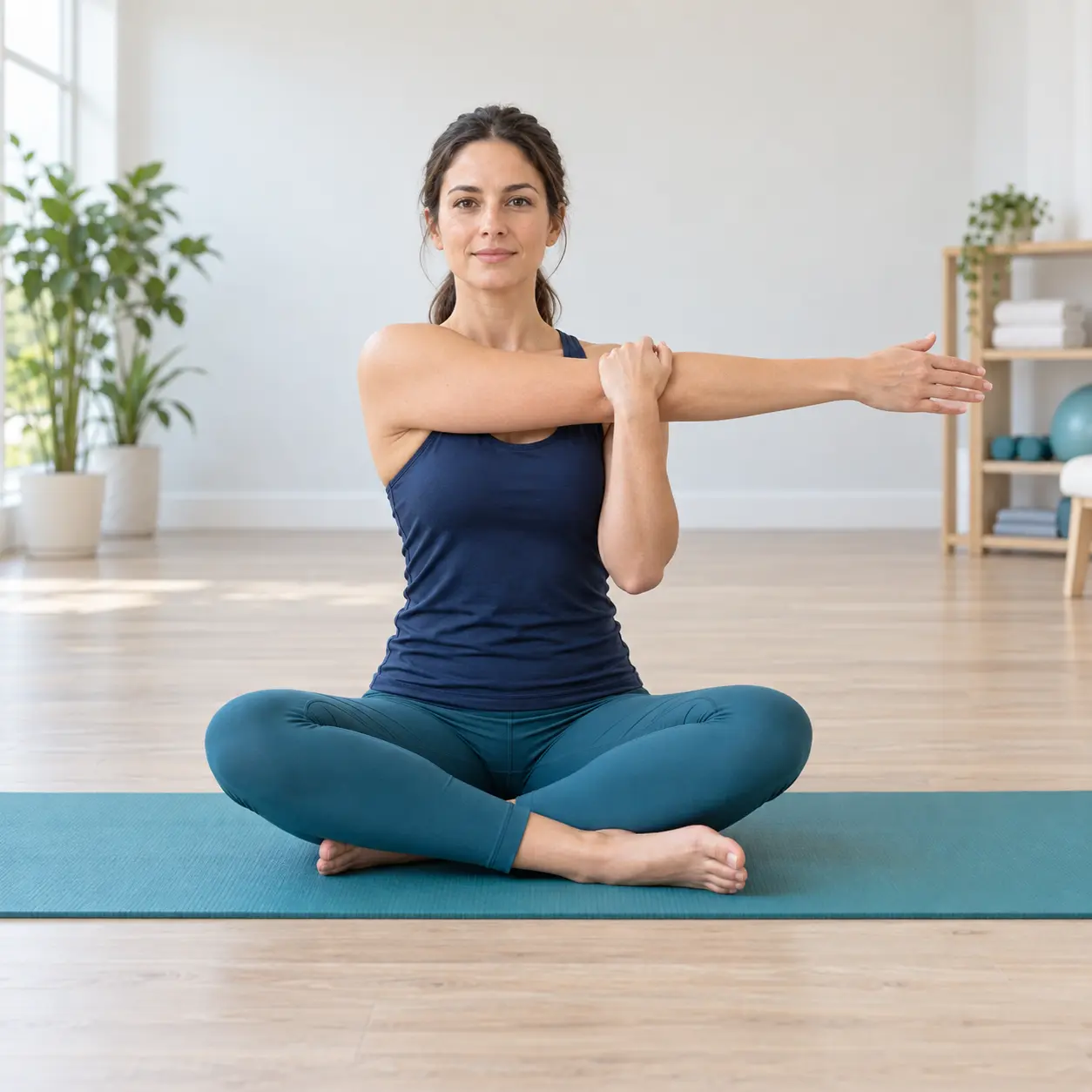
This exercise stretches the posterior shoulder muscles and the muscles around the shoulder blade. It can help improve the arm's horizontal adduction.
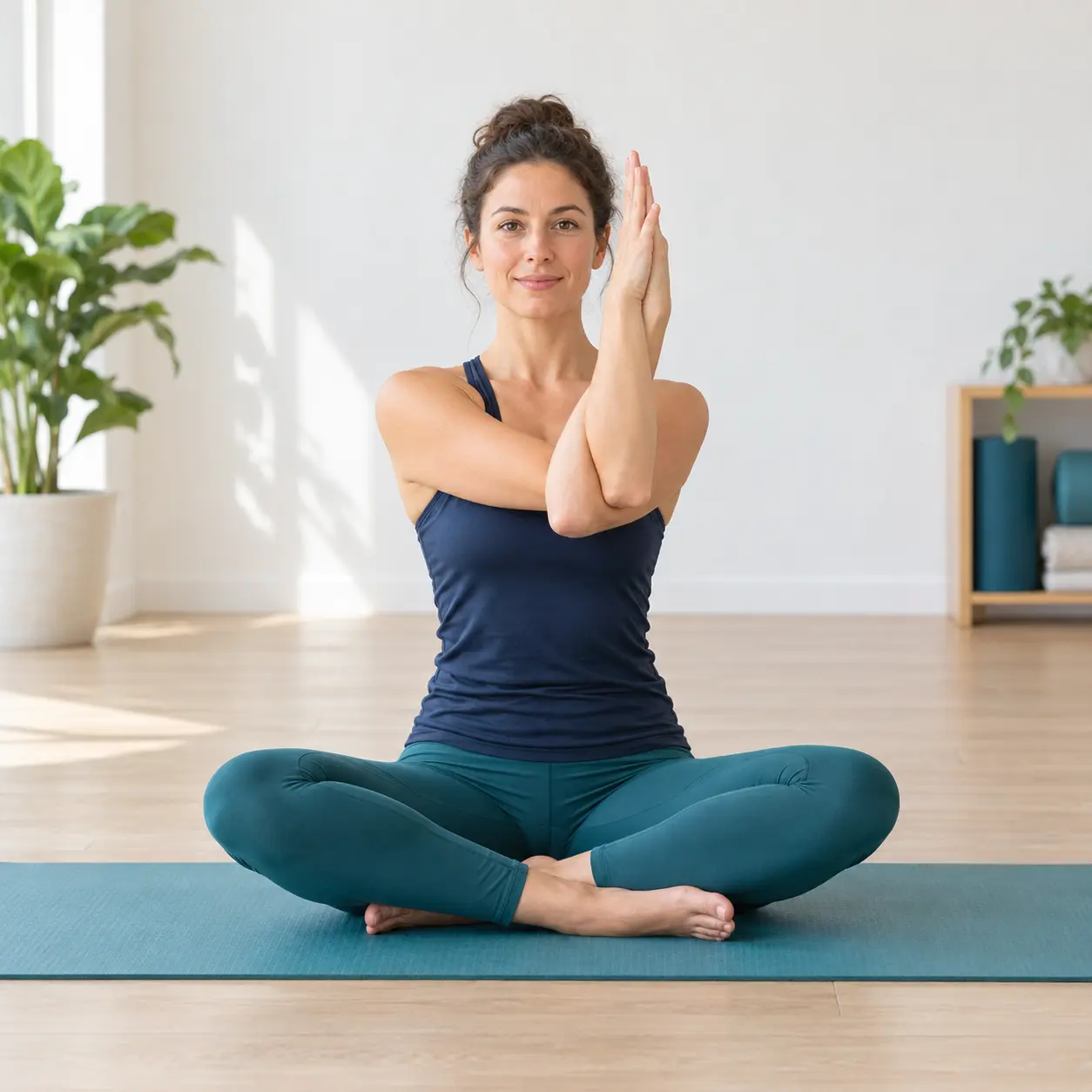
This exercise provides an intense stretch for the muscles between the shoulder blades (rhomboids) and the upper back. It promotes scapular protraction and mobility.
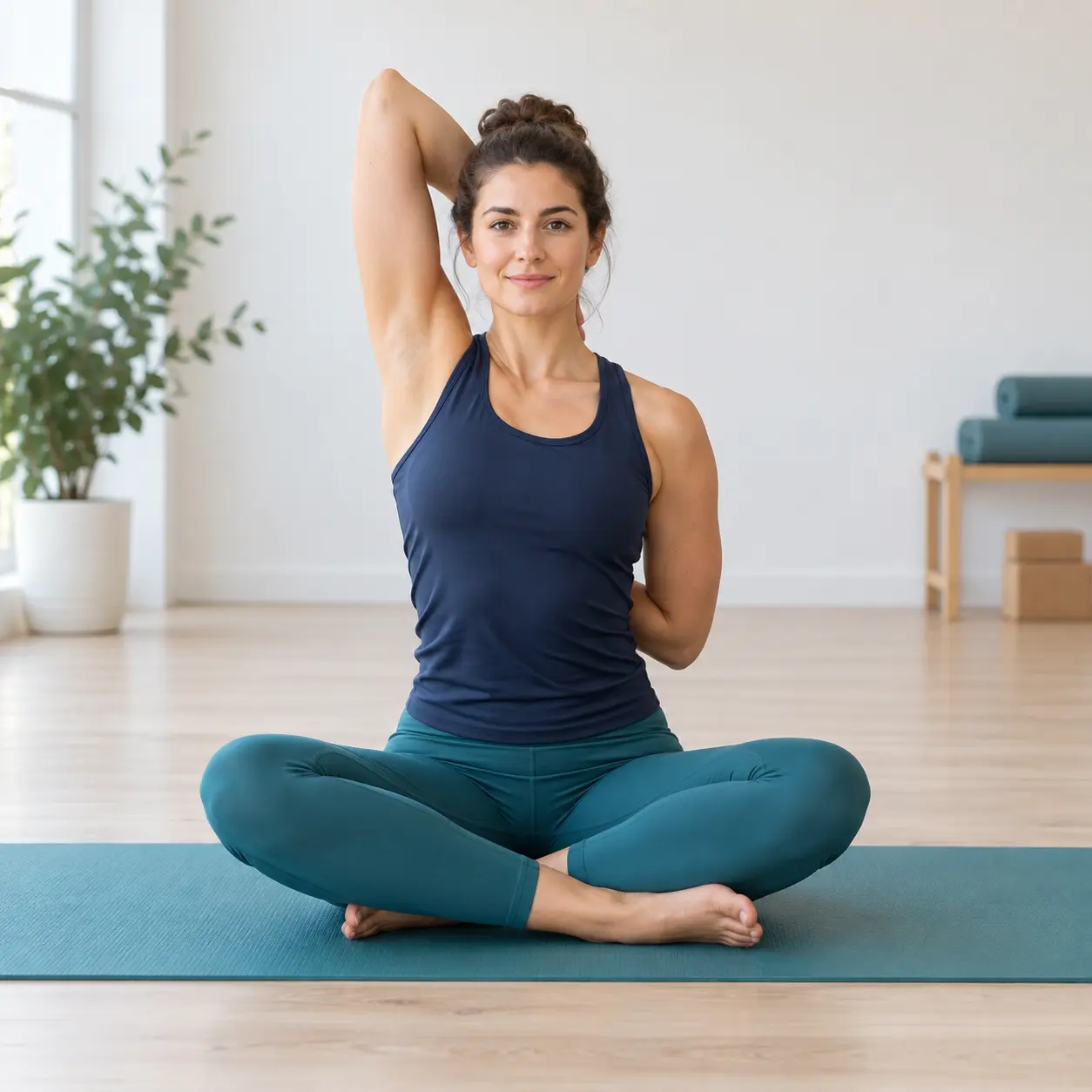
This challenging stretch improves external rotation in the upper shoulder and internal rotation in the lower shoulder. It is ideal for promoting overall shoulder mobility.
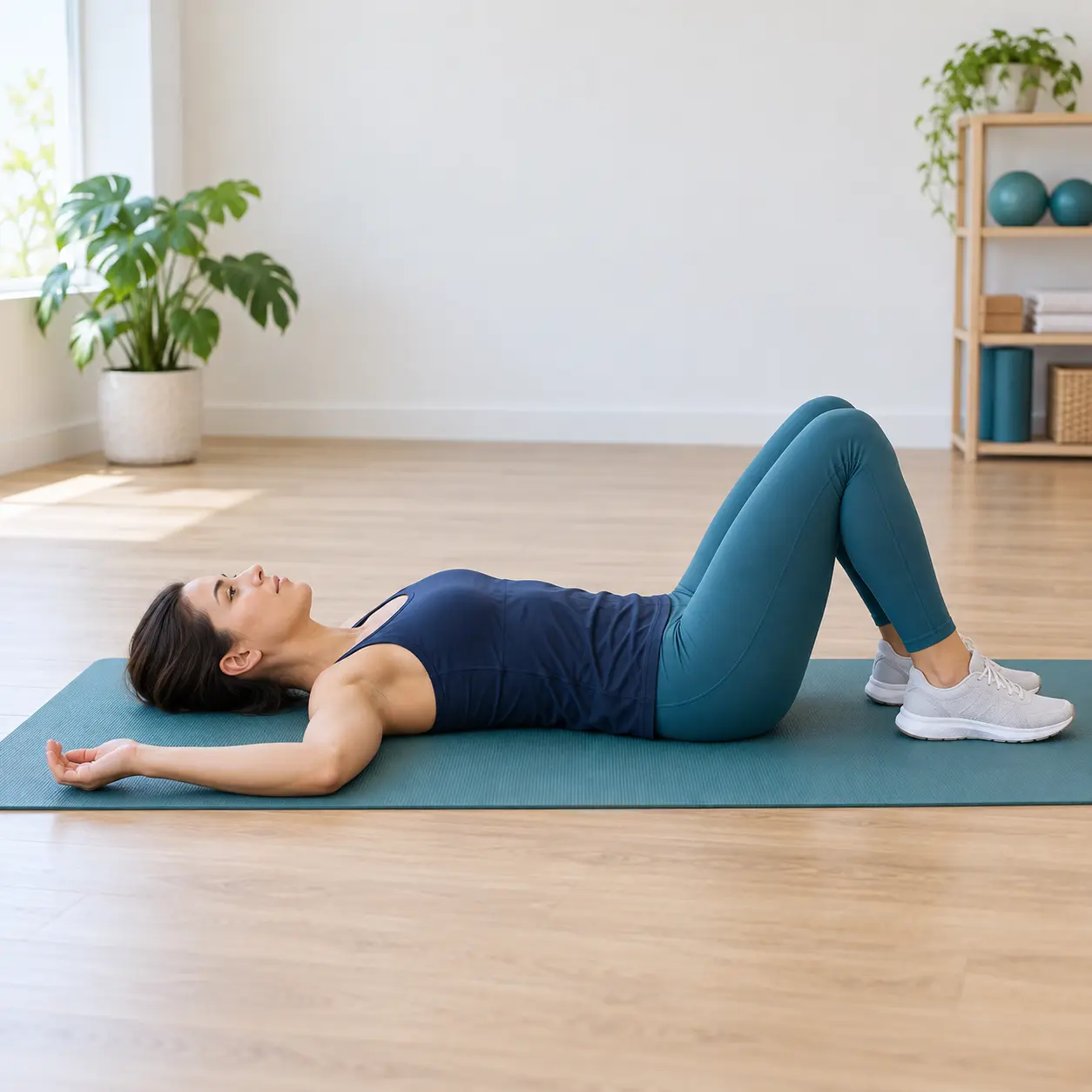
This passive stretch improves external rotation in the shoulder joint. It helps to open up the front of the shoulder and increase mobility.
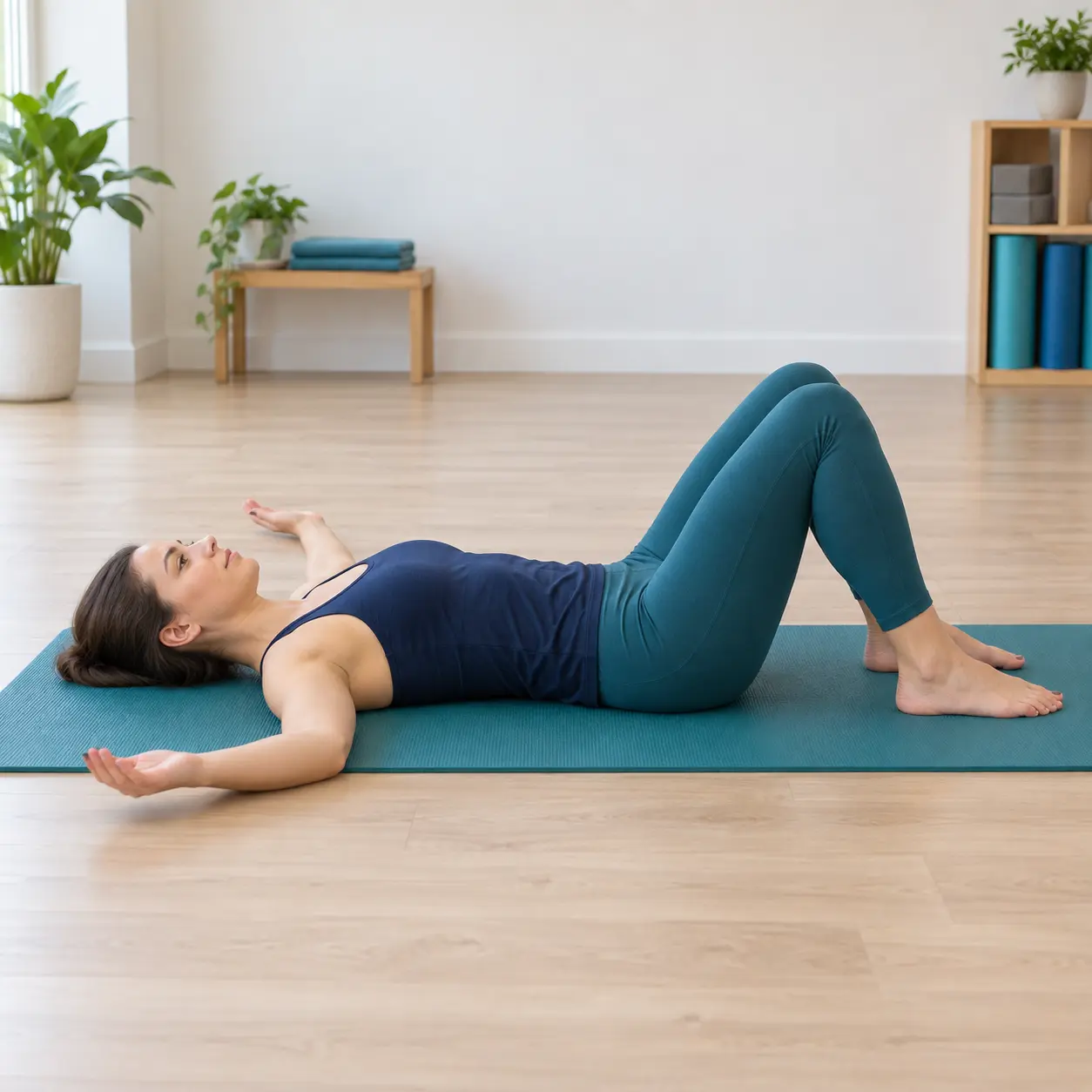
This exercise stretches the pectoral muscles and can help improve posture. It promotes deeper breathing into the chest.
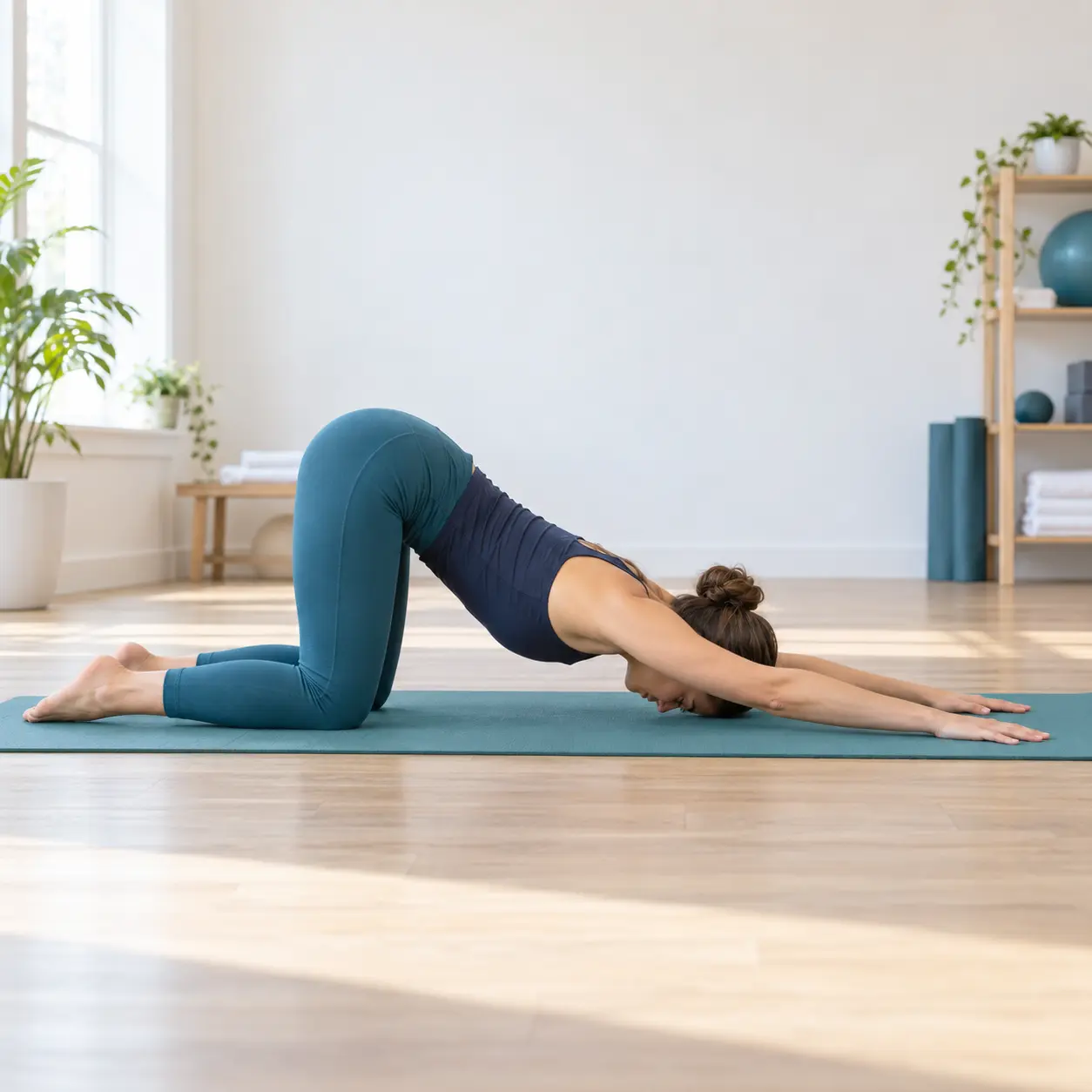
This stretch mobilizes the thoracic spine and opens up the shoulder girdle. It can relieve tension in the upper back and shoulders.
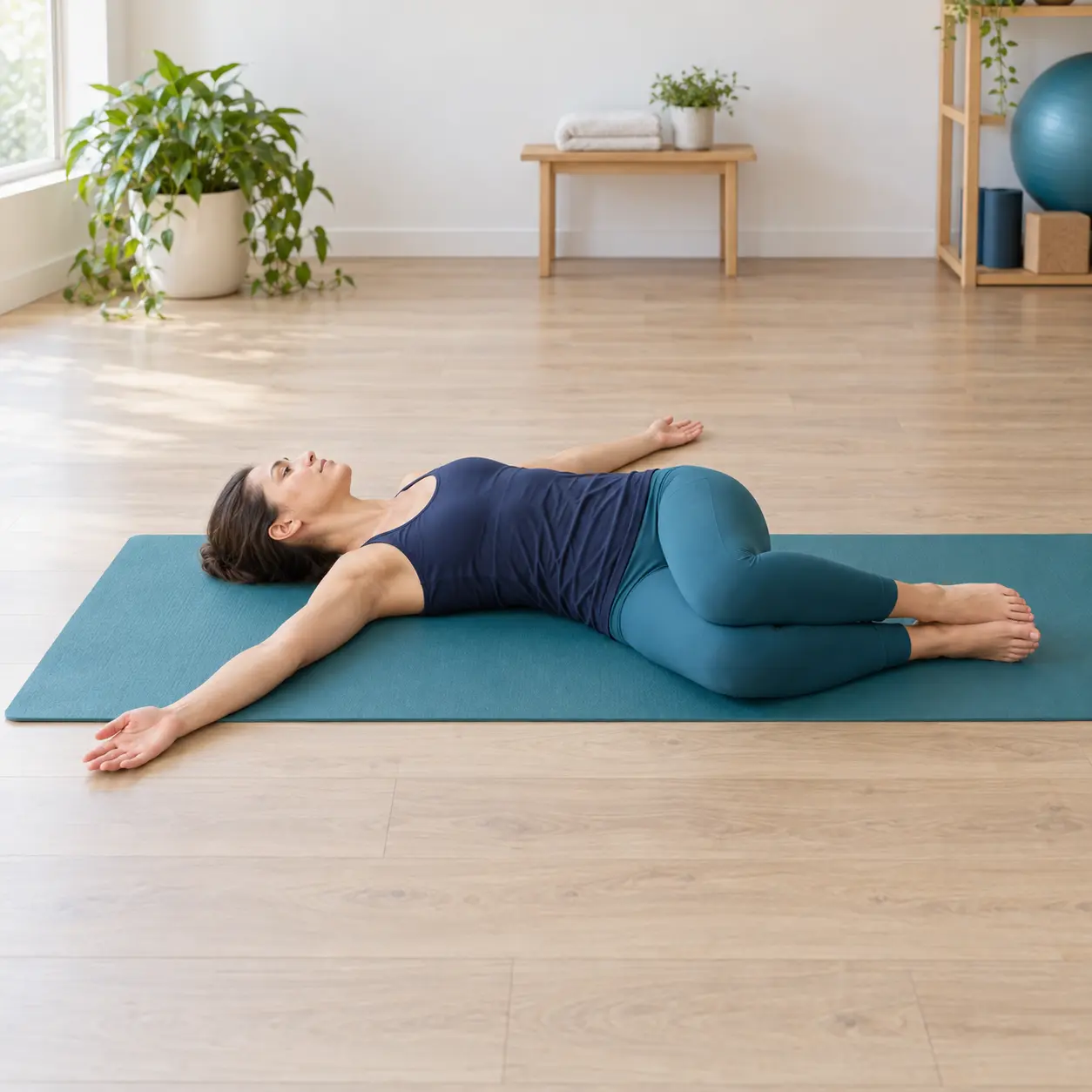
This exercise gently mobilizes the lumbar and thoracic spine and stretches the lateral trunk muscles. It can help release tension in the lower back.
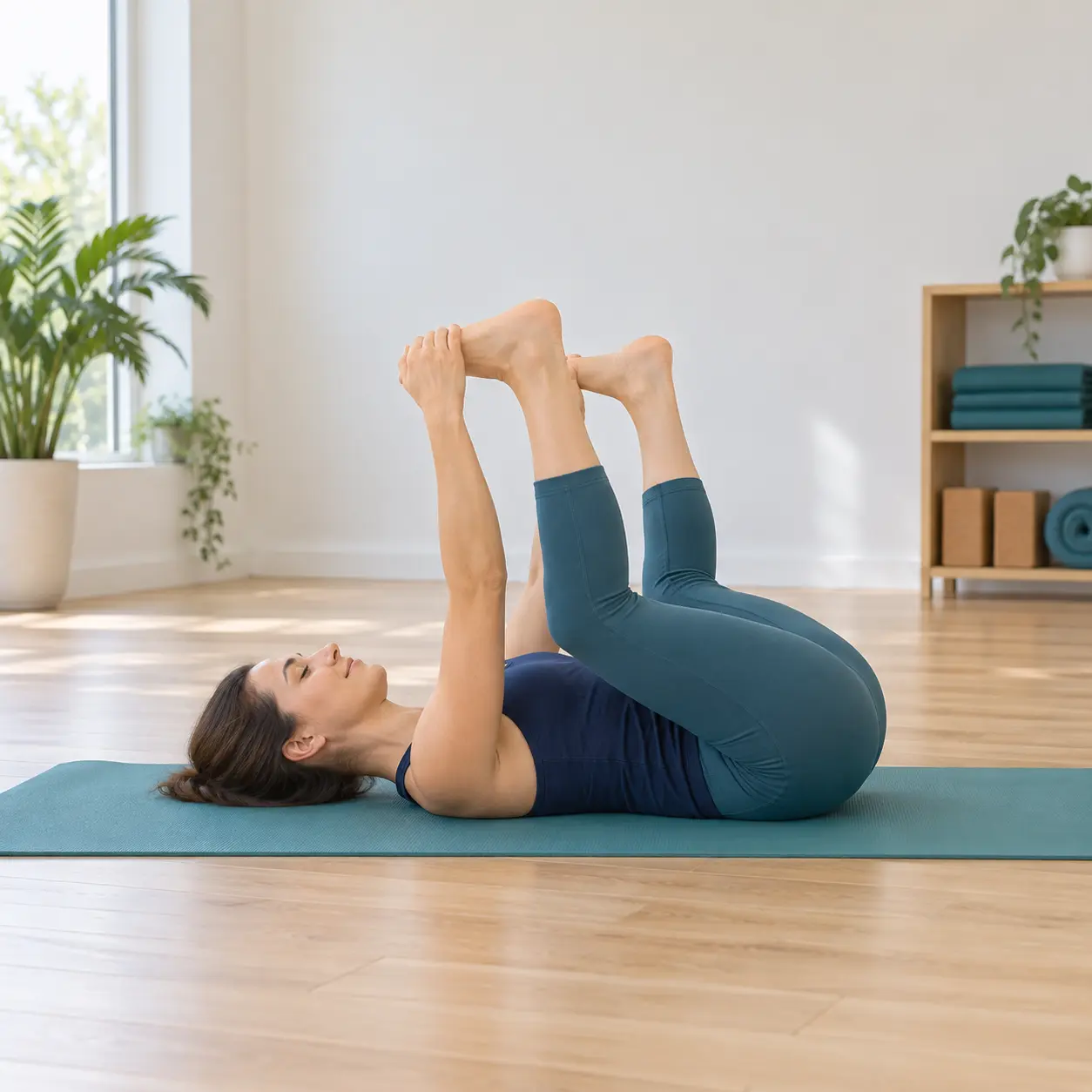
This pose opens the hips and stretches the groins and lower back. It can help to relax the lumbar spine.
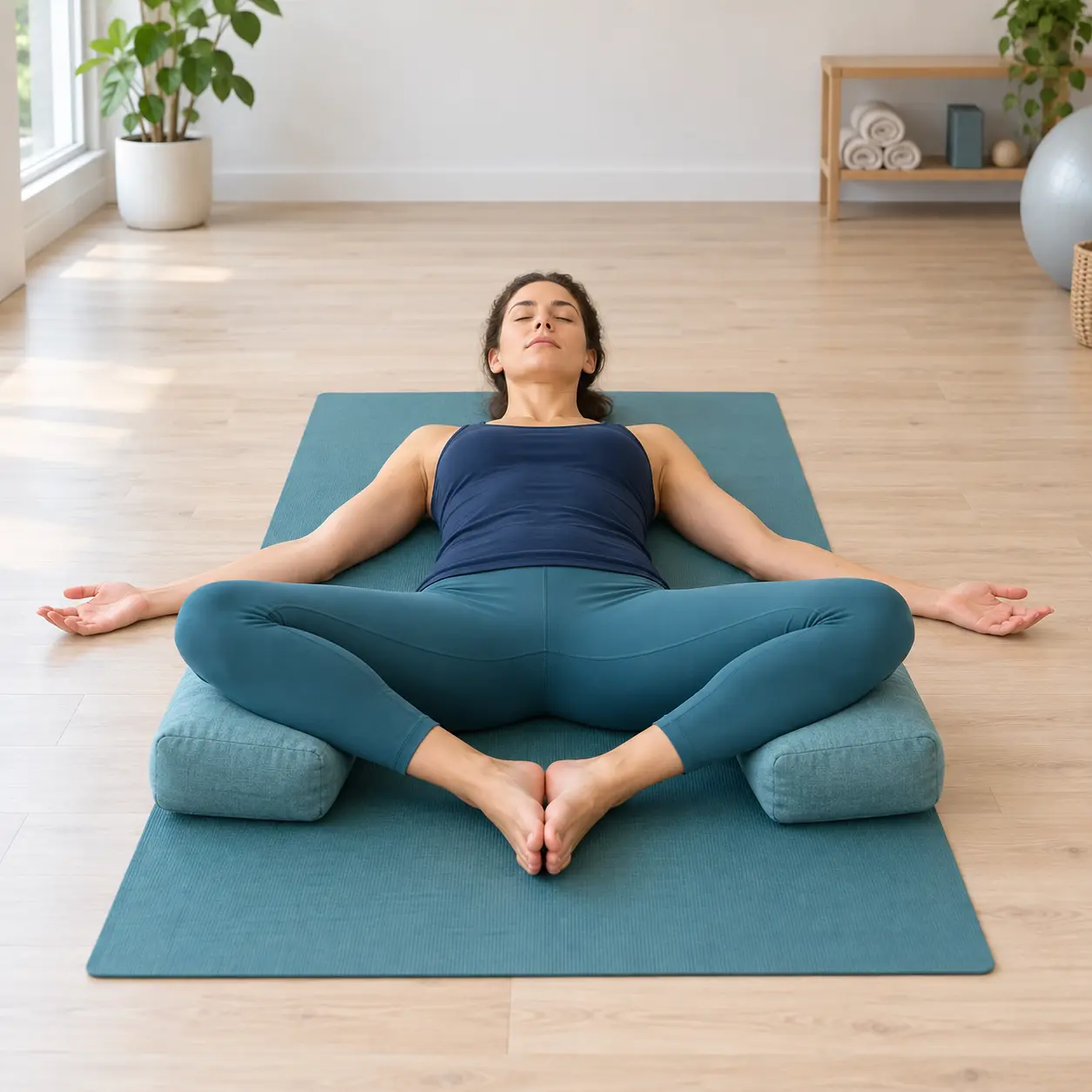
A gentle exercise for stretching the hip adductors and opening the pelvic area. It promotes relaxation and can help with groin tension.
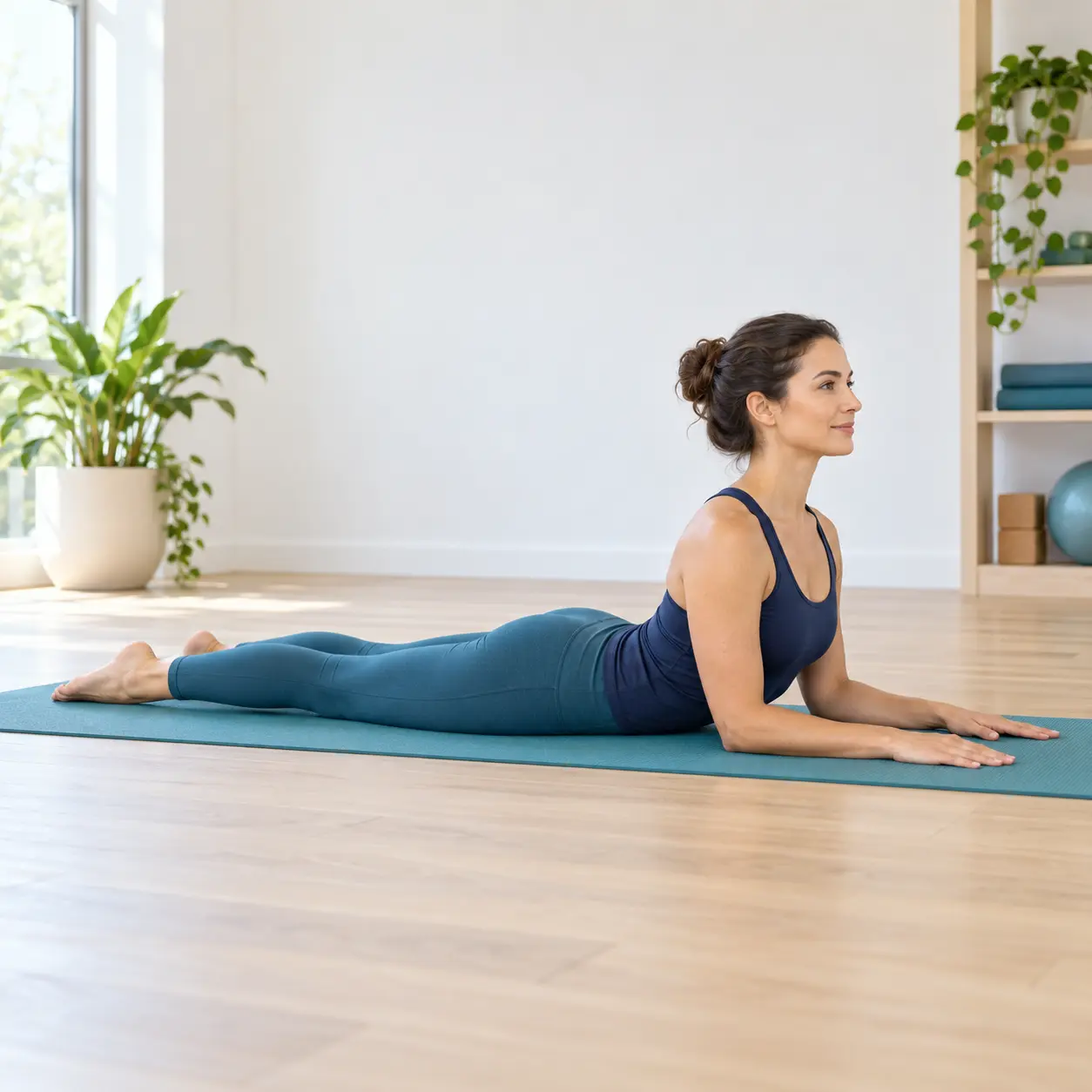
This pose gently strengthens the spinal extensors and stretches the abdominal muscles. It can improve posture and open the chest.
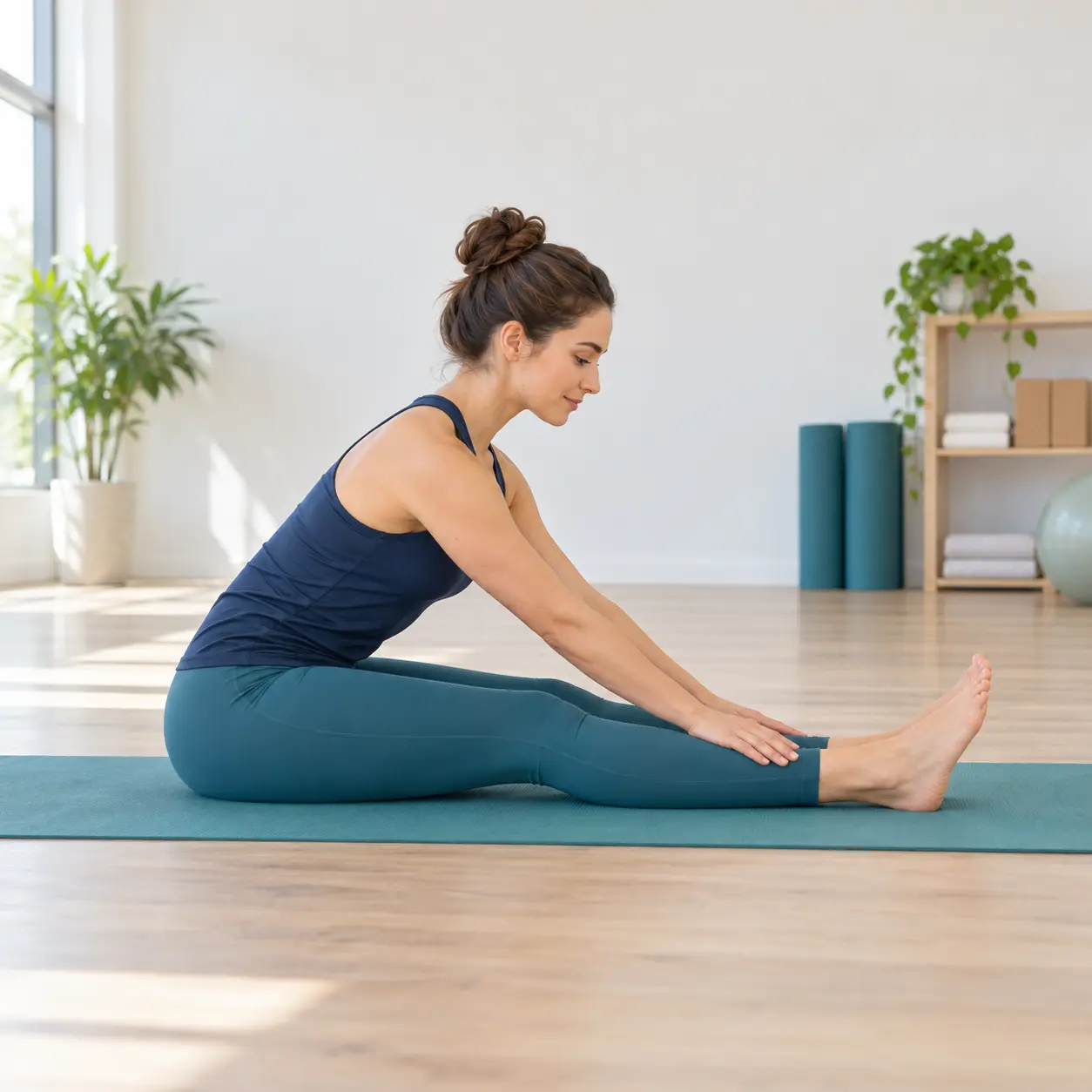
Stretches the hamstring and lower back muscles. Can help improve the flexibility of the posterior chain.
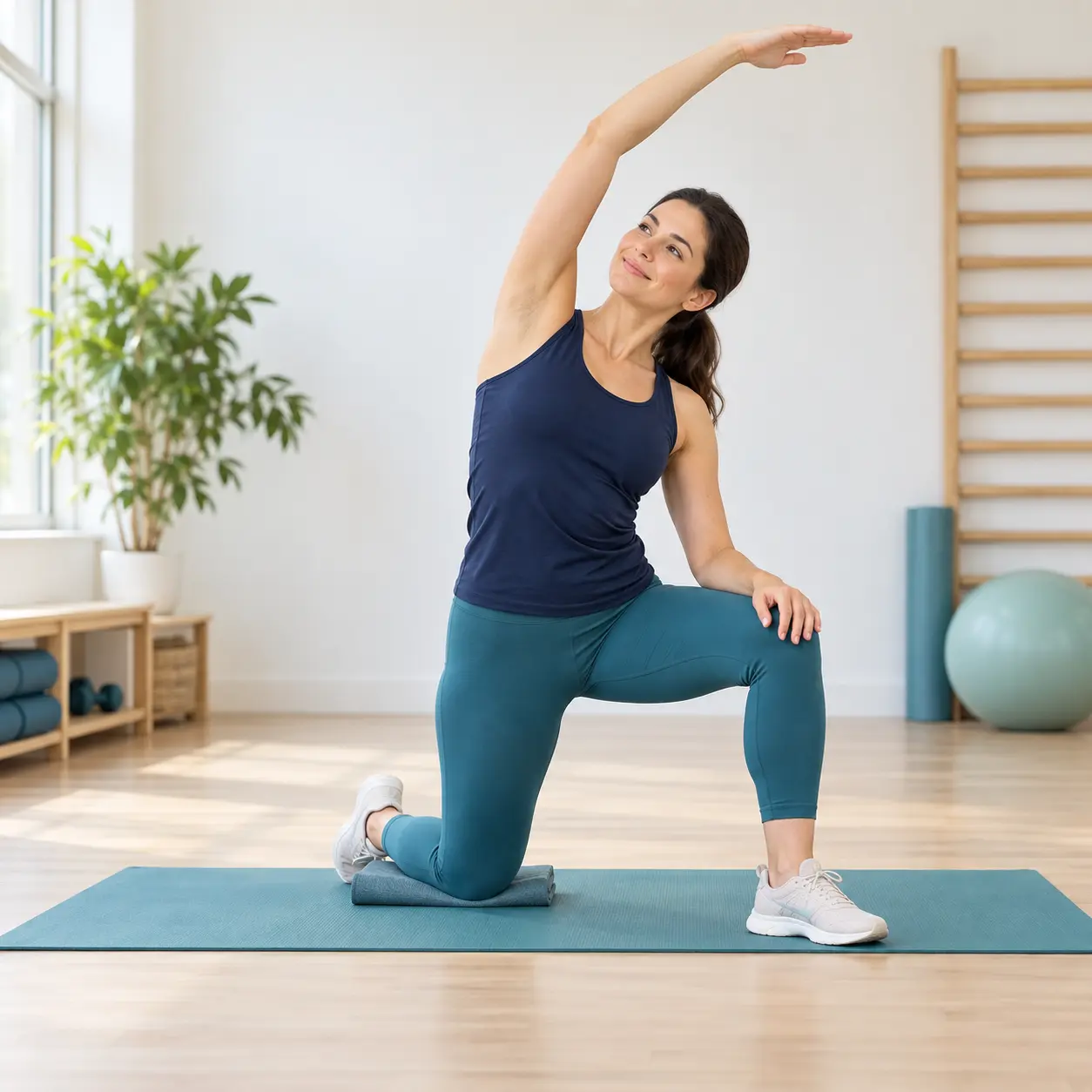
Stretches the hip flexors and lateral trunk muscles. Improves mobility in the hips and spine.
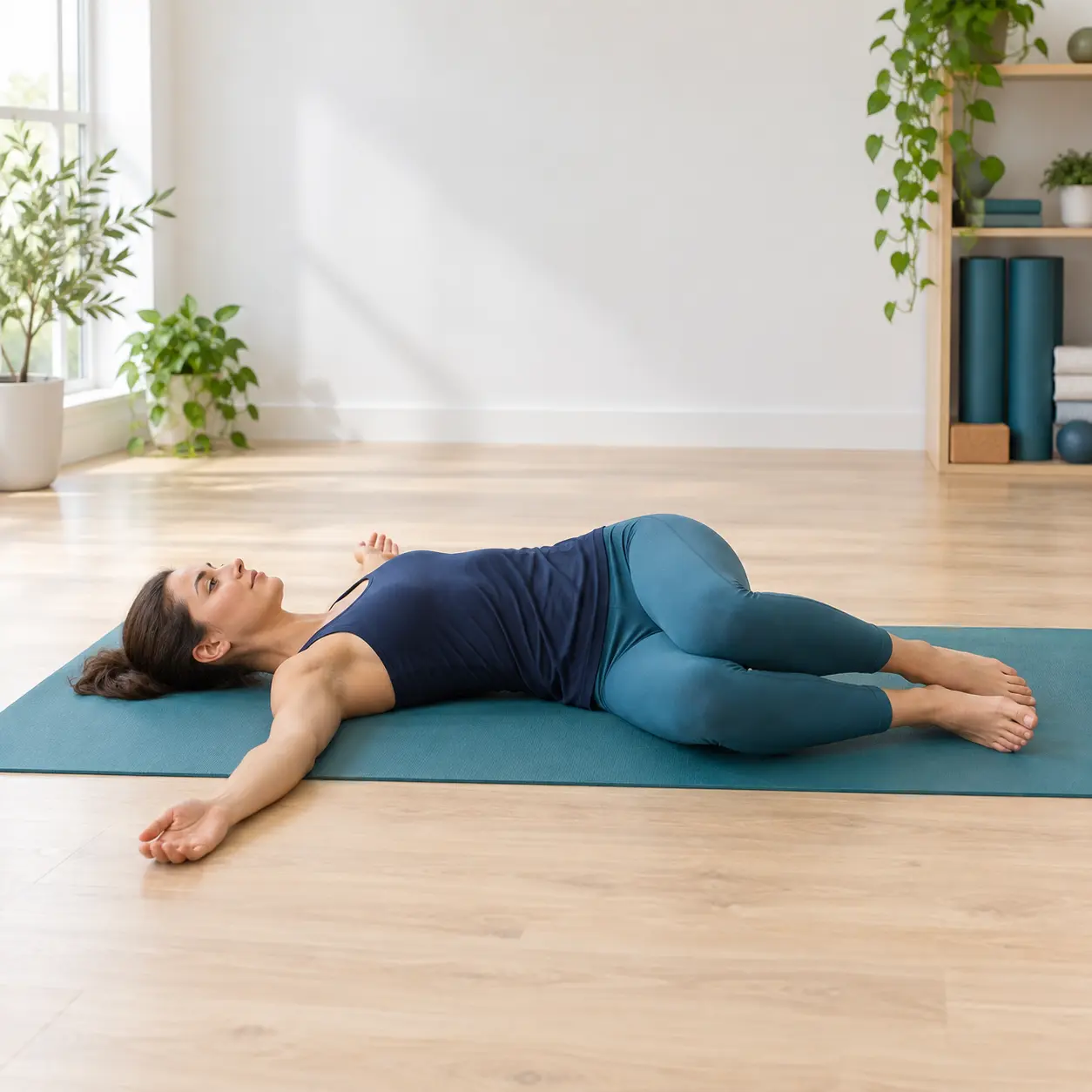
Gently mobilizes the lumbar spine and hip joints. Can help release tension in the lower back.
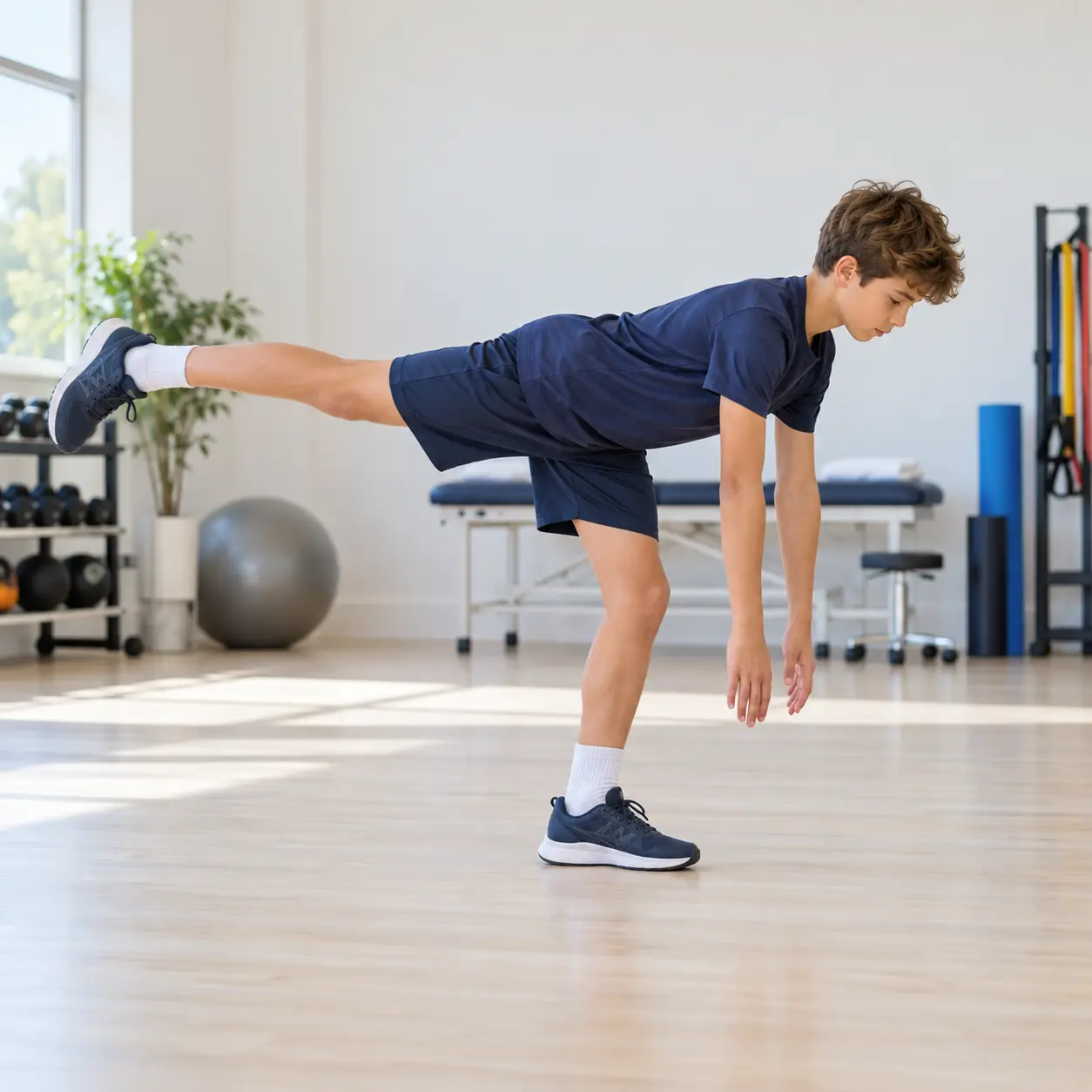
Strengthens the hamstrings, glutes, and lower back. Improves balance and stability.
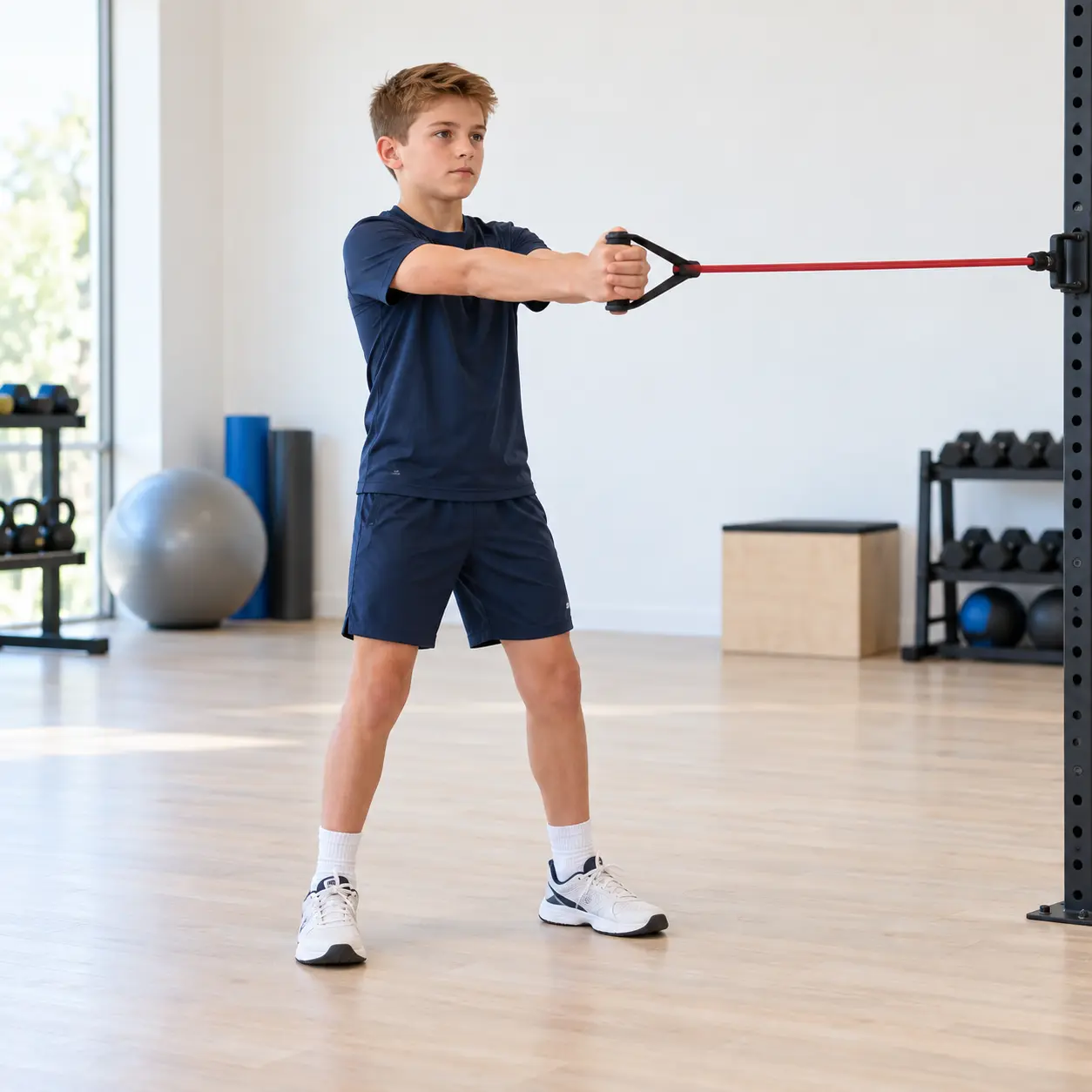
Strengthens the core muscles by resisting a rotational force. Improves core stability.
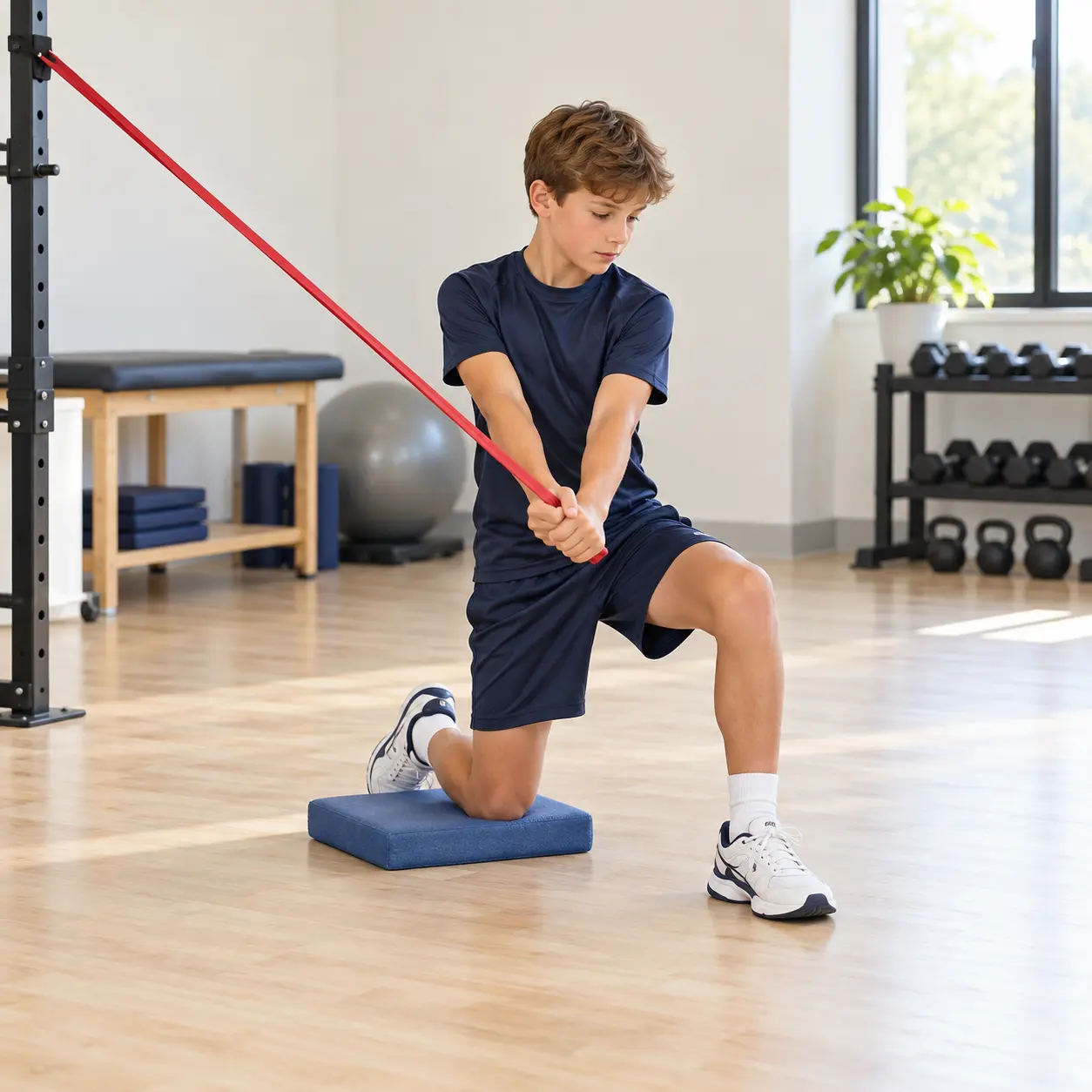
Strengthens the obliques, back, and shoulder muscles. Improves rotational core strength and control.
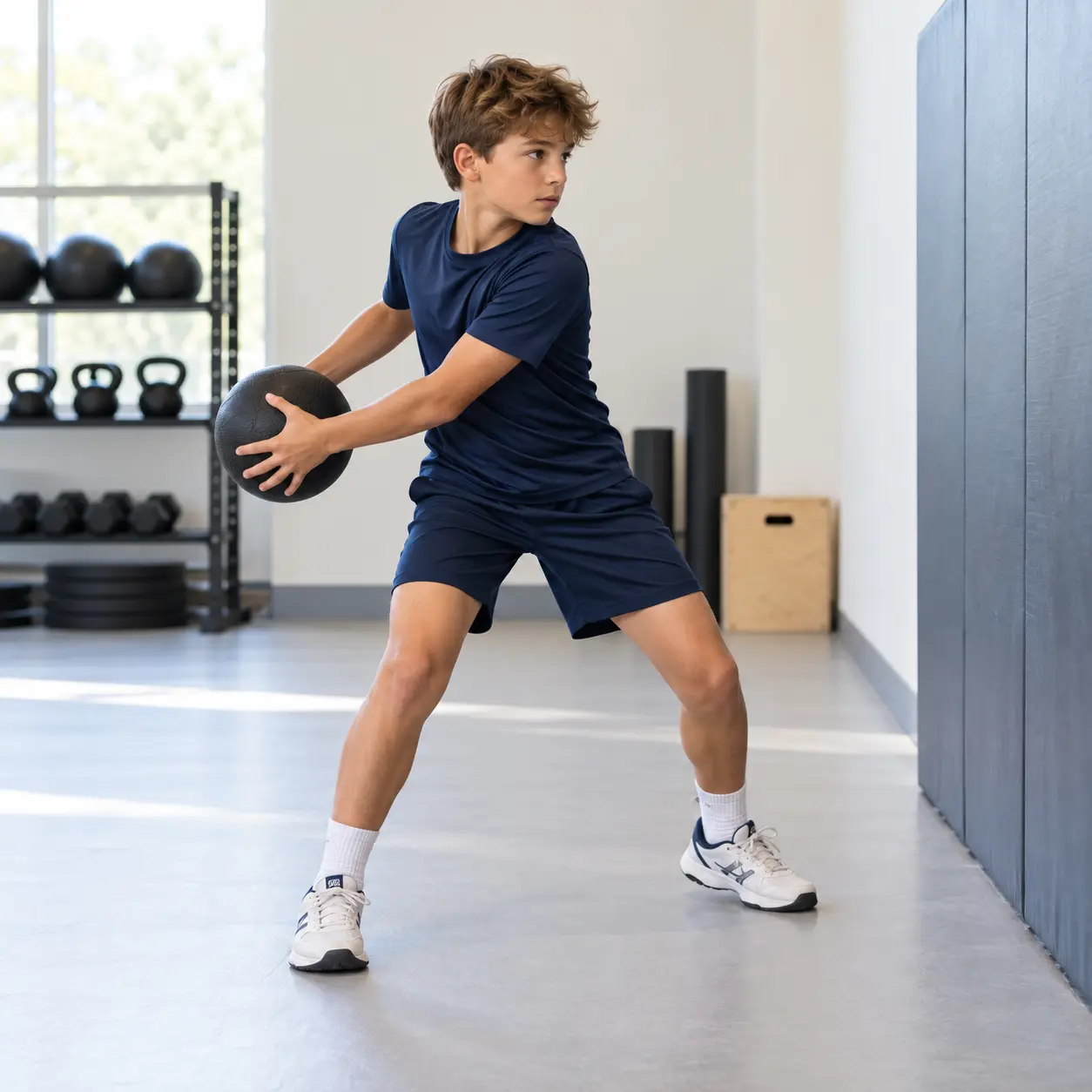
Develops explosive power in the core and hip muscles. Improves coordination and power transfer in rotational movements.
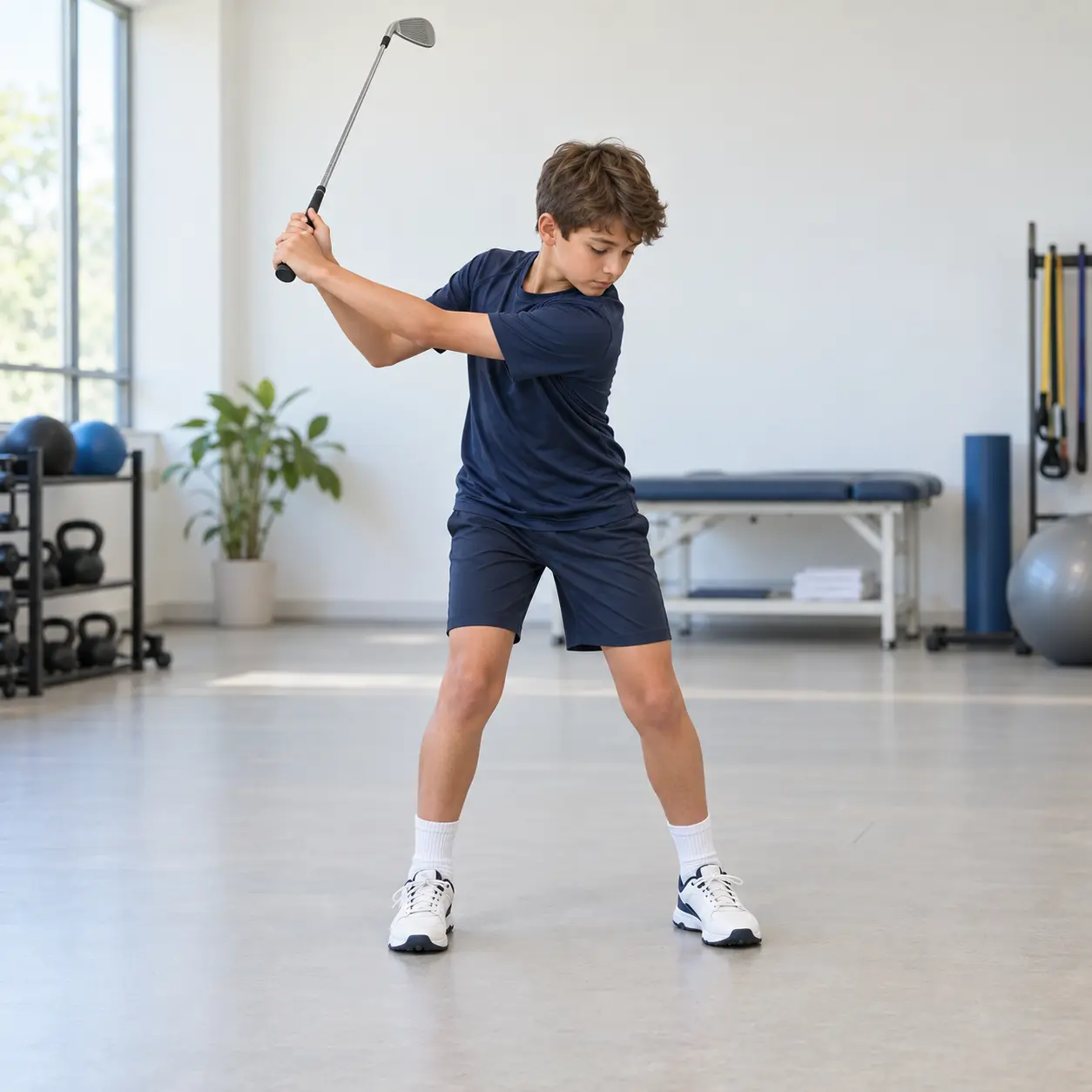
Improves trunk rotation and stability, which is important for a powerful and consistent golf swing. This exercise promotes thoracic spine mobility.
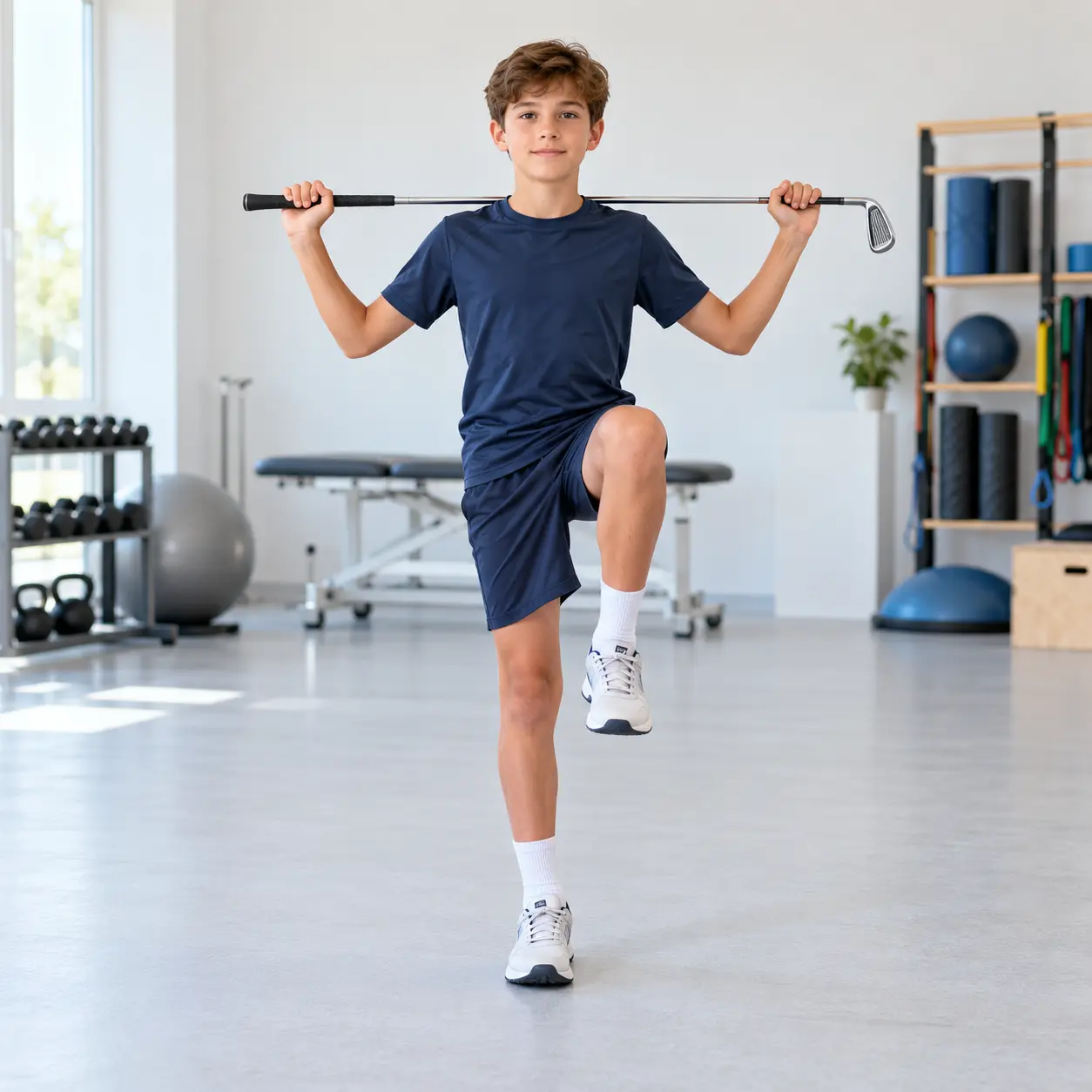
Trains balance and stability on the standing leg, which is crucial for a solid base in the golf swing. The exercise also strengthens the core muscles.
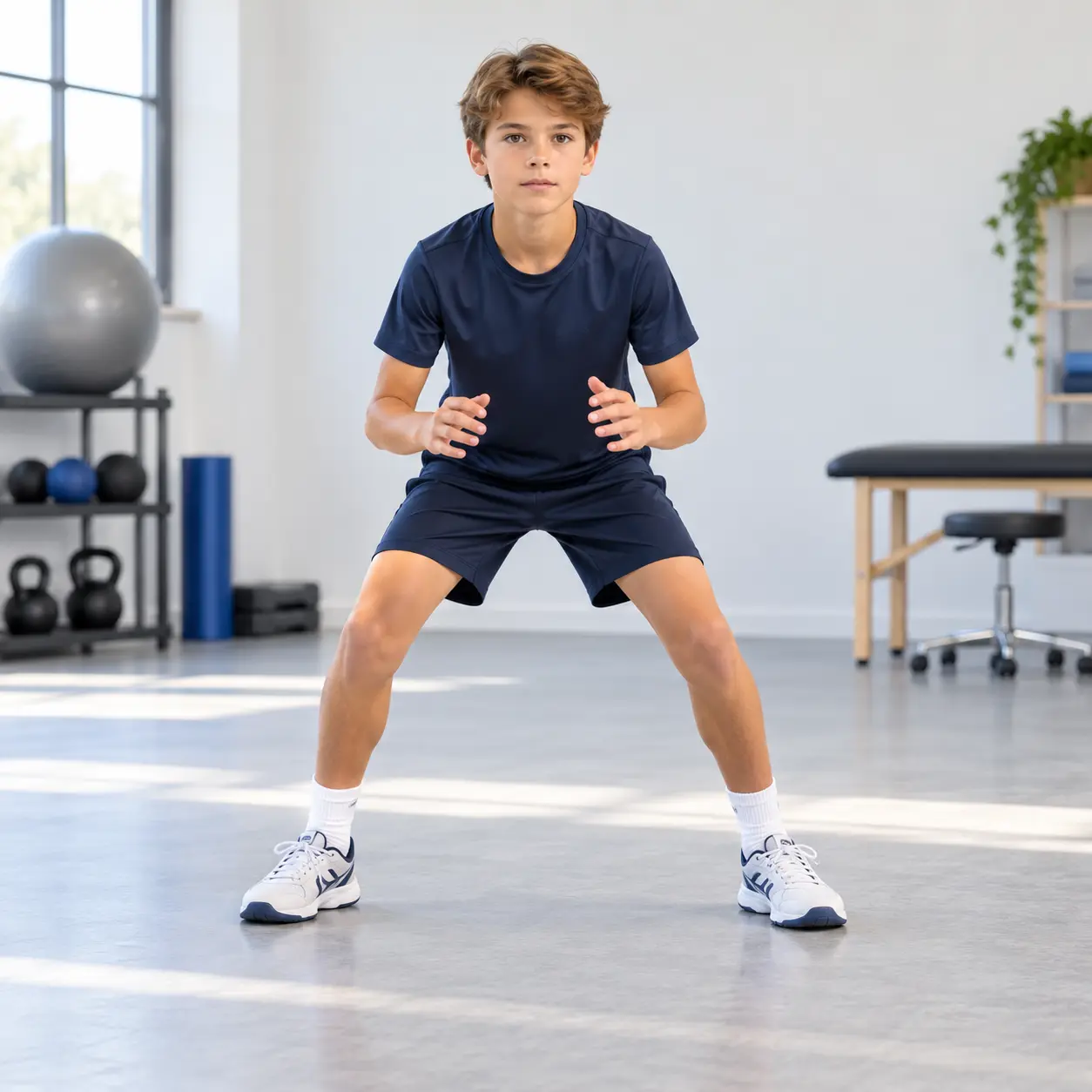
Improves reaction time and the ability to move quickly in any direction. This fundamental movement optimally prepares the body for the next shot in tennis.
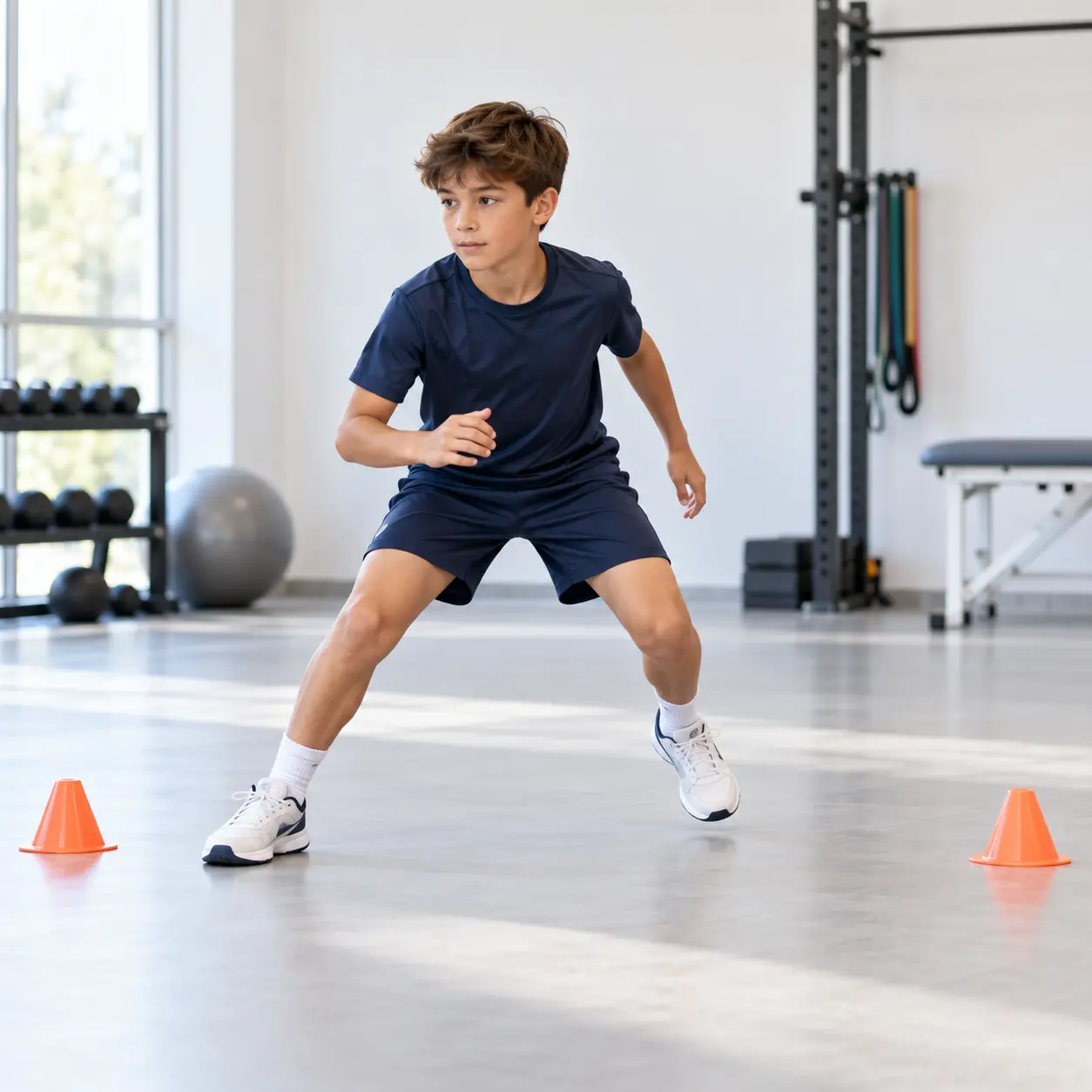
Strengthens the lateral hip muscles (abductors) and improves agility and stability during sideways movements. This is crucial for mastering changes of direction in many sports.
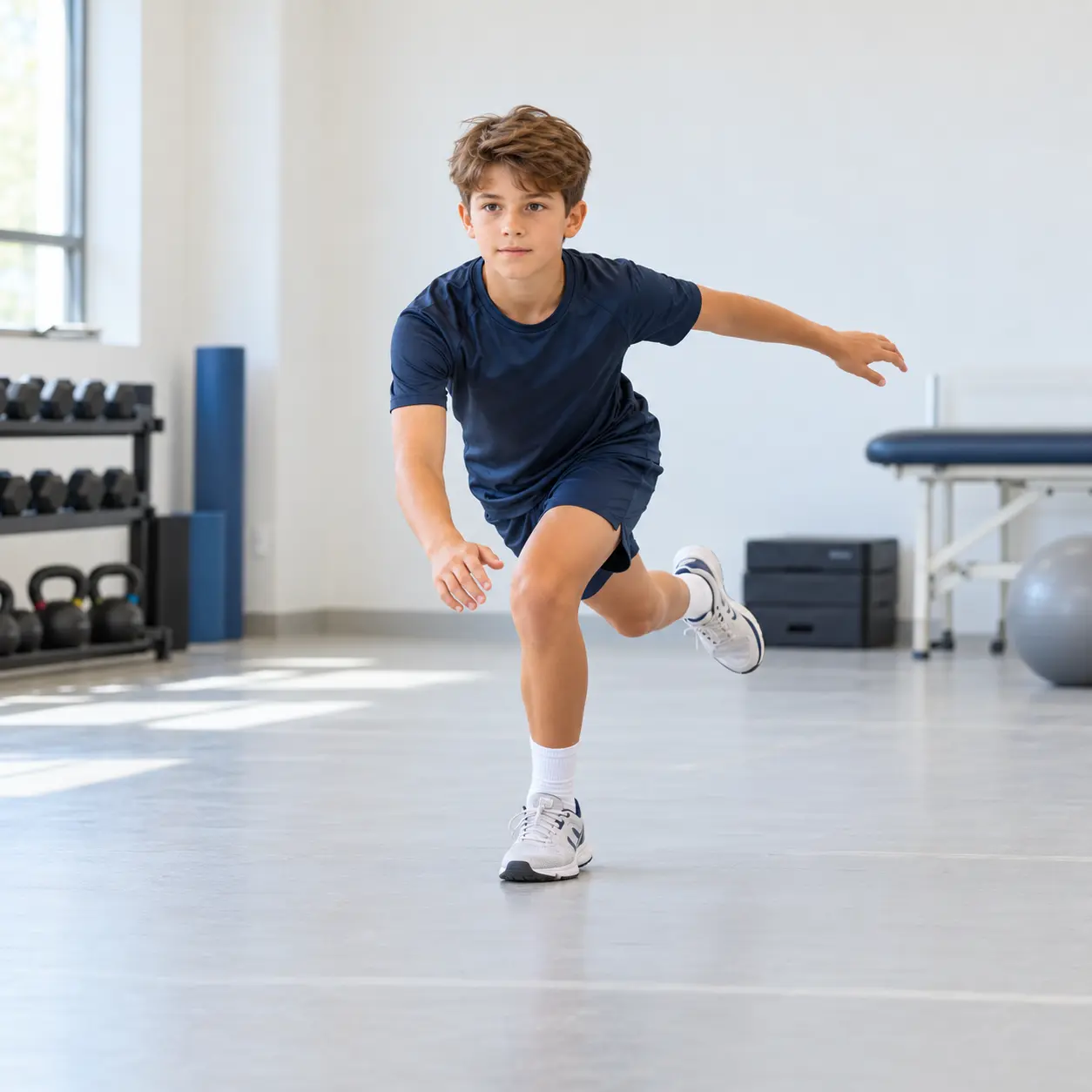
Improves ankle, knee, and hip stability during lateral jumps and landings. This exercise trains eccentric strength and control, which can help in injury prevention.
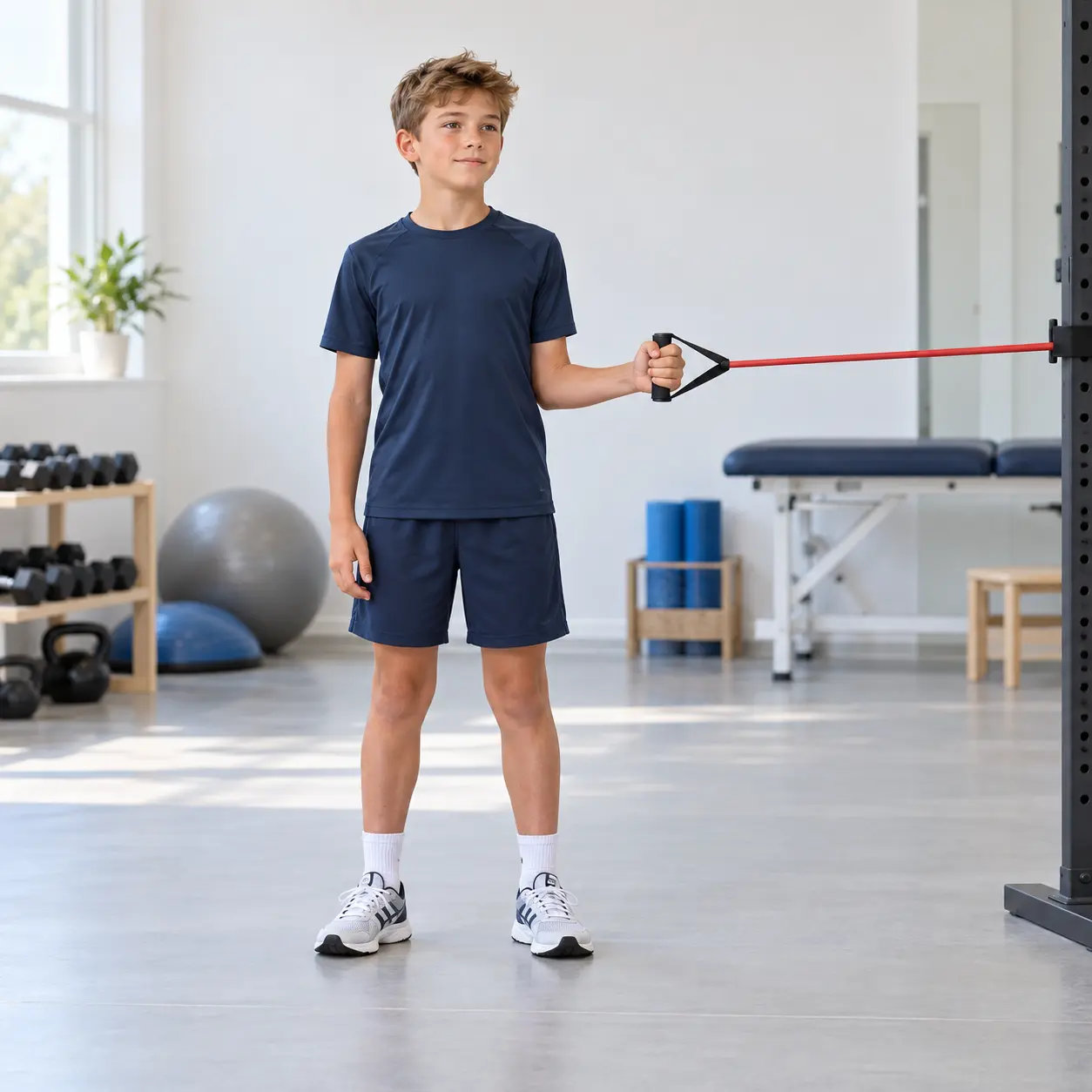
Strengthens the external rotators of the shoulder (rotator cuff), which helps to stabilize the shoulder joint. This is especially important in overhead sports for preventing shoulder issues.
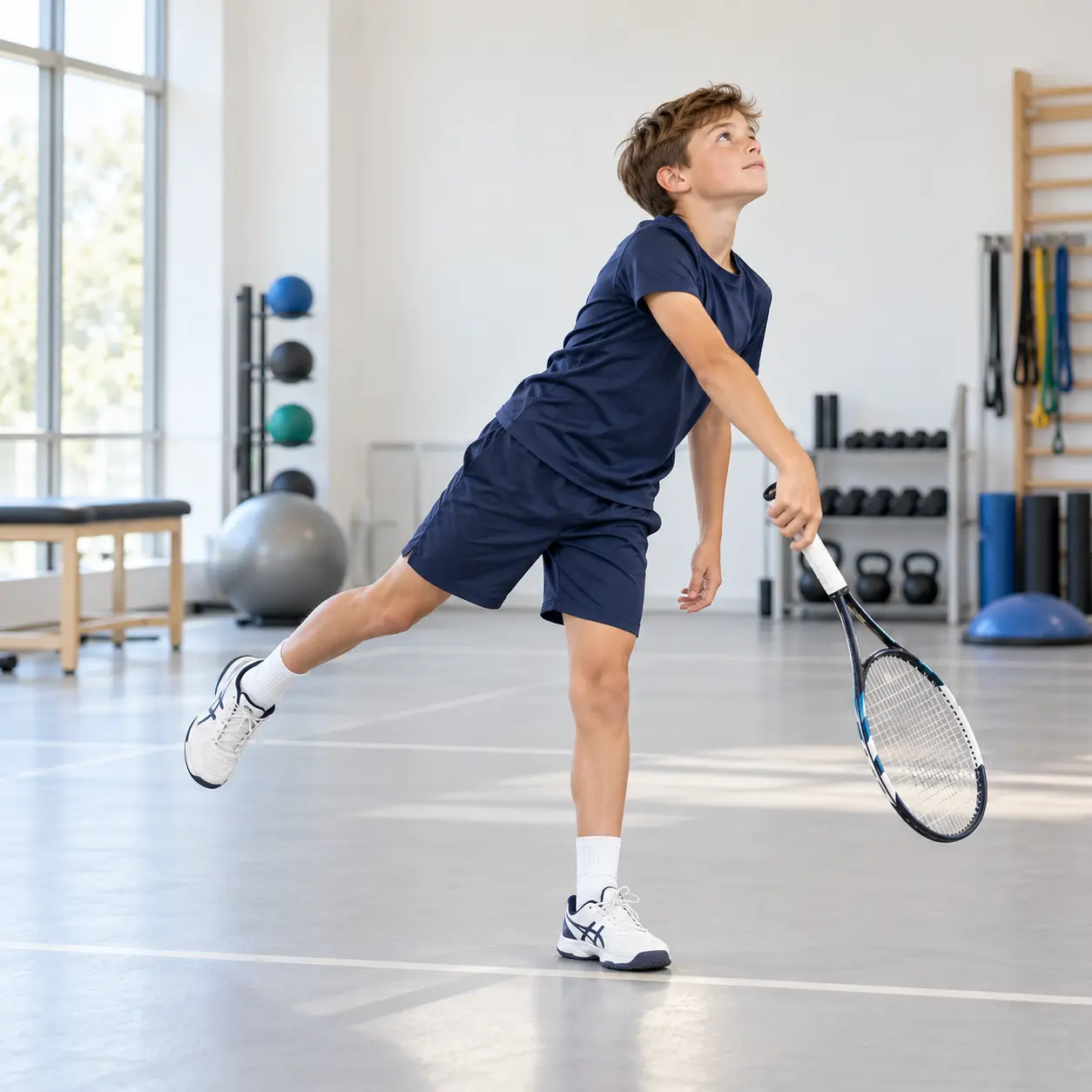
Improves balance and control after the service motion in tennis. A stable landing allows for quicker preparation for the next shot.