Releasing neck tension: gentle everyday exercises
Most often the neck gets tense not from one unlucky movement but from long static load: hours at a screen, a phone in a lowered head, stress that quietly lifts the shoulders toward the ears. Gentle, regular mobility and relaxation work usually helps more than rare, intense attempts to “loosen up” the neck.
Why the neck gets tense
The muscles of the neck and shoulder girdle hold up the head — and it weighs several kilograms. When the head is tilted toward a screen for a long time, the load on these muscles grows noticeably. Add stress, under which we reflexively “hunch” the shoulders, and by evening the familiar heaviness appears.
This is a general explanation, not a diagnosis: neck pain can have different causes, and when in doubt they should be discussed with a doctor.
Four exercises for neck and shoulder mobility
Start with two or three exercises and a small, comfortable range. Move smoothly and breathe normally. Stop if pain increases or you develop dizziness, tingling or numbness. After surgery or with a diagnosed neck condition, follow your clinician’s individual advice.
1. Upright, controlled neck rotation
Slowly turn your head each way while staying upright. Start with 3 repetitions per side.
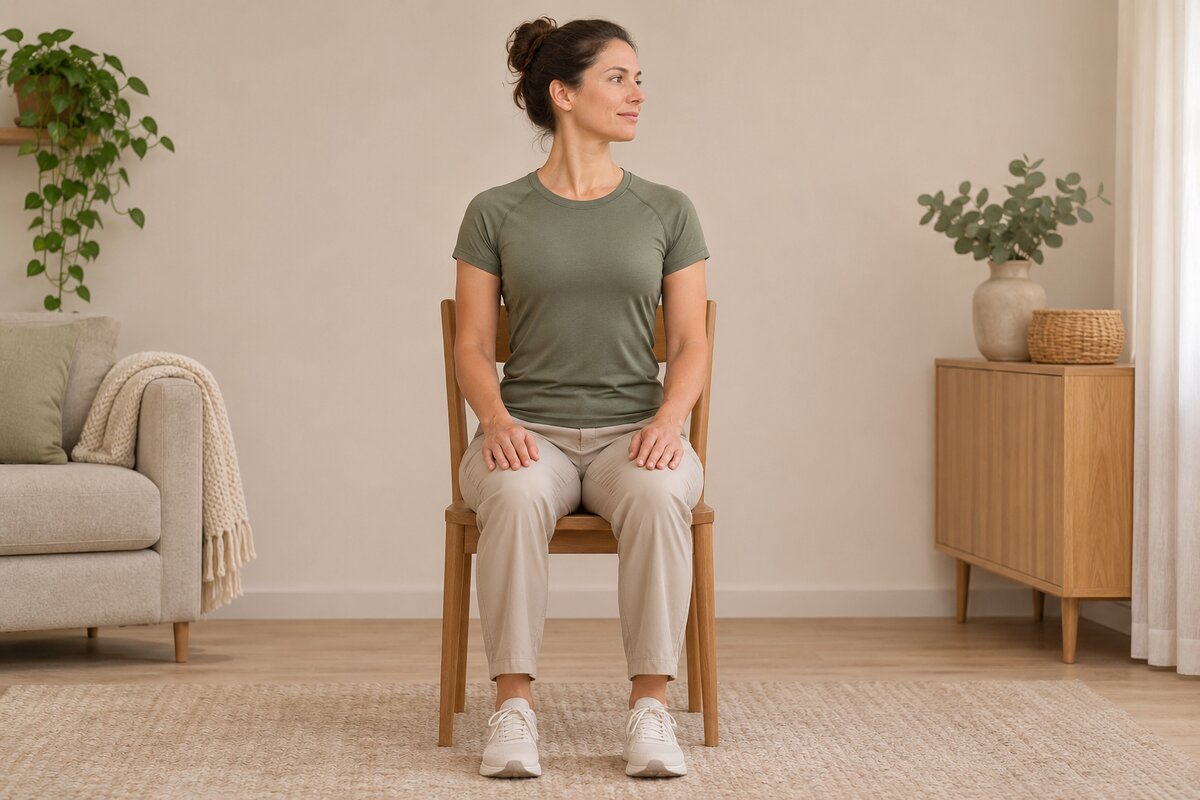 Open exercise
2. Side bend with the opposite shoulder lowered
Gently tilt your head sideways while keeping the opposite shoulder relaxed down. Hold 5 seconds, 3 times each side.
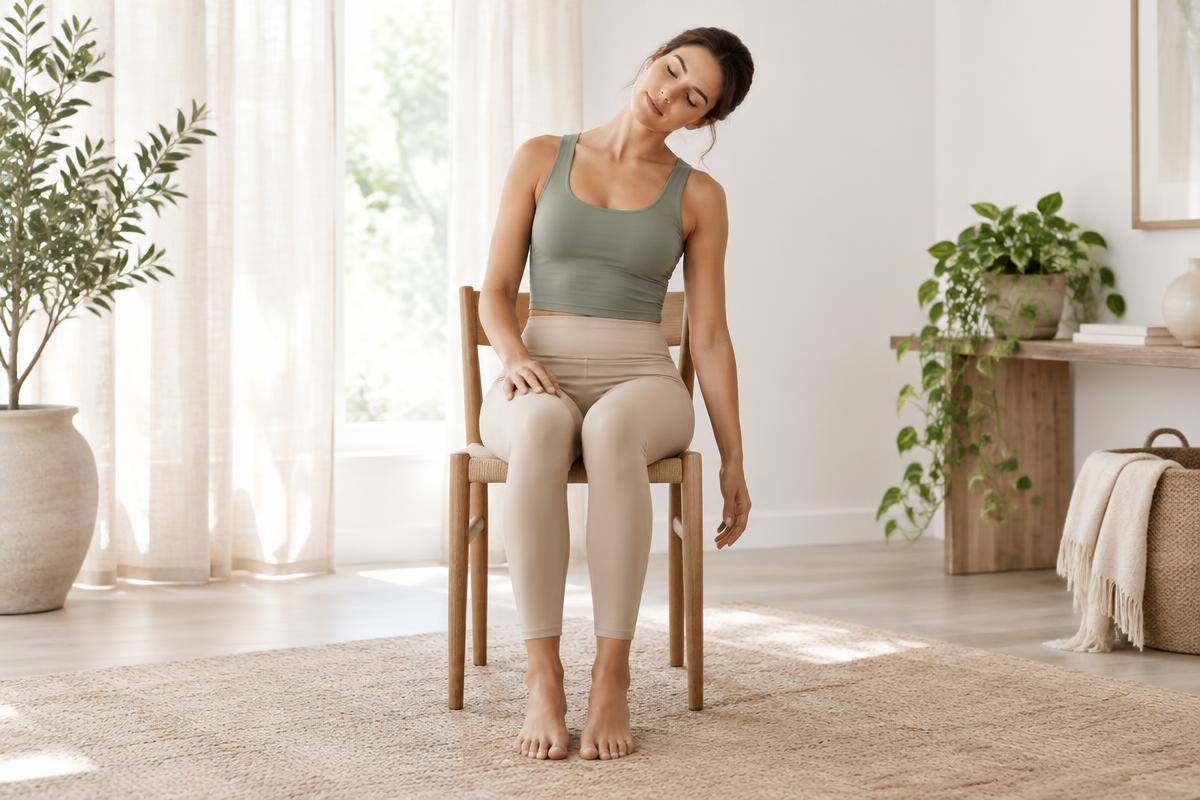 Open exercise
3. Gentle chin retraction
Glide your head gently backwards without looking down. Repeat 5 times, holding for 3 seconds.
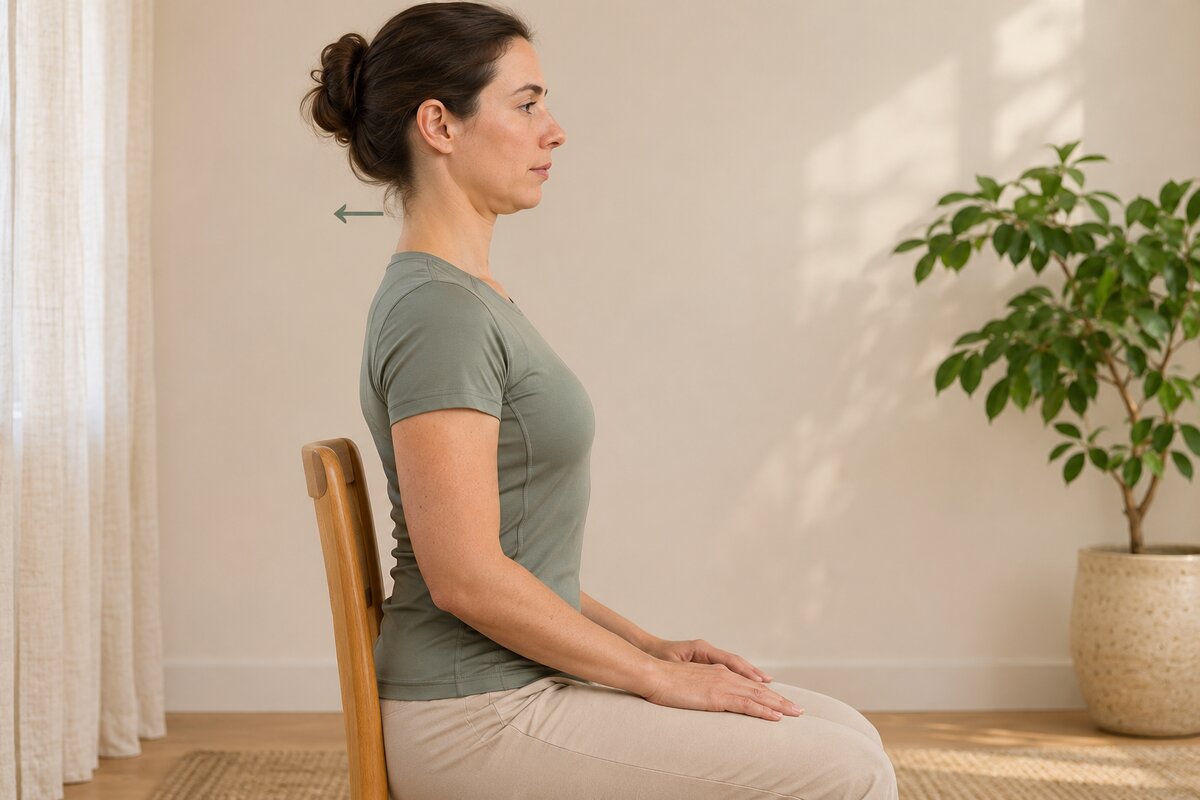 Open exercise
4. Seated upper-back rotation
Turn your chest while keeping your pelvis still and letting your head follow. Repeat 5 times each way.
 Open exercise
A break for screen work
Every 45–60 minutes of screen work, take a two-minute break:
- 1Drop your shoulders and take three slow exhales.
- 2Slowly turn your gaze right and left, three times each.
- 3Lift your shoulders to your ears on the inhale and drop them on the exhale — five times.
Common mistakes
The most common mistake is sharp head circles and attempts to “crack” the neck into place. The neck does not like jerks: fast, forced rotations can increase pain. The second mistake is stretching through pain, pushing the stretch to the limit. Softness and regularity work better than intensity.
When self-help is not enough
See a doctor if neck pain radiates into the arm, comes with numbness or weakness in the hand, appeared after an injury, comes with dizziness, or does not go away within a few weeks. These signs need an in-person assessment, not home exercises.
Frequently asked questions
How often should I do neck exercises?
A little every day works best: five to seven minutes of gentle movements in the morning or evening, plus short breaks during work. Rare, long sessions are less effective.
Can I do the exercises with a headache?
With a mild headache, gentle movements sometimes bring relief, but with a strong or unusual headache it is better to postpone the exercises and consult a doctor.
Does a massage ball help with neck tension?
Gentle self-massage with a ball against the wall can reduce surface tension in the shoulder and upper back muscles. The pressure should be moderate and pleasant; do not press on the spine and do not work through pain.
Why shouldn't I rotate my head sharply?
Fast rotations through the full range overload the small joints of the neck and can provoke pain or dizziness. Slow movements within a comfortable range give the same benefit without the risk.